
News
Extreme heat is rewriting the farming calendar in Gwagwalada

By Oladosu Adebola Oluwaseun
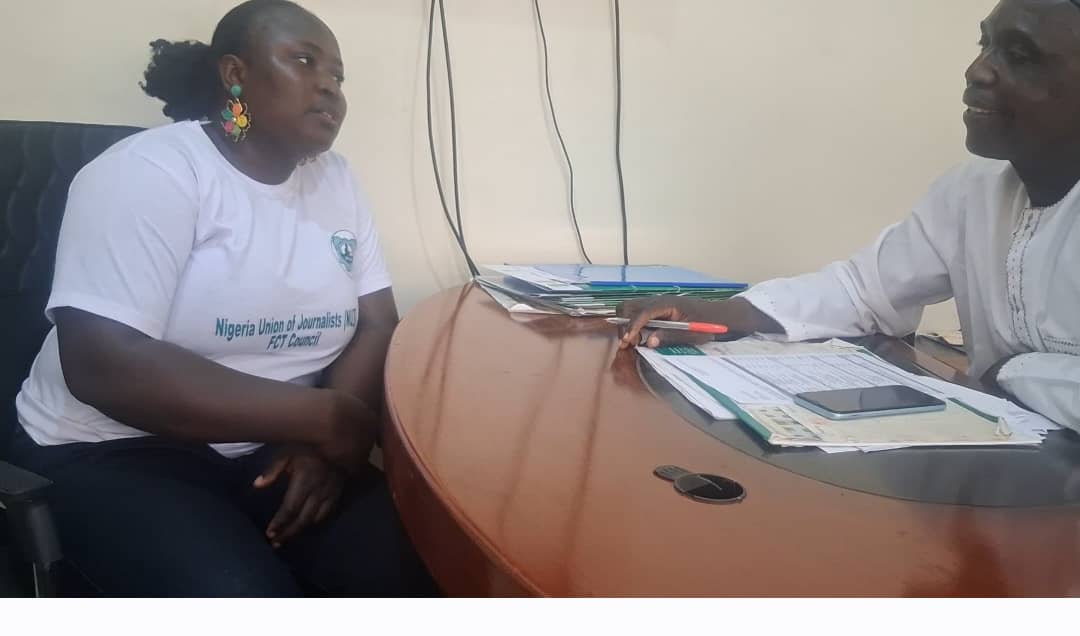
In the sweltering heat of Gwagwalada Area Council, where the rising temperatures of the Federal Capital Territory are already testing daily life, a sobering prediction hangs over Nigeria: by 2027, extreme heatwaves could claim over 30,000 additional lives. Sitting down to address what this looming crisis means for local food security and rural livelihoods is Audu Hassan, the Director of Agriculture for Gwagwalada Area Council.
With a calm, pragmatic demeanor, Hassan acknowledged that the relationship between government support and local farming has shifted.
In previous years, top-down directives often stalled before reaching the fields. Today, the responsibility falls squarely on the direct partnership between the Department of Agriculture and the farmers working the soil.
For Hassan, survival in an era of relentless heat comes down to one non-negotiable strategy: climate-smart farming.
”There are seeds that can produce for this heat,” Hassan explained, noting that traditional farming calendars are no longer reliable. Historically, local growers waited patiently for predictable rains before planting. Now, with erratic weather patterns and scorching heatwaves, waiting means risking total crop failure.
Through ongoing agricultural research and field demonstrations, his department is actively introducing fast-maturing, heat-resilient crop varieties specifically highlighting improved rice options suited for the current harsh conditions. However, convincing longtime farmers to abandon familiar traditional seeds for newly developed, scientifically resilient varieties remains an uphill battle. Many are initially skeptical, clinging to what they have always planted.
To break through that hesitation, the department isn’t just giving advice from behind desks; they are planting alongside the farmers in the fields. “When they try, they say, ‘Ah, this one is fast, oh,'” Hassan noted with a knowing smile. “Before the rain stops, we have harvested.”
As the threat of extreme heat intensifies ahead of 2027, Hassan emphasized that sustained advocacy and institutional backing are essential. With the Area Council Chairman turning attention toward the Department of Agriculture, the mission moving forward is clear: bridge the gap between agricultural research and the grassroots farmer, replace outdated planting habits with climate-resilient seeds, and ensure Gwagwalada’s residents can harvest their crops before the heat takes its toll.







Extreme heat is rewriting the farming calendar in Gwagwalada

Daura Emirate investigates viral video after Tourist accuses Emir of sexual misconduct

NUJ FCT Chair felicitates Rt Hon Betara @ 60

Reps Committee members on FCT felicitate Hon Betara @ 60

2027 Elections: IPC tasks journalists on accountability, fact-checking

Tinubu appoints Agboola Dabiri as South-West NASC commissioner

Gunmen attack, machete Former Super Eagles captain Segun Odegbami in Ogun residence

ADC, NDC, PDP, Others suspend campaigns nationwide, set November 30 for opposition summit

Court rejects Atiku’s bid to tender fresh evidence in suit seeking Tinubu’s disqualification

Tinubu confers GCON on Senior Advocate Wole Olanipekun
Reps Committee members on FCT felicitate Hon Betara @ 60
NUJ FCT Chair felicitates Rt Hon Betara @ 60
Daura Emirate investigates viral video after Tourist accuses Emir of sexual misconduct