
News
2027: Reserve 50% positions for Women – Pauline Tallen urges Political Parties

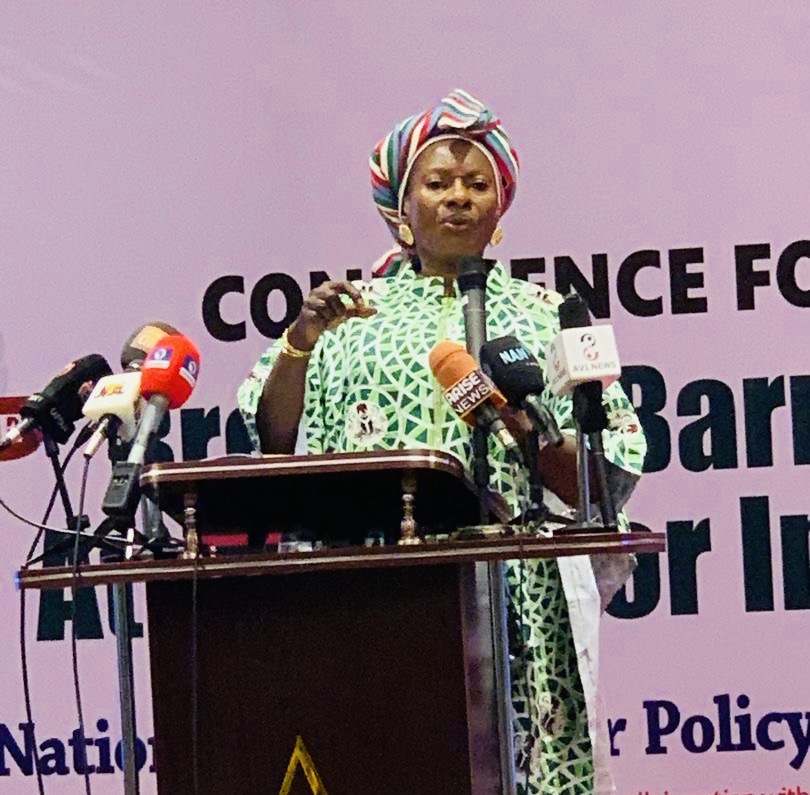
Former Minister of Women Affairs, Pauline Tallen, has called on Nigerian political parties to amend their constitutions and set aside 50 per cent of both appointments and elective positions for women.
Tallen made the appeal while delivering a keynote address at a two-day capacity-building conference in Abuja, organised by the National Institute for Policy and Strategic Studies (NIPSS) and the Inter-Party Advisory Council (IPAC).
The event was themed “Breaking the Barriers and Shaping Positive Attitudes Towards Inclusive Politics in Nigeria.”
She proposed that political parties should adopt what she called a “Zebra Policy or 50-50 pairing”, ensuring equal representation of men and women in political positions.
Tallen also urged President Bola Tinubu, whom she described as a former governor, senator, and pro-democracy advocate, to take the lead in pushing for gender inclusion. She encouraged the First Lady, Mrs. Oluremi Tinubu, to use her position and experience as a four-time senator to support efforts aimed at mainstreaming women into Nigeria’s political space.
Tallen, who once served as Deputy Governor of Plateau State and Minister of State for Science and Technology, described women as vital forces behind successful election campaigns and political movements.
According to her, women bring unmatched dedication, organisational skills, and persuasive abilities, making them crucial to community mobilisation and voter engagement.
However, she lamented that women’s involvement in politics remains limited due to deep-rooted gender biases in cultural beliefs, societal norms, and institutional systems.
Tallen explained that these barriers disproportionately hinder women’s participation and representation in politics and stressed the need for strategic, multi-dimensional efforts to address them.
She urged all political parties to deliberately include women in leadership roles, saying their contributions often determine the success or failure of campaigns. “One solution I recommend is for all political parties to immediately amend their constitutions to create special seats for women,” Tallen said.
She further proposed that as the 2027 general elections draw near, political parties should make it mandatory to allocate at least 50 per cent of elective and appointive positions to women. Tallen argued that as parties shape governance and policy, it is their duty to tackle religious and cultural limitations that exclude women.
Tallen emphasized the importance of political reforms backed by lawmakers, civil society organisations, and voters themselves. She noted that with a national population of over 200 million — half of whom are women — it is both strategic and essential to integrate more women into politics, warning that ignoring them would mean neglecting a significant part of Nigeria’s potential.
She criticised Nigeria’s poor global ranking in female representation, revealing that only 4.2 per cent of National Assembly members are women, placing Nigeria among the bottom five countries worldwide. While Rwanda leads globally with 64 per cent of parliamentary seats occupied by women, Nigeria has just 17 female members in the House of Representatives and only four in the Senate.
Tallen urged the government to enforce existing gender policies and suggested increasing the 35 per cent affirmative action quota for women to 50 per cent. She called for continuous public awareness to challenge gender biases and promote women’s leadership roles in politics and governance.
She also encouraged Nigeria to adopt best practices from countries that have achieved gender parity in politics and strengthen international partnerships aimed at promoting peace, security, and gender inclusiveness.
Earlier, the Director-General of NIPSS, Prof. Ayo Omotayo, reaffirmed the Institute’s commitment to serving as a neutral ground for essential national conversations. He acknowledged that while women’s participation in politics is central to Nigeria’s democratic progress, their representation in leadership roles remains poor, affecting both fairness and governance.
In his remarks, IPAC National Chairman, Yusuf Dantalle, praised the contributions of women, noting their significant role in addressing digital and societal challenges. He admitted that while discrimination and under-representation persist, they are challenges that can be overcome through collective effort.






Inside Tinubu’s N100m Mortgage Scheme: What applicants should know before applying

NUJ FCT mourns Former Chairman Abdul Jelil Adebayo

Xi, Trump, Putin begin historic Trilateral Summit in China

Nigeria needs stronger political parties, accountability – Stakeholders

EFCC arraigns socialite Halimat Tejuosho over alleged N603m NNPC job scam

Nigeria, Cameroon, Chad, Niger agree on five-kilometre cross-border military pursuit

Military recovers 12 AK-47 rifles, secures release of 10 kidnap victims in Kwara

CAPPA seeks higher tax on sugary drinks

Tinubu receives State Police Constitutional Amendment Bill, set to sign into law

‘Give Tinubu’s reforms time to mature, Nigeria will prosper’ — Wike

FIFA Rankings: Super Eagles rise one place to 29th, move to fifth in Africa

FG to release 3 Million bags of fertiliser, stored grains to reduce food prices

‘Let Tinubu finish what he started, He deserves Second Term’ — Fashola tells Nigerians

Government neglect and poverty fueling deforestation, climate heat in Nigeria, Official warns

U-23 AFCON Qualifiers: Olympic Eagles Thrash DR Congo 4-0, Advance 4-2 on Aggregate

Court declares Gabriel Suswam APC candidate for 2027 Benue Senate election
Nigeria needs stronger political parties, accountability – Stakeholders

Livestream Dispute: South Africa summons Nigeria’s High Commissioner, Fani-Kayode

Super Eagles held to goalless draw by Tanzania in AFCON 2027 qualifier

Woman arrested for allegedly hiring Men to kill husband’s children over inheritance in Kano
-
 Sports22 hours ago
FIFA Rankings: Super Eagles rise one place to 29th, move to fifth in Africa
-
 News22 hours ago
FG to release 3 Million bags of fertiliser, stored grains to reduce food prices
-
 News2 days ago
‘Let Tinubu finish what he started, He deserves Second Term’ — Fashola tells Nigerians
-
 FCT News1 day ago
Government neglect and poverty fueling deforestation, climate heat in Nigeria, Official warns
-
 News2 days ago
Livestream Dispute: South Africa summons Nigeria’s High Commissioner, Fani-Kayode
-
 Sports2 days ago
Super Eagles held to goalless draw by Tanzania in AFCON 2027 qualifier
-
 Metro2 days ago
Woman arrested for allegedly hiring Men to kill husband’s children over inheritance in Kano
-

 News22 hours ago
‘Don’t allow political ambition to tear Nigeria apart’ — Jonathan warns leaders ahead of 2027