










News
NCDC advocates multi-sectoral approach to curb AMR


By Ifeoma Nwovu
The Nigeria Centre for Disease Control and Prevention (NCDC) has highlighted data quality, multi-sectoral approach, continuous community and stakeholder engagement as key factors to effectively combat the growing threat of antimicrobial resistance, AMR, in the country.
The Director General of the NCDC, Dr. Jide Idris stated this in Abuja at the Commonwealth Partnership for Antimicrobial Stewardship Programme.
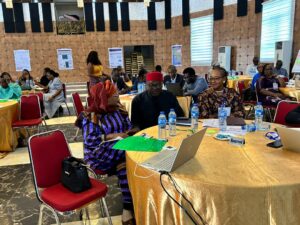
Dr. Idris, who was represented by the Head of AMR and Infection Prevention and Control at the NCDC, Dr. Tochi Okwor expressed worry that some Nigerians rely on patent medicine vendors out of convenience or financial constraints and gave the assurance that the agency would strengthen partnership with regulatory bodies to ensure responsible antibiotic use to build a resilient health system.
“We are working through a multi-sectoral, participatory approach to understand why people prefer patent medicine vendors over hospitals. We cannot ignore these realities, so we are bringing in social scientists to study these behaviours and develop solutions that work for the Nigerian context.” She said.
The World Health Organisation, WHO Country Representative, Dr. Laxmikant Chavan called for the integration of antimicrobial stewardships in Primary Health Centres to address regional gaps.
“We have outbreaks which are addressed under health security, but simultaneously, we have so many antimicrobial stewardships in hospital like at least 50 to 60 hospitals in Nigeria, they are actually implementing and optimizing the use but I don’t know how many of them are really in primary health care level, they use anti microbials in very irrational and heavy way.“
A pharmacist and founding partner of Ducit Blue Solutions – under Global health partnerships, Estelle Mbadiwe said Nigeria had expanded its key health facilities to address the issues of substandard and falsified antimicrobials.
” Initially, Nigeria had one facility, which expanded to five – Babcock University Teaching Hospital, University of Nigeria Teaching Hospital Enugu, UNTH; University of Calabar Teaching Hospital, University College Hospital Ibadan, UCH, and Lagos University Teaching Hospital, LUTH.”
On his part, The Programmes Coordinator for Global Health Partnerships, Jihoon Yoo said Nigeria was one of the eight countries that participated in the commonwealth Partnership program and called for collaborative and sustained efforts to tackle AMR.
Antimicrobials are used to prevent, control and treat infectious diseases in humans, animals and plants, but they are becoming increasingly ineffective. As a result of antimicrobial resistance (AMR), infections become difficult to treat, increasing the risk of disease spread, severe illness and death. According to world bank, the global economic loss due to AMR is estimated to be $100 trillion by 2050.











News4 hours ago
Gov Bago performs groundbreaking for permanent NYSC camp in Niger

News16 hours ago
Ondo Assembly suspends plenary as Lawmakers insist speaker must resign

Sports16 hours ago
WAFCON 2026: Super Falcons begin title defence against debutants Malawi

National News16 hours ago
Tinubu modernising Nigeria’s public broadcasting sector — Information Minister

News16 hours ago
Wike promises completion of up to 10 major FCT Road projects before year-end

News16 hours ago
Reps panel orders IGP to produce PFIPC DG within 48 Hours over probe

National News24 hours ago
FG approves 35% hazard allowance increase for NASU members in federal universities

News24 hours ago
Hoodlums invade Osun PVC distribution centre, cart away voter cards

World News24 hours ago
Iran not in negotiations with US despite ceasefire, foreign ministry says

Sports24 hours ago
Infantino fires back at World Cup critics, says FIFA delivered ‘Only Joy and Happiness’

News24 hours ago
Troops foil terrorist attack on military base, rescue 21 female students in Borno
Sports16 hours ago
WAFCON 2026: Super Falcons begin title defence against debutants Malawi
Sports24 hours ago
Infantino fires back at World Cup critics, says FIFA delivered ‘Only Joy and Happiness’
World News24 hours ago
Iran not in negotiations with US despite ceasefire, foreign ministry says

News24 hours ago
I’ll serve only one term if elected President — Peter Obi
News24 hours ago
Hoodlums invade Osun PVC distribution centre, cart away voter cards
News16 hours ago
Wike promises completion of up to 10 major FCT Road projects before year-end
National News24 hours ago
FG approves 35% hazard allowance increase for NASU members in federal universities
News16 hours ago
Reps panel orders IGP to produce PFIPC DG within 48 Hours over probe
National News16 hours ago
Tinubu modernising Nigeria’s public broadcasting sector — Information Minister
-
 News24 hours ago
Troops foil terrorist attack on military base, rescue 21 female students in Borno
-
 Sports24 hours ago
Infantino fires back at World Cup critics, says FIFA delivered ‘Only Joy and Happiness’
-
 World News24 hours ago
Iran not in negotiations with US despite ceasefire, foreign ministry says
-
 Sports16 hours ago
WAFCON 2026: Super Falcons begin title defence against debutants Malawi
-
 News24 hours ago
Hoodlums invade Osun PVC distribution centre, cart away voter cards
-
 News24 hours ago
I’ll serve only one term if elected President — Peter Obi
-
 National News24 hours ago
FG approves 35% hazard allowance increase for NASU members in federal universities
-
 News16 hours ago
Reps panel orders IGP to produce PFIPC DG within 48 Hours over probe