


NUJ FCT
AI will only replace Journalists who refuse to learn — Oyo NUJ Chair


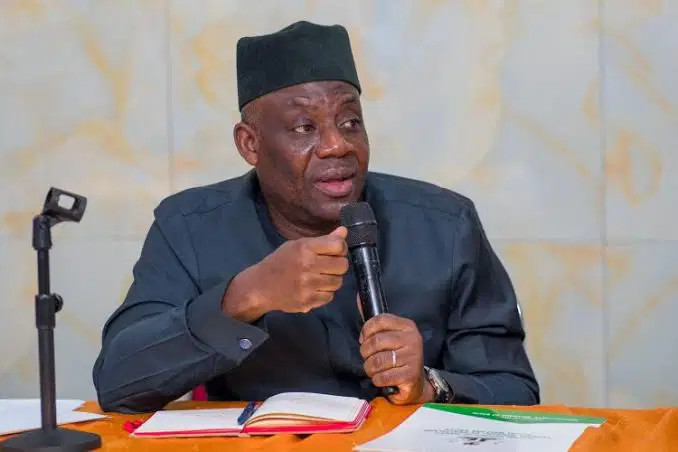
The Chairman of the Nigeria Union of Journalists (NUJ), Oyo State Council, Akeem Abas, has said that artificial intelligence (AI) poses no threat to journalists who continually update their digital skills, stressing that only those who refuse to adapt risk being replaced.
Abas made the assertion on Wednesday in Ibadan at a two-day training on artificial intelligence organised by the NUJ Oyo State Council in collaboration with the American Open University, Nigeria.
The training, themed “Empowering Journalists with Artificial Intelligence for Ethical, Innovative and Future-ready Journalism,” drew over 120 journalists from across the state.
According to Abas, journalists equipped with digital and AI competencies are not enemies of national development but critical partners in nation-building.
He said such journalists could expand beyond newsroom reporting to function as media consultants, offering data analysis, content strategy and communication advisory services to governments, institutions and the private sector.
Abas added that journalists could also establish media and technology-driven startups, including fact-checking platforms, local data hubs, investigative journalism laboratories, digital storytelling studios and AI-assisted news platforms serving specialised audiences.
“With AI competence, journalists can become policy advisers and public communication experts, supporting government agencies, lawmakers and development institutions with research-based insights, public engagement strategies and evidence-driven narratives,” he said.
He described the training as a deliberate investment in capacity building rather than charity, noting that it aligns with Nigeria’s Digital Economy Agenda, which prioritises innovation, entrepreneurship and human capital development.
“As Nigeria moves towards a knowledge-based economy, journalists must not be left behind. During our electioneering campaign, we promised policy-driven unionism that equips members with skills for relevance, sustainability and dignity in a changing economy.
“This training is a fulfilment of that promise. Artificial intelligence will not replace journalists; it will only replace journalists who refuse to learn,” Abas said.
He urged participants to move beyond routine reporting to embrace analytical, data-driven and solution-oriented journalism capable of strengthening democracy and accountability.
Abas also called on policymakers and stakeholders to recognise that investing in journalists is an investment in transparency, stability and informed governance.
“A technologically competent press is not a luxury; it is a national necessity. Journalism has survived every technological disruption because it adapts without surrendering its soul.
“Artificial intelligence must amplify human judgment, not replace it; it must serve democracy, not undermine it,” he added.
Meanwhile, the Oyo State Commissioner for Information, Prince Dotun Oyelade, described the emergence of AI as a positive development, though he warned that it could be abused for negative purposes if poorly managed.
Oyelade said studies have shown that AI is already an integral part of modern journalism and will remain so in the future.
He cited the Seyi Makinde-led administration’s reliance on data and science in governance, particularly in the digitisation of land transactions, which he said had drastically reduced fraud and increased the state’s internally generated revenue (IGR).
According to him, Oyo State recorded an IGR of ₦103 billion in 2025, a figure he said surpassed the combined revenue of the previous two administrations.
Oyelade urged journalists to fully utilise the knowledge gained from the training for personal growth and professional advancement, while commending the NUJ leadership for organising the programme within two months of assuming office.
Also speaking, the Acting Vice-Chancellor of the American Open University, Nigeria, Dr Seyi Akanbi, described artificial intelligence as a powerful tool that must be guided by ethical use.
He identified misinformation, disinformation and propaganda as major threats to journalism and urged journalists to deploy AI in ways that promote content integrity, social responsibility and professional excellence.
Akanbi also encouraged journalists to partner with technology organisations such as Google to establish fact-checking platforms that enhance accuracy and credibility in the media space.










FCT News10 hours ago
Journalists are professionals deserving Respect- IGP Disu

NUJ FCT17 hours ago
NUJ FCT raises alarm over fuel prices, water scarcity, security

News20 hours ago
IGP Disu commends FCT Journalists, seeks stronger Police–Media partnership

News22 hours ago
Fasawe, NUJ President seek philanthropists’ sponsor of health insurance for journalists

NUJ FCT22 hours ago
Fasawe, NUJ President urge philanthropists to sponsor health insurance for journalists as NUJ FCT launches scheme

Business2 days ago
CBN warns Banks against lending to loan defaulters

News2 days ago
Troops repel terrorist attacks on military positions in Borno

News2 days ago
Engine anomaly forced Arik Air flight diversion — NSIB report

FCT News2 days ago
FCT residents lament rising transport fares after fuel price hike

National News2 days ago
Tinubu Polytechnic, Epe University get N2bn funding each from FG
News22 hours ago
Fasawe, NUJ President seek philanthropists’ sponsor of health insurance for journalists
NUJ FCT22 hours ago
Fasawe, NUJ President urge philanthropists to sponsor health insurance for journalists as NUJ FCT launches scheme
News20 hours ago
IGP Disu commends FCT Journalists, seeks stronger Police–Media partnership
Business2 days ago
CBN warns Banks against lending to loan defaulters
FCT News10 hours ago
Journalists are professionals deserving Respect- IGP Disu
NUJ FCT17 hours ago
NUJ FCT raises alarm over fuel prices, water scarcity, security
-
 News22 hours ago
Fasawe, NUJ President seek philanthropists’ sponsor of health insurance for journalists
-
 NUJ FCT22 hours ago
Fasawe, NUJ President urge philanthropists to sponsor health insurance for journalists as NUJ FCT launches scheme
-
 News20 hours ago
IGP Disu commends FCT Journalists, seeks stronger Police–Media partnership
-
 Business2 days ago
CBN warns Banks against lending to loan defaulters
-
 NUJ FCT17 hours ago
NUJ FCT raises alarm over fuel prices, water scarcity, security
-
 FCT News10 hours ago
Journalists are professionals deserving Respect- IGP Disu