






National News
No plan to equate PhD with Medical Fellowship, FG insists

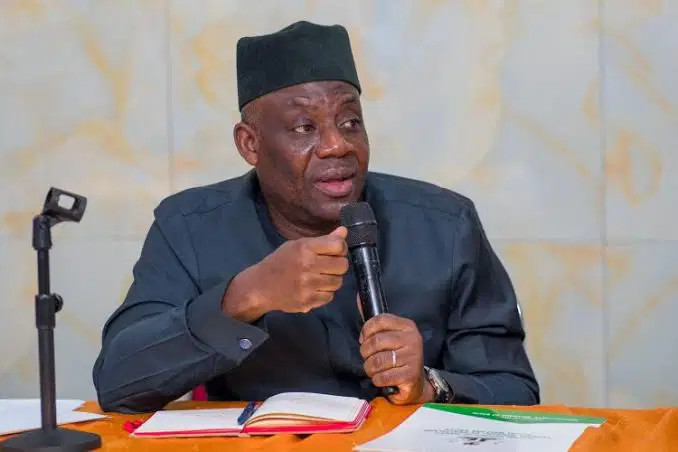
The Federal Government has moved to clear the confusion surrounding the Federal Executive Council (FEC) approval to amend the Act governing the Nigerian Postgraduate Medical College, insisting that a Doctor of Philosophy (PhD) degree will not replace or be considered equivalent to medical fellowship in Nigeria.
The clarification was contained in a statement issued Thursday night by the Federal Ministry of Education through its Director of Press and Public Relations, Folasade Boriowo.
According to the ministry, the decision by the Federal Executive Council, chaired by President Bola Tinubu, only grants the Nigerian Postgraduate Medical College the authority to seek accreditation from the National Universities Commission (NUC) to award PhD degrees in relevant medical and research fields.
Minister of Education, Dr. Tunji Alausa, said several reports in traditional and digital media had misrepresented the policy, creating the impression that the government intended to equate a PhD with the highly regarded medical fellowship required for specialist clinical practice.
He explained that medical fellowship remains a distinct and superior professional qualification in clinical medicine, earned only after physicians complete rigorous residency training and other postgraduate requirements needed for specialist certification.
Alausa stated that the FEC approval simply expands the academic mandate of the Nigerian Postgraduate Medical College, which has historically been responsible for awarding fellowships to qualified physicians.
“With the new approval, the College will be able, subject to NUC accreditation, to offer PhD programmes for candidates interested in pursuing advanced academic research alongside professional medical training,” the minister said.
He added that under the proposed framework, doctors undergoing postgraduate medical training may choose to integrate a structured doctoral research pathway into their fellowship programmes where appropriate.
According to him, the initiative is expected to strengthen Nigeria’s capacity for advanced medical research, deepen academic medicine, and enhance specialist knowledge development while preserving the prestige attached to professional fellowships.
The ministry said the clarification became necessary following widespread misconceptions suggesting that the proposed PhD programmes would place academic doctoral degrees on the same level as professional fellowship qualifications.
It explained that rather than replacing the fellowship structure, the reform introduces an additional academic pathway designed to complement specialist medical training.
Officials noted that the policy reflects the Federal Government’s broader agenda to strengthen postgraduate medical education, expand research and innovation opportunities, and align Nigeria’s specialist training system with global best practices.
The ministry reassured the medical community, academic institutions and the public that the decision does not in any way diminish the value or status of medical fellowship in Nigeria.
Instead, it said the reform is aimed at deepening scholarly research within the country’s medical training system and enhancing Nigeria’s competitiveness in global medical education and scientific discovery.
The government also reaffirmed its commitment to maintaining the integrity, quality and international relevance of Nigeria’s higher education and professional training systems while ensuring that policy decisions are clearly communicated to the public.














News20 minutes ago
PSC promotes seven AIGs to Deputy Inspectors-General in Nigeria Police

Uncategorized37 minutes ago
Only ‘unconditional surrender’ will lead to deal with Iran – Trump

News42 minutes ago
Sowore, wives of detained military officers protest in Abuja, demand trial or release over alleged coup plot

News1 hour ago
Transcorp Hilton celebrates Women in leadership on International Women’s Day

National News5 hours ago
BREAKING: Tinubu approves 65 Ambassadorial postings, Omokri to Mexico, Fani-Kayode to Germany (Full List)

World News5 hours ago
Iran authorises Police to shoot suspected looters amid war with US, Israel

National News5 hours ago
No plan to equate PhD with Medical Fellowship, FG insists

News6 hours ago
JUST-IN: Armed thugs engage Amaechi’s convoy in gun duel during ADC visit

News6 hours ago
Court grants bail to ex-AGF Malami, wife, son in N9bn money laundering case

News6 hours ago
DIG Frank Mba, other senior officers set to retire as Police leadership changes continue

National News1 day ago
FEC approves 100% exit benefit for retiring Civil Servants

Metro1 day ago
Gunmen kill two Police Officers, burn checkpoint in Kebbi

News1 day ago
Air Chief Aneke visits Yenagoa, commissions key projects

National News1 day ago
IGP Disu backs creation of State Police

World News1 day ago
Azerbaijan summons Iranian envoy after drone strikes injure civilians

Sports1 day ago
Hurzeler slams Arsenal tactics after narrow Brighton defeat

Metro1 day ago
Nigerian Army kills notorious kidnapper, rescues four in Edo forest
News6 hours ago
DIG Frank Mba, other senior officers set to retire as Police leadership changes continue
News6 hours ago
JUST-IN: Armed thugs engage Amaechi’s convoy in gun duel during ADC visit

National News1 day ago
Shettima says ADC backed e-transmission but struggled with digital registration
-
 National News1 day ago
FEC approves 100% exit benefit for retiring Civil Servants
-
 Metro1 day ago
Gunmen kill two Police Officers, burn checkpoint in Kebbi
-
 News1 day ago
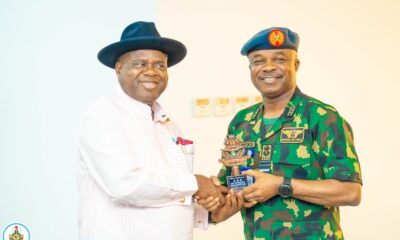
Air Chief Aneke visits Yenagoa, commissions key projects
-
 National News1 day ago
IGP Disu backs creation of State Police
-
 World News1 day ago
Azerbaijan summons Iranian envoy after drone strikes injure civilians
-
 Sports1 day ago
Hurzeler slams Arsenal tactics after narrow Brighton defeat
-
 Metro1 day ago
Nigerian Army kills notorious kidnapper, rescues four in Edo forest
-
 News6 hours ago
DIG Frank Mba, other senior officers set to retire as Police leadership changes continue