


News
Nigerian entrepreneurs have ideas, courage, need structures to thrive — Speaker Abbas

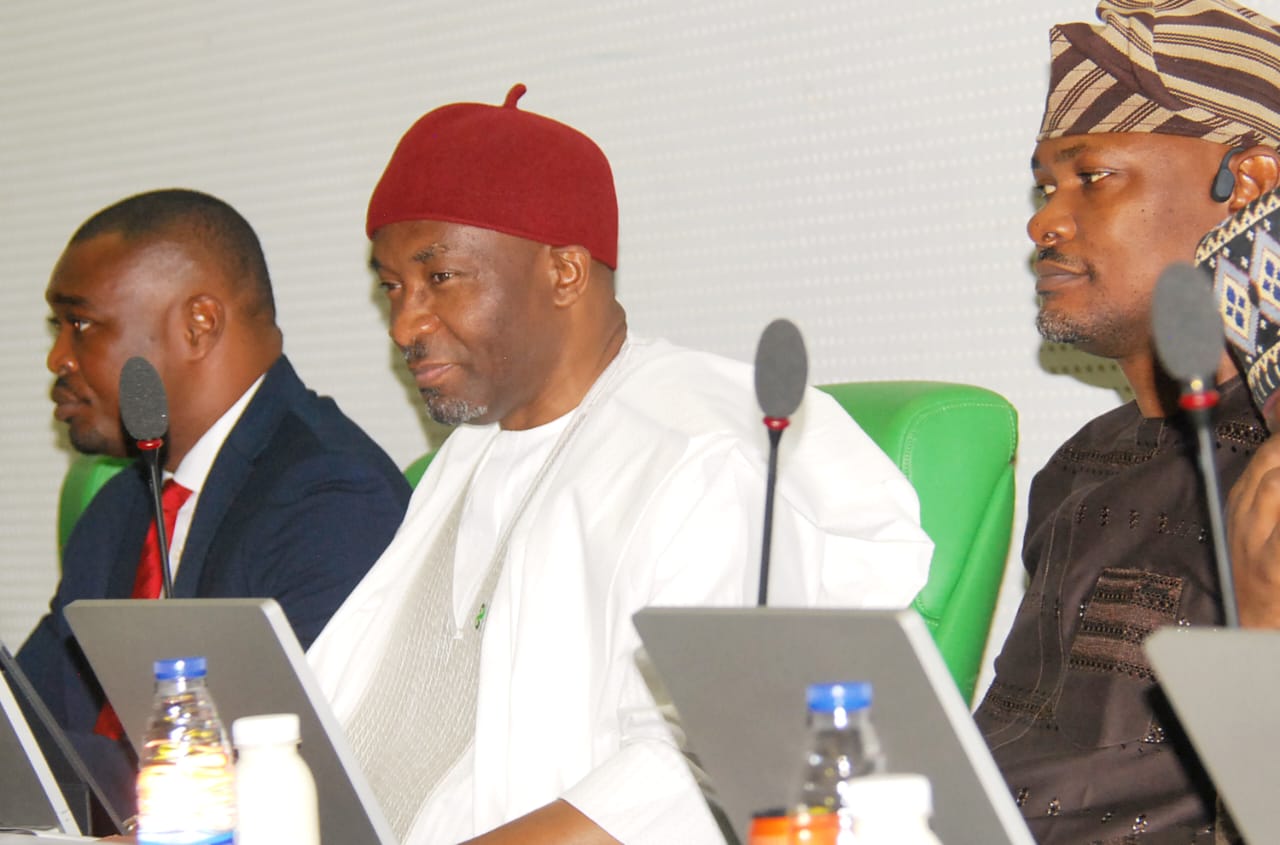
The Speaker of the House of Representatives Rt. Hon. Abbas Tajudeen,m has said Nigerian entrepreneurs have ideas and courage but lack structures that match their energy, a gap that the House is working to fill.
Speaker Abbas, in his keynote address at the Enterprise Nexus Summit in Abuja on Monday, emphasised the need for a system that creates access, information, and capital as well as public policy targeted at entrepreneurship development.
At the summit with the theme ‘Strengthening Local Enterprise Through Policy Support and Access,’ were many youths, business executives, development partners, policymakers, and other stakeholders.
Represented by the Deputy Speaker, Rt. Hon. Benjamin Okezie Kalu, Speaker Abbas said, “When we conceived the Enterprise Nexus Summit, the intention was not to add another event to the already crowded calendar of economic conferences. The purpose was far more precise: to create a working platform where policy, ambition, and opportunity meet in one room—and produce outcomes that can be measured in livelihoods, not communiqués.
“We wanted an ecosystem conversation, not a ceremonial gathering. A space where the energy of entrepreneurs meets the responsibility of policymakers in a setting designed for solutions rather than speeches.”
He added: “Nigeria’s entrepreneurs have never lacked ideas. They have never lacked courage. What they have lacked, too often, is a system designed to match their energy. A system where access, information, capital, and public policy move in the same direction.
“The truth is simple: potential does not translate into prosperity unless the environment is intentionally structured to support it. This summit is our attempt to close that gap—deliberately, structurally, and with strong institutional backing from the Office of the Speaker.”
The Speaker explained that the Enterprise Grant being introduced is a bold step that will be judged not by the size of the cheques, but by the number of viable businesses it helps stabilise and scale.
He urged that the beneficiaries should “be tracked, mentored, evaluated, and linked to opportunities within larger value chains.”
“If we do this right, a small grant today becomes a job-creating enterprise tomorrow and a tax-paying employer soon after,” he added.
Speaker Abbas reiterated that the Renewed Hope Agenda of President Bola Ahmed Tinubu, GCFR, places enterprise at the centre of national transformation. He added that the Agenda aims to propel Nigeria into a trillion-dollar economy in the next five years through the facilitation of small- and medium-scale enterprises.
He stressed the need for the legislature to lead “by ensuring that the rules of the economy are coherent, modern, and aligned with the realities of a population that is young, innovative, and impatient for progress.”
He said, “For this reason, today’s conversations should centre on three practical shifts. First, we must shift from fragmentation to coordination. Too many support initiatives operate in isolation, each doing good work but rarely speaking to one another. Yet entrepreneurs do not live in silos—their challenges cut across finance, training, taxation, technology, logistics, and market access.
“The Enterprise Nexus Summit brings all these actors into one space because coordination is no longer optional; it is the most cost-effective form of reform. When institutions align, impact multiplies.”
As a former university lecturer, the Speaker said he knows “that knowledge becomes powerful only when it is transferred and applied. We cannot build a competitive economy on instincts and improvisation alone.
“Our goal is not to create a handful of star entrepreneurs; it is to raise a generation of businesses that can compete anywhere because their foundations are sound—in governance, financial literacy, production standards, and digital competence. When capability becomes widespread, productivity becomes predictable,” he said.
While emphasising inclusion, the Speaker also noted that a productive economy must work for those who have historically been left on the margins—women, youth, people living in underserved communities, artisans, and rural creators.
“If our enterprise agenda is not inclusive, then it is not strategic. A nation cannot rise on a narrow base; the base must be wide, diverse, and empowered,” he stated.
Speaker Abbas pointed out that the responsibility for building a productive economy does not rest on the government alone. He, however, said the government must set the tone—through legislation that protects innovation, through oversight that encourages transparency, and through collaboration that respects the expertise of the private sector and development partners.
“Development finance institutions, universities, state governments, and global partners all have roles to play. This summit, therefore, is not an event; it is an invitation—an invitation to coordinate, to commit, and to innovate,” he said.
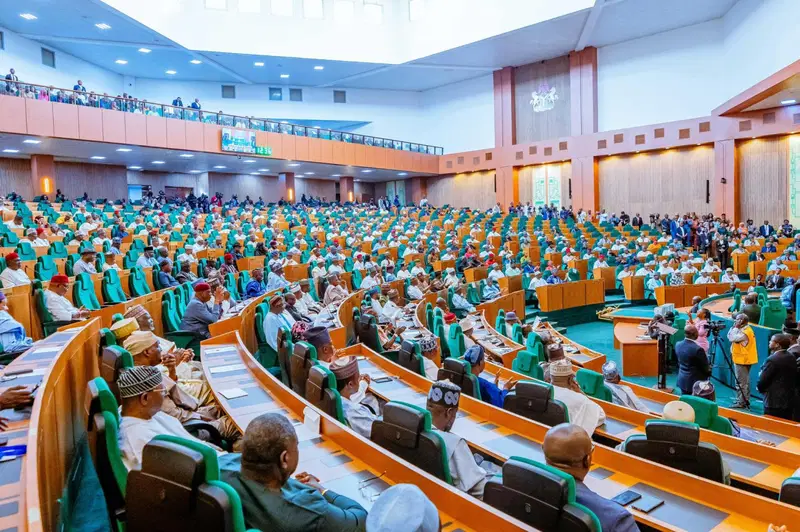
Noting that the 10th House has, in many ways, been able to advance legislative support for small and medium-scale enterprises (SMEs), the Speaker said some of these efforts focus on legislation, others on budget implementation, funding access, regulatory ease, innovation, and vocational support.
For instance, Speaker Abbas said the House Committee on Commerce has conducted multiple oversight visits to the Small and Medium Scale Enterprises Development Agency of Nigeria (SMEDAN), which, together with the Bank of Industry, have collaborated to disburse over ₦100 billion in SME grants/loans under schemes like the Agribusiness Small and Medium Enterprises Investment Scheme (AGSMEIS) and the ₦75 billion MSME Intervention Fund launched in late 2024.
He said: “Through its resolutions, the 10th House has called for faster implementation of the 2024 budget’s ₦50 billion allocation for MSME clusters to enhance access to credit and market linkages for small-scale enterprises.
“The House is currently carrying out legislative action on the Innovation and Entrepreneurship Support Bill, 2025, which proposes a national framework for innovation hubs, tax breaks for tech start-ups, and partnerships with the private sector for mentorship programmes. The bill, when passed, will build on the Nigeria Start-up Act 2022 by focusing on non-digital SMEs.”
Speaker Abbas noted another important step as the proposed Senate amendment to the Nigerian Export-Import Bank Act (NEXIM), 1991, which aims to increase NEXIM’s capitalisation for SME export financing, including low-interest loans dramatically.
He noted that the amendment targets small-scale exporters in agriculture and manufacturing with the potential to unlock about $1 billion in trade opportunities. He added that the House will “definitely vote to pass this legislation” in concurrence with the Senate, when the time comes.
The Speaker further said: “The House is also advancing legislative action on the Factoring and Invoice Discounting Bill, which aims to enable SMEs to convert receivables into immediate cash for working capital.
“Supported by stakeholders like CBN, the Securities and Exchange Commission (SEC), and the National Association of Chambers of Commerce, Industry, Mines, and Agriculture (NACCIMA), the bill seeks to address liquidity challenges in trade finance to further SME expansion. It also seeks to regulate invoice financing for SMEs, allowing conversion of receivables to cash.
“The bill passed second reading in May 2025 and is slated for committee-stage report by December 2025 and potentially addresses liquidity gaps for thousands of MSMEs.”
While noting that the 10th House is “actively engaged in legislative action concerning budgetary allocations and oversight of MSME Clinics,” the Speaker said that through the 2024 and 2025 Appropriation Acts, the parliament has increased funding for SMEDAN and supported MSME Clinics, which by mid-2025 had disbursed ₦576 million to 237 small and medium-sized enterprises.
He said: “In sum, we are constantly working to simplify business processes, improve access to finance, and foster an enabling environment that aligns with broader economic recovery plans, such as the Economic Recovery and Growth Plan (ERGP), which emphasises SME industrialisation and local content inclusion.
“Looking ahead, what does a strengthened local enterprise ecosystem looks like? It is one where policy is proactive, not reactive. Policies, like the Nigeria First Policy of the Federal Government, which mandates all MDAs to give preference to local manufacturers and producers in the procurement needs, in order to improve local enterprise development and growth.
“Governments across our country should adopt policies that enable start-ups to flourish. Our financial institutions should help drive innovation through enhanced access to finance, and our corporations should adopt mentoring policies to develop SMEs.”





News8 hours ago
Ondo Assembly suspends plenary as Lawmakers insist speaker must resign

Sports8 hours ago
WAFCON 2026: Super Falcons begin title defence against debutants Malawi

National News8 hours ago
Tinubu modernising Nigeria’s public broadcasting sector — Information Minister

News8 hours ago
Wike promises completion of up to 10 major FCT Road projects before year-end

News8 hours ago
Reps panel orders IGP to produce PFIPC DG within 48 Hours over probe

National News15 hours ago
FG approves 35% hazard allowance increase for NASU members in federal universities

News15 hours ago
Hoodlums invade Osun PVC distribution centre, cart away voter cards

World News15 hours ago
Iran not in negotiations with US despite ceasefire, foreign ministry says

Sports15 hours ago
Infantino fires back at World Cup critics, says FIFA delivered ‘Only Joy and Happiness’

News15 hours ago
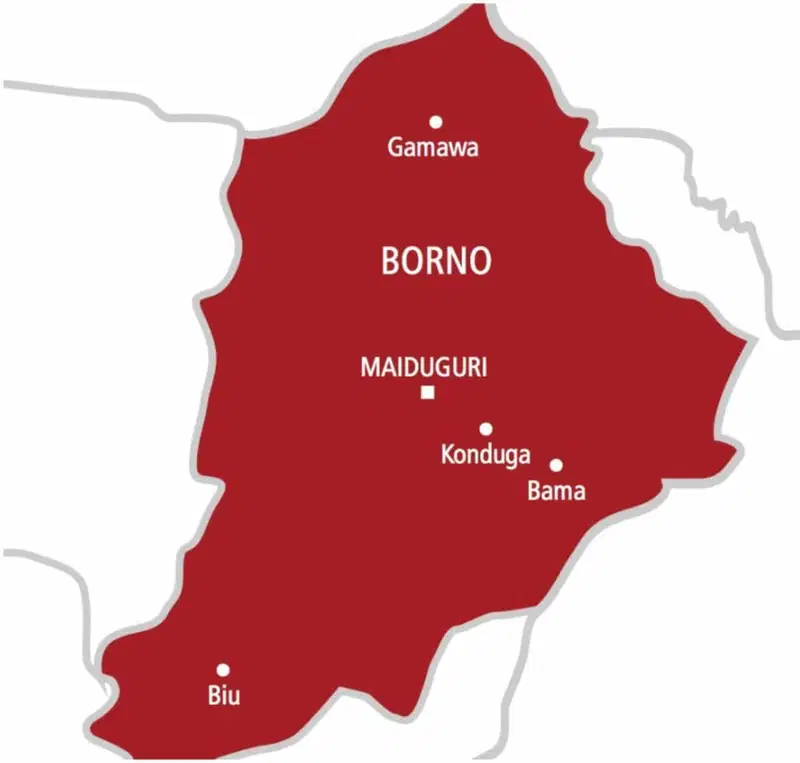
Troops foil terrorist attack on military base, rescue 21 female students in Borno
News15 hours ago
Troops foil terrorist attack on military base, rescue 21 female students in Borno
Sports8 hours ago
WAFCON 2026: Super Falcons begin title defence against debutants Malawi

News15 hours ago
I’ll serve only one term if elected President — Peter Obi
Sports15 hours ago
Infantino fires back at World Cup critics, says FIFA delivered ‘Only Joy and Happiness’
World News15 hours ago
Iran not in negotiations with US despite ceasefire, foreign ministry says
News15 hours ago
Hoodlums invade Osun PVC distribution centre, cart away voter cards
National News15 hours ago
FG approves 35% hazard allowance increase for NASU members in federal universities
News8 hours ago
Reps panel orders IGP to produce PFIPC DG within 48 Hours over probe
News8 hours ago
Wike promises completion of up to 10 major FCT Road projects before year-end
National News8 hours ago
Tinubu modernising Nigeria’s public broadcasting sector — Information Minister
-
 News15 hours ago
Troops foil terrorist attack on military base, rescue 21 female students in Borno
-
 Sports15 hours ago
Infantino fires back at World Cup critics, says FIFA delivered ‘Only Joy and Happiness’
-
 World News15 hours ago
Iran not in negotiations with US despite ceasefire, foreign ministry says
-
 Sports8 hours ago
WAFCON 2026: Super Falcons begin title defence against debutants Malawi
-
 News15 hours ago
I’ll serve only one term if elected President — Peter Obi
-
 News15 hours ago
Hoodlums invade Osun PVC distribution centre, cart away voter cards
-
 National News15 hours ago
FG approves 35% hazard allowance increase for NASU members in federal universities
-
 News8 hours ago
Reps panel orders IGP to produce PFIPC DG within 48 Hours over probe