
News
FG bans use of ‘Dr’ by honorary degree holders, approves $500m annual research fund


The Federal Government has banned recipients of honorary degrees from prefixing “Dr” to their names in official, academic, or professional settings, warning that violations will now be treated as academic fraud.
The directive was announced on Wednesday by the Minister of Education, Tunji Alausa, following approval by the Federal Executive Council (FEC) of two key memoranda he presented.
Briefing State House correspondents alongside the Minister of State for Education, Suwaiba Ahmad, Alausa said the policy introduces a uniform framework regulating the award and usage of honorary degrees across Nigerian universities.
He described the growing trend of honorary title abuse as a distortion of academic standards, often driven by political patronage and financial incentives.
“The recent trend we’ve seen with the award of honorary degrees has revealed a growing abuse and politicisation of this academic privilege,” he said.
Under the new policy, recipients must no longer prefix “Dr” to their names. Instead, they are required to use the full honorary designation after their names, clearly indicating its status as “Honoris Causa.”
“For instance, you can write Chief Louis Clark, D.Lit. (Honoris Causa) or Mrs Miriam Adamu, LL.D. Hons. This makes it clear the degree is honorary and not earned,” the minister explained.
He warned that misrepresenting honorary awards as earned academic qualifications would attract legal and reputational consequences.
The policy also limits honorary degrees to four categories: Doctor of Laws (LL.D.), Doctor of Letters (D.Lit.), Doctor of Science (D.Sc.), and Doctor of Humanities (D.Arts). Universities without active PhD programmes are now barred from conferring such awards.
According to Alausa, the move is aimed at curbing indiscriminate conferment by institutions lacking the academic capacity to justify such honours.
He added that all honorary degrees must explicitly carry the words “honorary” or “Honoris Causa” on certificates and in official references.
The National Universities Commission, in collaboration with the Federal Ministry of Education, will enforce compliance, monitor convocation ceremonies, and issue guidelines to vice-chancellors and governing councils.
The government will also publish an annual list of legitimate recipients and work with the media to discourage misuse of academic titles.
Alausa noted that earlier attempts to regulate the system, including the 2012 Keffi Declaration by the Association of Vice-Chancellors, failed due to lack of legal backing—an issue now addressed through FEC approval.
In a related development, the minister announced the establishment of the National Research and Innovation Development Fund, with an annual allocation of $500 million to support research and innovation in Nigeria.
He said the fund is designed to unlock the country’s underutilised potential in research and development, adding that past administrations had neglected the sector.
Alausa commended Bola Ahmed Tinubu for approving the initiative, describing it as a major step toward strengthening higher education and driving innovation-led growth in the country.




















Reps Pass Bill to Stop FCT Landlords from Demanding More Than One Year’s Rent Upfront

PSC Dismisses Three Senior Police Officers, Demotes 16 Others Over Misconduct

Kidnappers Release Man, Five Mourners Abducted While Taking Wife’s Corpse for Burial in Benue

Tinubu Seeks Senate Approval for Fresh $7.7bn External Loan

Tinubu Departs Saudi Arabia After Performing Umrah, Visits Inner Chambers of Kaaba

DSS counters Atiku, says two operatives hurt while protecting Sokoto ADC guber candidate; arrested, jailed man who threatened Obi

CRMI Bets ₦3m on Youth Innovation to Drive National Resilience

DSS has been gracious to Sowore, says Ughegbe

APC Declares Tijjani Yahaya Kaura Winner of Zamfara North Primary

Gwagwalada is Burning Up—And Unchecked Deforestation Made It Worse
Gwagwalada is Burning Up—And Unchecked Deforestation Made It Worse
CRMI Bets ₦3m on Youth Innovation to Drive National Resilience
APC Declares Tijjani Yahaya Kaura Winner of Zamfara North Primary
DSS has been gracious to Sowore, says Ughegbe
DSS counters Atiku, says two operatives hurt while protecting Sokoto ADC guber candidate; arrested, jailed man who threatened Obi
PSC Dismisses Three Senior Police Officers, Demotes 16 Others Over Misconduct
Tinubu Departs Saudi Arabia After Performing Umrah, Visits Inner Chambers of Kaaba
Tinubu Seeks Senate Approval for Fresh $7.7bn External Loan
Kidnappers Release Man, Five Mourners Abducted While Taking Wife’s Corpse for Burial in Benue
Reps Pass Bill to Stop FCT Landlords from Demanding More Than One Year’s Rent Upfront
-
 FCT News2 days ago
Gwagwalada is Burning Up—And Unchecked Deforestation Made It Worse
-
 News2 days ago
APC Declares Tijjani Yahaya Kaura Winner of Zamfara North Primary
-
 News16 hours ago
CRMI Bets ₦3m on Youth Innovation to Drive National Resilience
-
 News2 days ago
DSS has been gracious to Sowore, says Ughegbe
-
 News16 hours ago
DSS counters Atiku, says two operatives hurt while protecting Sokoto ADC guber candidate; arrested, jailed man who threatened Obi
-
 News8 hours ago
PSC Dismisses Three Senior Police Officers, Demotes 16 Others Over Misconduct
-
 News8 hours ago
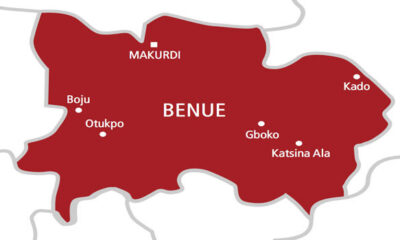
Kidnappers Release Man, Five Mourners Abducted While Taking Wife’s Corpse for Burial in Benue
-
 News8 hours ago
Reps Pass Bill to Stop FCT Landlords from Demanding More Than One Year’s Rent Upfront