News
Reclaiming The Noble Calling: Why Journalism Must Preserve Its Identity By Shu’aibu Usman Leman

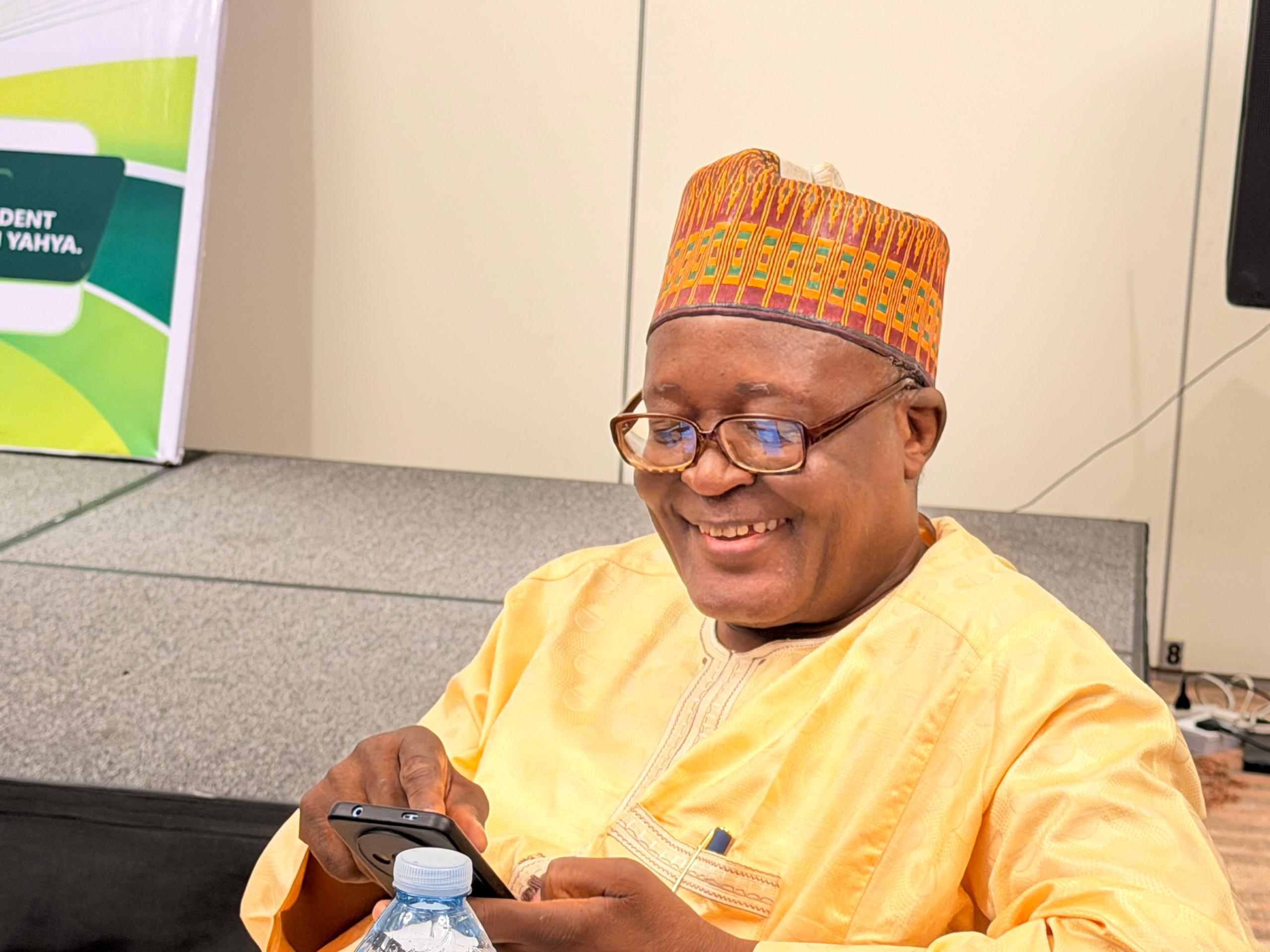
My veteran colleague and respected brother, Jonathan Ishaku, recently penned a deeply introspective essay titled “JOURNALISM VERSUS ACTIVISM: The Thin Line We Must Still Defend.”
Reading through his lucid recollection of our industry’s fiery struggles during the dark days of military rule, alongside his cogent analysis of our present dilemmas, I felt an overwhelming sense of professional duty to add my voice to this vital conversation. Jonathan has opened a door to a debate that the Nigerian media space urgently needs to hold. As someone who had the privilege of serving as the National Secretary of the Nigeria Union of Journalists for many years, I have lived, observed, and navigated the exact tension Jonathan so eloquently articulates: the precarious boundary where professional journalism ends and socio-political activism begins.
Jonathan rightly recalled his solitary, courageous stance against the decision of the Lagos Council of the NUJ to impose a blackout during the tumultuous June 12 struggle. His argument then—as it is now—remains compelling, why generously donate silence to a dictatorship that thrives on darkness? From the vantage point of union leadership, I know firsthand the immense pressure that press institutions face in moments of national crisis. When military boots were on the throat of Nigerian democracy, the NUJ was not merely a trade union; it became a vanguard of popular resistance. Our members were being jailed, newsrooms were being proscribed, and publishers were being forced into exile or subterranean existence. In that pressure cooker of history, the line between unionist resistance and political activism naturally blurred.
Indeed, Jonathan speaks from a place of profound personal sacrifice.
When he mentions losing his editorial seat back in Jos, many of us who walked those minefields remember the true cost. He was sacked by the military authorities from The Nigerian Standard in 1985, merely seven days to his wedding, purely on account of his uncompromising, critical journalism.
That is the crucible from which his perspective is forged and not from the comfort of armchair critique, but from the brutal reality of a life upended for simply telling the truth.
Yet, Jonathan’s historical critique demands our humility and reflection. When journalists voluntarily shut down their printing presses or turn off their transmitters in protest, who suffers? It is the public, deprived of accurate information.
It is history, robbed of its contemporary witness. It is truth, left at the mercy of state-sponsored propaganda. The primary weapon of the press against tyranny is not silence; it is the persistent, unyielding publication of verified facts. To report the truth amidst dictatorship is, in itself, the highest form of public service.
Of course, defending the integrity of the profession does not mean we must remain silent when the very survival of the practitioner is threatened. During my tenure as the National Secretary of the NUJ, we frequently had cause to mobilise members, organise protests, and even picket media houses.
However, there is a fundamental distinction to be drawn here. When we locked gates or picketed offices, we were not doing so to suppress information or protest government policies; we were fighting against the criminal withholding of journalists’ wages by exploitative managements.
A hungry, impoverished journalist, owed months of back pay, is dangerously susceptible to compromise and unable to hold power to account. Industrial action to secure workers’ economic rights is not political activism obstructing the public’s right to know—it is a vital defensive shield ensuring that the independent voice of the press is not starved into submission.
At a time when social media algorithms confuse emotional outrage with investigative reporting, and when hashtag activism often poses as news gathering, Jonathan’s distinction between the activist and the journalist must be etched on the wall of every newsroom in Nigeria.
The activist begins with a righteous conclusion and mobilises arguments, slogans, and public passion to achieve a specific outcome, whereas the journalist must begin with evidence, interrogate assumptions, verify facts, and allow the truth to emerge, regardless of whose narrative it disrupts. Both roles are indispensable to a healthy democracy.
Activism shakes the pillars of power, whilst journalism documents the structural integrity of those pillars so the public knows why they ought to fall.
However, journalism is not activism’s junior partner, nor is the press the public relations unit of civil society. When journalists abandon the rigour of verification, balance, and intellectual discipline to adopt the partisan rhetoric of activists—even in pursuit of a noble cause—they risk forfeiting their most valuable currency which is credibility.
Once a journalist becomes a full-time partisan in the court of public opinion, he may earn the applause of the choir, but he loses the authority to speak to the congregation.
There is, of course, a counter-argument that frequently rears its head in our contemporary security climate. In a country where innocent villagers are butchered by terrorists, where non-combatants are abducted, and where state failure leaves communities vulnerable, can a journalist remain strictly neutral? Here, I align completely with journalism, that it must never confuse professional balance with moral cowardice.
Objectivity does not demand that we give equal moral weight to the oppressor and the oppressed.
It does not require us to balance the voice of a terrorist with the tears of a grieving mother. When reporting on atrocities in the North-East, the Middle Belt, the North West or any corner of our nation, accuracy demands that we call evil by its name. To reduce human carnage to euphemisms like clashes or to rely habitually on vague phrases like unknown gunmen when facts suggest otherwise is not professional detachment—it is a betrayal of the craft.
Moral clarity requires us to stand on the side of humanity, truth, and justice. But we must do so using the rigorous tools of our trade, painstaking verification, contextual analysis, relentless investigation, and uncompromised accuracy.
The Nigerian press has paid a colossal price for the democracy we enjoy today. Journalists have suffered detention, torture, economic ruin, and death. Many of our colleagues who stood in the trenches against dictatorship never received national honours, commemorative banquets, or public accolades.
Yet, their legacy does not rest on government decorations or donor awards. Their legacy lives in the archives of our national memory—in the yellowed pages of newspapers and the recorded broadcasts that preserved the truth when powerful forces tried to erase it.
As we confront new challenges, from economic hardship and state overreach to misinformation and insecurity, the Nigerian media must defend its professional borders. We must remain compassionate to the suffering, unsparing of injustice, and fearless before power.
But above all, we must remain journalists.
Democracy may be ignited by the shouts of activists, but it is sustained by the quiet, disciplined, and enduring memory of the press. That is the thin line we have inherited, and that is the line we must, at all costs, continue to defend.
_Leman is a former National Secretary, Nigeria Union of Journalists (NUJ)_







NSITF now a digital, efficient, accountable institution – Faleye

Wike: Obi Supporters Won Rivers Only in Their Imagination

‘Who Is in Charge of Nigeria?’ — Atiku Questions Tinubu’s Extended Vacation

Tinubu Understands My Rainbow Coalition – Wike

Wike: I Will Never Support Uzodinma for Senate President in 2027

Tinubu Extends Working Vacation, Returns to Nigeria This Weekend

Shettima Arrives in New York to Lead Nigeria’s Delegation to 81st UNGA

Niger NSCDC Custody Deaths: Names of 37 Suspected Illegal Miners Released (Full List)

Civil Servants Demand N500,000 Minimum Salary, N500/Litre Petrol in Letter to Tinubu

Cole Palmer Withdraws from England Squad with Muscle Injury, Gibbs-White Set to Replace Him

US Refuses Visas for Members of Iranian President’s UNGA Delegation
Niger NSCDC Custody Deaths: Names of 37 Suspected Illegal Miners Released (Full List)
Wike: I Will Never Support Uzodinma for Senate President in 2027
Civil Servants Demand N500,000 Minimum Salary, N500/Litre Petrol in Letter to Tinubu

Tinubu mandates Shettima to lead high-level delegation to UNGA
Cole Palmer Withdraws from England Squad with Muscle Injury, Gibbs-White Set to Replace Him
Tinubu Extends Working Vacation, Returns to Nigeria This Weekend
Tinubu Understands My Rainbow Coalition – Wike
Shettima Arrives in New York to Lead Nigeria’s Delegation to 81st UNGA
‘Who Is in Charge of Nigeria?’ — Atiku Questions Tinubu’s Extended Vacation
-
 World News1 day ago
US Refuses Visas for Members of Iranian President’s UNGA Delegation
-
 News17 hours ago
Wike: I Will Never Support Uzodinma for Senate President in 2027
-
 News1 day ago
Niger NSCDC Custody Deaths: Names of 37 Suspected Illegal Miners Released (Full List)
-
 National News2 days ago
Tinubu mandates Shettima to lead high-level delegation to UNGA
-
 National News1 day ago
Civil Servants Demand N500,000 Minimum Salary, N500/Litre Petrol in Letter to Tinubu
-
 Sports1 day ago
Cole Palmer Withdraws from England Squad with Muscle Injury, Gibbs-White Set to Replace Him
-
 National News17 hours ago
Tinubu Extends Working Vacation, Returns to Nigeria This Weekend
-
 News17 hours ago
Tinubu Understands My Rainbow Coalition – Wike