
News
FG Alerts 24 States, FCT to Possible Flooding Between Sept 27 and Oct 10

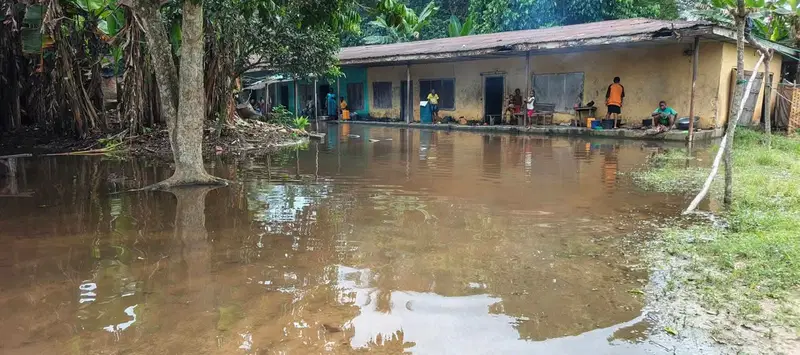
The Federal Government has alerted residents in 24 states and the Federal Capital Territory (FCT) to possible flooding between September 27 and October 10, 2026.
The warning followed forecasts of heavy rainfall, rising river levels, saturated soil and increased surface runoff during the period.
The advisory was contained in a flood prediction issued by the National Flood Early Warning Systems Centre, under the Erosion, Flood and Coastal Zone Management Department.
The advisory, signed by the department’s Director, Usman Abdullahi Bokani, classified communities across the affected areas into critical, high and moderate flood-risk categories.
States with communities listed under the critical-risk category include Benue, Kogi, Kwara, Niger, Adamawa, Bauchi, Taraba, Rivers, Edo, Delta, Cross River, Bayelsa, Akwa Ibom, Abia, Anambra, Ebonyi, Enugu, Imo, Ekiti, Lagos, Ogun, Ondo, Osun and Oyo.
The FCT, Nasarawa, Plateau, Bauchi, Taraba, Adamawa and Kebbi were among areas where communities were listed under the high-risk category.
The Centre said the forecast was based on elevated soil moisture, expected rainfall, rapid surface runoff, drainage surcharge and rising river levels, which could combine to trigger flooding.
Major urban centres covered by the warning include Makurdi, Lokoja, Minna, Port Harcourt, Benin City, Asaba, Calabar, Uyo, Aba, Onitsha, Enugu, Owerri, Ado-Ekiti, Lagos, Abeokuta, Akure, Osogbo and Ibadan.
In the FCT, Abuja Municipal, Asokoro, Bwari, Garki, Gwagwalada, Gwarinpa, Kubwa, Kuje, Kwali, Lugbe, Maitama, Nyanya and Wuse were among the locations listed as facing high flood risk.
The Centre said several riverine and coastal communities in Rivers, Delta, Bayelsa, Cross River and Akwa Ibom had been classified as critical-risk areas.
It urged residents in communities under the critical-risk category to maintain an immediate flood watch, identify evacuation routes and take steps to protect vulnerable persons and essential property.
Residents were also advised against settling, parking vehicles, trading or storing goods on floodplains, wetlands, riverbanks and low-lying drainage corridors.
The Centre directed State Controllers, State Emergency Management Agencies, local government environmental officers and community flood focal persons to intensify monitoring of rivers, streams, culverts, bridges, drains, estuaries, reservoirs and erosion-prone areas.
For communities under the high-risk category, it recommended intensified drainage clearance and monitoring of culverts and waterways.
It also urged residents and relevant authorities to promptly report heavy rainfall, ponding, dam releases and changes in river levels.
The Centre said communities on the moderate-risk watchlist should also remain vigilant, noting that prolonged or consecutive rainfall could rapidly increase local flood risk.
Residents were advised to comply with evacuation orders issued by competent authorities, keep children away from floodwater and avoid walking or driving through flowing water.
The Centre further advised residents to disconnect electricity where flooding was imminent and secure medicines, important documents, food and potable water.
It stressed that the forecast should be considered alongside real-time rainfall, drainage and river-level conditions, as well as official emergency directives.
The Centre added that observations and reports from state governments, relevant stakeholders and community focal persons would be used to update the flood-risk database.








Atiku Demands Account of ₦166.79tn Debt Before Fresh World Bank Loan

FG Alerts 24 States, FCT to Possible Flooding Between Sept 27 and Oct 10

Gunmen Kill Three Women, Injure One at Plateau Mining Site

Nigeria-Kenya Chamber Strengthens Trade Drive with NACCIMA Membership

Restoring Trust And Strengthening Intelligence: The Quiet Transformation Of Nigeria’s SSS Under Adeola Ajayi

Customs emerge champions of NUJ FCT football tournament

Tinubu to Nigerians: Give Us More Opportunity to Finish the Good Work

Lagos Police Begin Disciplinary Action Against Inspector Over Viral Video

Four Killed as Armed Men Attack Two Niger Communities

Rivers Assembly Issues Arrest Warrant for PAMO VC Over N29bn Funds
Gunmen Kill Three Women, Injure One at Plateau Mining Site
Atiku Demands Account of ₦166.79tn Debt Before Fresh World Bank Loan
Customs emerge champions of NUJ FCT football tournament
Restoring Trust And Strengthening Intelligence: The Quiet Transformation Of Nigeria’s SSS Under Adeola Ajayi
Nigeria-Kenya Chamber Strengthens Trade Drive with NACCIMA Membership
FG Alerts 24 States, FCT to Possible Flooding Between Sept 27 and Oct 10
-
 News35 minutes ago
Gunmen Kill Three Women, Injure One at Plateau Mining Site
-
 News2 minutes ago
Atiku Demands Account of ₦166.79tn Debt Before Fresh World Bank Loan
-
 NUJ FCT1 day ago
Customs emerge champions of NUJ FCT football tournament
-
 News1 day ago
Restoring Trust And Strengthening Intelligence: The Quiet Transformation Of Nigeria’s SSS Under Adeola Ajayi
-
 News1 day ago
Nigeria-Kenya Chamber Strengthens Trade Drive with NACCIMA Membership