
News
NLC-TUC Rift Deepens as Ajaero, Osifo Clash Over N70,000 Transport Allowance

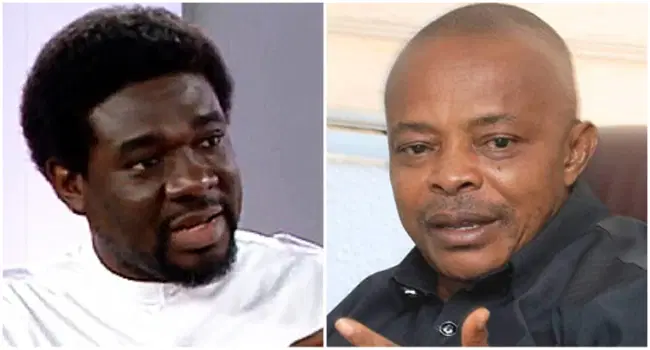
The rift between the Nigeria Labour Congress (NLC) and the Trade Union Congress of Nigeria (TUC) has widened, with the two labour leaders exchanging accusations over the N70,000 transport allowance negotiated with the Federal Government and the representation of workers’ interests.
NLC President, Joe Ajaero, on Monday defended his union’s role in securing the allowance, insisting that the agreement was reached through collective bargaining and not a unilateral arrangement.
Speaking on Channels Television’s The Morning Brief, Ajaero challenged allegations that he was not a team player and said the disagreement between the two labour centres should be assessed based on facts rather than personal sentiments.
He also questioned the commitment of TUC President, Festus Osifo, to workers’ interests, raising concerns over his alleged absence from Nigeria and the whereabouts of buses allocated to the TUC under the government’s compressed natural gas (CNG) transportation initiative.
Osifo, however, rejected Ajaero’s position, arguing that the NLC could not negotiate salaries and allowances on behalf of TUC-affiliated workers without the organisation’s participation.
N70,000 allowance dispute
Ajaero said the transport allowance was negotiated after organised labour issued an ultimatum to the Federal Government over the rising cost of living and threatened industrial action.
According to him, the government requested four days to meet with labour representatives at the Presidential Villa, where the agreement was reached.
“We issued an ultimatum to the government and were preparing to embark on industrial action. The government requested four days to meet with us at the Presidential Villa.
“Following that meeting, agreements were reached. Every collective bargaining process produces an agreement. In this instance, the N70,000 transport allowance was included in the agreement.
“I, therefore, do not understand the argument that the government simply gave us the money without any negotiation,” Ajaero said.
He said representatives of the Ministry of Labour, the National Salaries, Incomes and Wages Commission, the Budget Office, the Ministry of Finance and the Office of the Head of the Civil Service of the Federation attended the meeting.
Ajaero added that the Joint National Public Service Negotiating Council (JNPSNC) was also represented, with its secretary signing the agreement on behalf of the council.
He said the council’s trade union side comprised eight unions, seven affiliated with the NLC and one with the TUC, arguing that their participation validated the agreement.
Ajaero maintained that reports of rejection by some TUC-affiliated unions should be resolved internally within the affected organisations. He added that the agreement, its signatories and the organisations represented could be independently verified.
Osifo says NLC cannot negotiate for TUC
In his response on the same programme, Osifo described the agreement as an aberration, saying the TUC was not carried along in the negotiations.
He argued that the NLC could not negotiate on behalf of workers represented by the TUC, regardless of the number of affiliates each labour centre had.
Osifo said both organisations were required to participate in negotiations involving their members and challenged Ajaero to produce any International Labour Organisation (ILO) regulation that authorised one labour centre to negotiate for the other without consultation.
“We are not contesting the fact that NLC has more affiliates. But what we are saying is that you have about 60 affiliates while we have about 40. You cannot negotiate for a body that is represented, for a body that has a trade union,” Osifo said.
He also disputed Ajaero’s account of the role played by the JNPSNC, insisting that the meeting where the allowance was agreed was not a formal council meeting.
According to Osifo, the council had its own constitution and quorum requirements, and its members were not present at the meeting in question.
“The Minister is not a member of the Council. Ajaero is not a member of the Council. The Council even has a quorum and the number of persons that must be seated to form a quorum.
“But at the end of the day, that meeting was not a JNC meeting. The members of JNC were not there,” he said.
Osifo further accused Ajaero of misusing the council’s role by asking it to apply N40,000 across the board to workers’ salaries.
He said the difference between the previous N30,000 minimum wage and the new N70,000 minimum wage was applied as a uniform adjustment, which he argued had left federal workers with inadequate pay.
Osifo said he had previously confronted Ajaero over the matter, describing the use of the council in the process as “fundamentally wrong”.
Disagreement over minimum wage proposals
Ajaero also rejected claims that he had promised to submit the NLC’s minimum wage proposals to the TUC but failed to do so.
He said labour organisations were expected to submit their proposals directly to the appropriate minimum wage negotiating committee once it was established, rather than through the media.
“You cannot present an organisation’s position as a formal submission to a minimum wage committee that has not yet been established.
“It is when the committee resumes its work that each group will submit its proposal, supported by relevant justifications. You do not submit your proposal through the media,” he said.
The NLC president argued that workers should not be made to wait until the next minimum wage negotiations before receiving financial relief, given the effects of inflation and the rising cost of living.
He said salary adjustments must follow established collective bargaining procedures involving labour, employers and government, including the Nigeria Employers’ Consultative Association (NECA).
Ajaero described the disagreement between the two labour leaders as ideological, saying their approaches to workers’ struggles differed.
“There is a difference between his ideological orientation and mine. He comes from a capitalist perspective, while I come from the tradition of proletarian struggle and trade union leadership,” he said.
Ajaero questions TUC’s CNG buses
Ajaero also denied allegations that his involvement in the CNG transportation initiative was motivated by personal business interests.
He said discussions on the programme began during the previous NLC administration, when he served as deputy president, and that the union had advocated private-sector participation.
However, he criticised what he described as excessive government control of the initiative, arguing that it had hindered implementation.
Ajaero then questioned the whereabouts of buses allocated to the TUC under the government’s transportation intervention.
He said the NLC received 90 buses and funding to support their fuel requirements for approximately 30 months, adding that the vehicles had been commissioned across different geopolitical zones.
“Where are the 90 buses allocated to the TUC? Are they still operating, or have they developed wings?” he asked.
Ajaero said the buses were intended to ease transportation difficulties faced by workers and the general public, and challenged the TUC to account for its allocation.
Ajaero accuses Osifo of being an absentee leader
The NLC president also accused Osifo of being an absentee labour leader, alleging that he lived outside Nigeria and returned mainly to attend meetings before travelling abroad again.
Ajaero questioned Osifo’s participation in meetings connected with his responsibilities on the board of the National Pension Commission (PenCom).
He challenged the TUC president and the Nigerian Immigration Service to establish how much time Osifo had spent in Nigeria during the year.
“You cannot live abroad while holding a leadership position in a central labour organisation,” Ajaero said.
Ajaero also denied claims that he had failed to communicate with his TUC counterpart, saying he had sent messages around June or July to propose discussions on harmonising their positions on minimum wage negotiations.
He said Osifo had indicated that he was in transit and would return his call, but the discussion did not take place.
Ajaero dismissed suggestions that his leadership style was responsible for the strained relationship between the two organisations.
“We are not fighting. What I observed in his interview, however, was that the discussion appeared personal rather than issue-based,” he said.
The dispute has exposed continuing differences between the two major labour centres over representation, collective bargaining and the handling of government agreements affecting workers.



FG Unveils SPARK USSD Credit Service for Nigerians Without Smartphones

UK Retains 10-Year Settlement Wait for Most Migrants, Exempts Care Workers

CBN Appoints Eight Agents to Monitor Nigeria’s Crude Oil, Gas Exports

US to Exclude South Africa, Rwanda from AGOA Trade Deal

NLC-TUC Rift Deepens as Ajaero, Osifo Clash Over N70,000 Transport Allowance

Sokoto Government Seals ADC Office Over Ownership Dispute

Muslim-Muslim Ticket: Between Identity and Interest, A New Political Calculus for The Middle Belt and Northern Minorites Ahead of 2027

Army, DSS Arrest Suspected Kidnapper While Collecting Ransom In Nasarawa

NUJ calls for end to impunity for crimes against Journalists

Sowore, the Kidnap That Became an Attack, and the Burden of Credibility

NAWOJ FCT Congratulates RMRDC DG, Ike-Muonso, on WAITRO Board Election
Sowore, the Kidnap That Became an Attack, and the Burden of Credibility
NUJ calls for end to impunity for crimes against Journalists
Army, DSS Arrest Suspected Kidnapper While Collecting Ransom In Nasarawa
Muslim-Muslim Ticket: Between Identity and Interest, A New Political Calculus for The Middle Belt and Northern Minorites Ahead of 2027
Sokoto Government Seals ADC Office Over Ownership Dispute
US to Exclude South Africa, Rwanda from AGOA Trade Deal
FG Unveils SPARK USSD Credit Service for Nigerians Without Smartphones
NLC-TUC Rift Deepens as Ajaero, Osifo Clash Over N70,000 Transport Allowance
CBN Appoints Eight Agents to Monitor Nigeria’s Crude Oil, Gas Exports
-
 News1 day ago
NAWOJ FCT Congratulates RMRDC DG, Ike-Muonso, on WAITRO Board Election
-
 News15 hours ago
Sowore, the Kidnap That Became an Attack, and the Burden of Credibility
-
 NUJ FCT6 hours ago
NUJ calls for end to impunity for crimes against Journalists
-
 News6 hours ago
Army, DSS Arrest Suspected Kidnapper While Collecting Ransom In Nasarawa
-
 News2 hours ago
Muslim-Muslim Ticket: Between Identity and Interest, A New Political Calculus for The Middle Belt and Northern Minorites Ahead of 2027
-
 News13 minutes ago
Sokoto Government Seals ADC Office Over Ownership Dispute
-
 World News7 minutes ago
US to Exclude South Africa, Rwanda from AGOA Trade Deal
-
 National News1 minute ago
FG Unveils SPARK USSD Credit Service for Nigerians Without Smartphones