
News
NSITF, South Africa’s Rand mutual’s partnership will strengthen Africa’s social protection systems – Faleye

…As the Fund Reaffirms Commitment to Strengthening the ECS
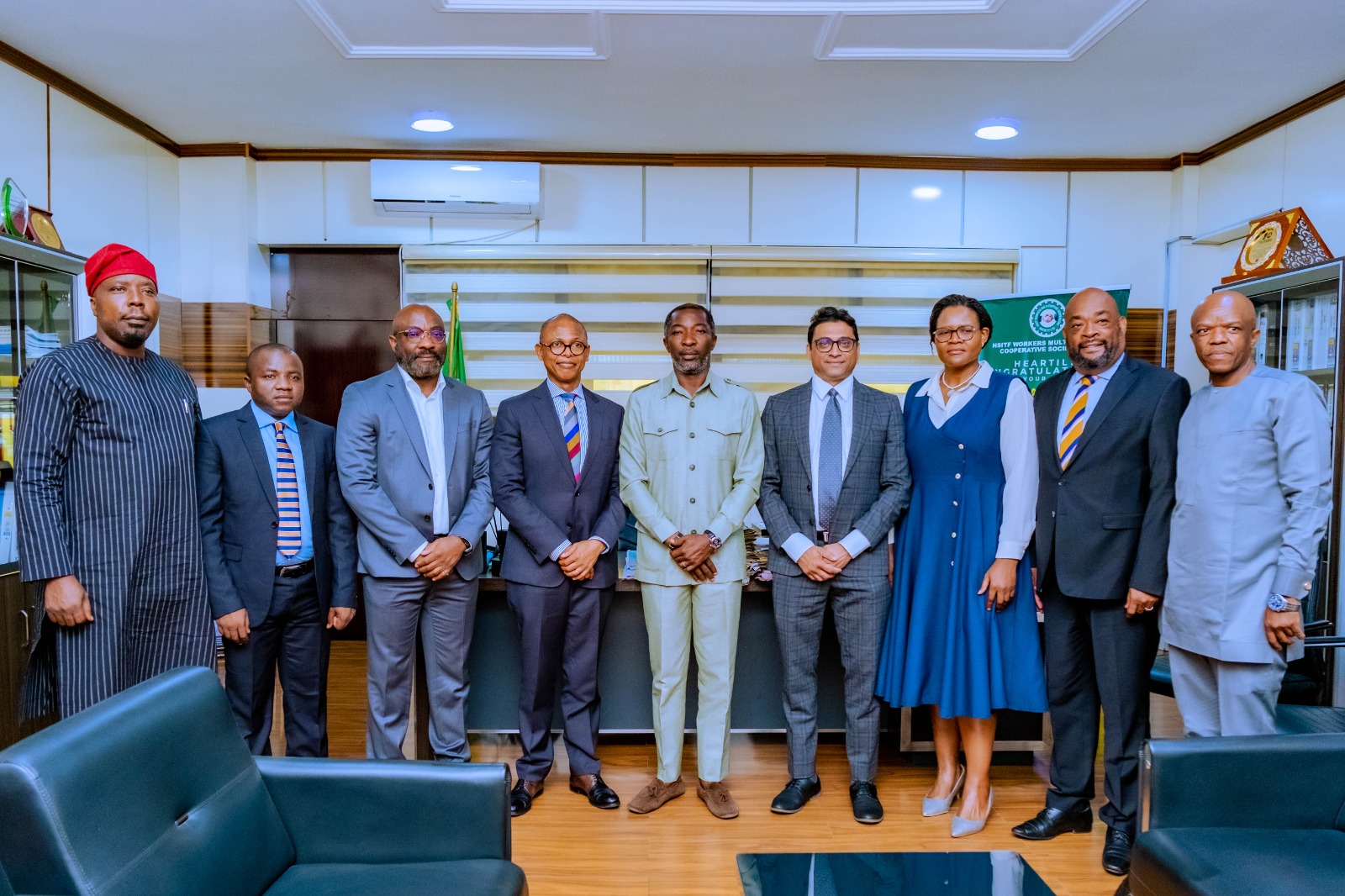
Managing Director/Chief Executive of the Nigeria Social Insurance Trust Fund (NSITF), Barr. Oluwaseun Faleye, has said collaboration between the Fund and Rand Mutual Assurance (RMA) of South Africa would strengthen Africa’s social protection system.
Faleye stated this on Tuesday when he hosted a high-level delegation from RMA South Africa led by the Group Chief Executive Officer, Bilal Adam, at the NSITF headquarters in Abuja.
He said the meeting marked the start of a strategic partnership between two of Africa’s leading social insurers.
“Your visit marks the beginning of what we hope will evolve into a mutually beneficial and enduring relationship between our two organizations, and highlights our shared commitment to advancing workers’ compensation, occupational safety and health, and social security administration on the African continent,’ the MD stated.
Speaking on RMA’s rich history, the NSITF boss said “We are particularly delighted to receive an institution of such remarkable pedigree. Established in 1894, Rand Mutual Assurance has built an enviable reputation over more than a century as one of Africa’s foremost workers’ compensation and social insurance institutions.
“Your evolution from a specialized compensation scheme for the mining industry into a modern, purpose-driven social insurer with a strong emphasis on prevention, rehabilitation, care and shared value creation is both admirable and inspiring,” he added.
He assured the visitors that “At NSITF, we recognize that the future of social protection lies in collaboration, innovation and the exchange of experiences. Consequently, we view this visit not merely as a courtesy engagement, but as the beginning of a strategic partnership capable of transforming workers’ compensation and occupational injury insurance administration across our respective jurisdictions.
“Nigeria and South Africa are two of Africa’s leading economies, and I believe that our institutions have a unique responsibility to provide thoughtful leadership and champion best practices that will strengthen social protection systems throughout the continent”, he stressed.
According to Faleye, “Today’s engagement provides us with a valuable opportunity to learn from one another, compare experiences, identify areas of mutual interest and explore innovative approaches to addressing the emerging challenges confronting the world of work.
“I am particularly encouraged by the prospect of collaboration in such areas as digital transformation, claims administration, occupational health and safety, rehabilitation and return-to-work programmes, capacity building, research and policy development.
“As institutions with a common purpose of protecting workers and supporting employers, we must continue to innovate and build resilient systems that place the dignity and wellbeing of workers at the centre of our operations.
“It is my expectation that the discussions over the next few days will culminate in practical outcomes and provide a framework for sustainable cooperation between our organizations,” he said. .
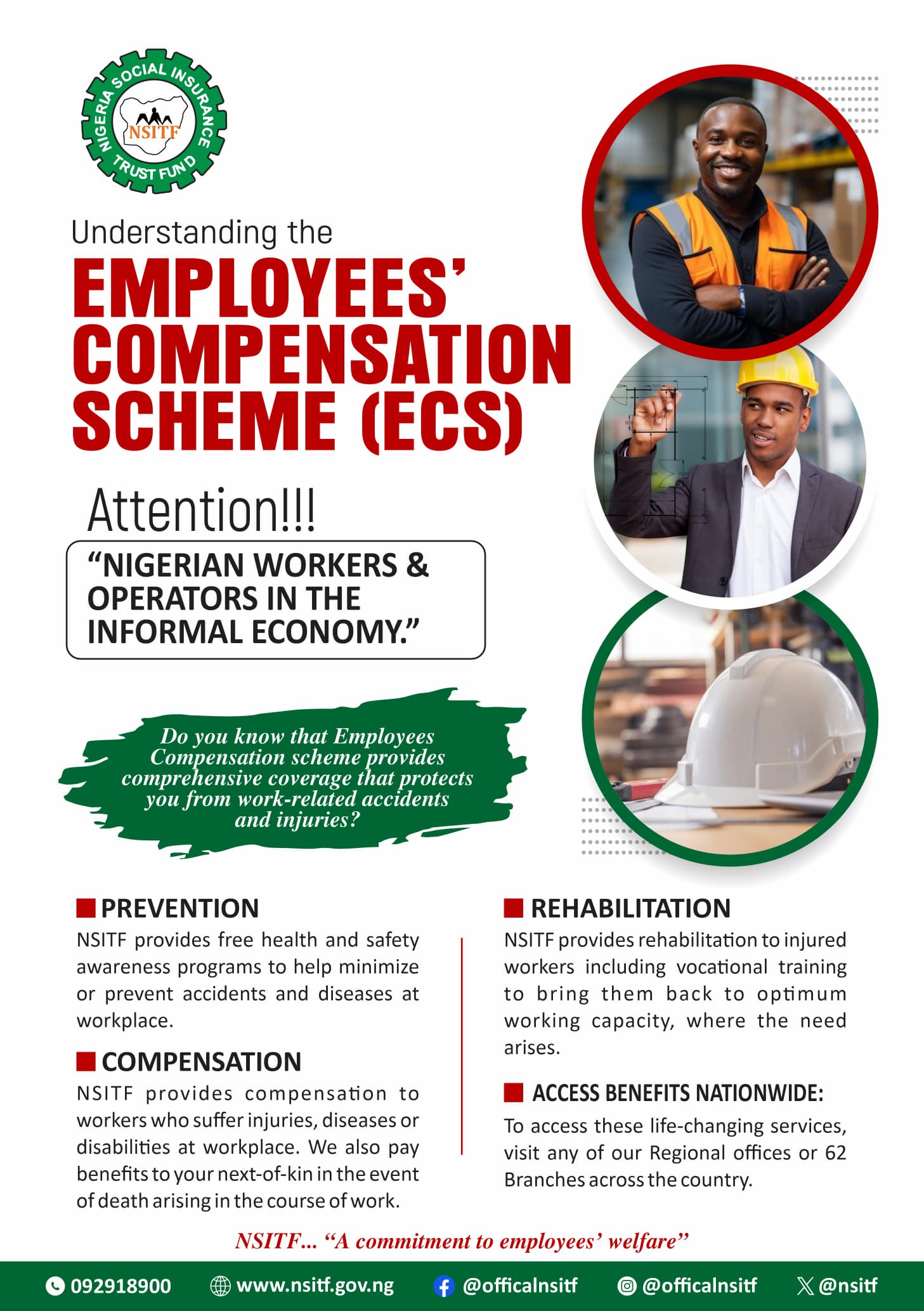
Reaffirming NSITF’s commitment to strengthening the Employees’ Compensation Scheme (ECS) as a critical social protection mechanism designed to guarantee compensation, rehabilitation and support for Nigerian workers who suffer workplace injuries, occupational diseases, disabilities or death arising from their employment, Faleye noted that the changing nature of work and emerging occupational risks require social insurance institutions to continuously improve their systems and adopt innovative approaches that place workers’ welfare at the centre of service delivery.
According to him, the ECS remains one of the most important social security interventions in Nigeria, providing medical care, rehabilitation services, compensation benefits and support to employees and their dependants in cases of work-related injury, disability or death.
He emphasized that collaboration, knowledge sharing and the exchange of professional experiences remain essential to strengthening social protection systems and ensuring that workers receive timely and adequate compensation.
The Managing Director stated that the Fund is particularly focused on advancing key areas that will further improve the implementation of the Scheme, including digital transformation, efficient claims administration, occupational safety and health, rehabilitation programmes, return-to-work initiatives, capacity development, research and policy enhancement.
“These areas are essential to building a modern and responsive compensation system that protects workers while supporting employers and contributing to national productivity,” he said, stressing that the NSITF is committed to building resilient systems that promote workplace safety, reduce occupational injuries and ensure that injured workers are rehabilitated and reintegrated into productive employment.
He noted that the Employees’ Compensation Scheme not only guarantees compensation for workers and their dependants but also provides employers with an organized and sustainable framework for managing workplace liabilities.
The Managing Director further stated that as the world of work continues to evolve, institutions responsible for social protection must continue to innovate and adopt best practices that improve service delivery and strengthen public confidence.
He expressed confidence that the Memorandum of Understanding (MOU) to be drafted for ratification and signing by the NSITF Management Board during this visit will open a new chapter of collaboration and strengthen the bonds of friendship between NSITF and Rand Mutual Assurance.
“Together, let us continue to build stronger institutions, safer workplaces and a more inclusive and resilient social protection system for the benefit of workers across Africa”, he appealed.
As part of the deliberation both organizations will have engagement sessions where they are expected to share experiences that would enhance their proposed collaboration.


You Won’t Return to Senate in 2027, Defends FCT Loans – Wike Tells Kingibe

Trump Rejects Global Supervision of AI, Calls It ‘Globalist Scheme’

UK Bars Nigerian, Ghanaian Teachers From QTS Application Route in England

CBN Resets Monetary Policy Rate to 23%

FG Inaugurates 10-Member Panel to Probe Deaths of 37 Suspected Illegal Miners in NSCDC Custody

NSITF now a digital, efficient, accountable institution – Faleye

Wike: Obi Supporters Won Rivers Only in Their Imagination

‘Who Is in Charge of Nigeria?’ — Atiku Questions Tinubu’s Extended Vacation

Tinubu Understands My Rainbow Coalition – Wike

Wike: I Will Never Support Uzodinma for Senate President in 2027

US Refuses Visas for Members of Iranian President’s UNGA Delegation

Cole Palmer Withdraws from England Squad with Muscle Injury, Gibbs-White Set to Replace Him

Niger NSCDC Custody Deaths: Names of 37 Suspected Illegal Miners Released (Full List)
Wike: I Will Never Support Uzodinma for Senate President in 2027

Civil Servants Demand N500,000 Minimum Salary, N500/Litre Petrol in Letter to Tinubu
UK Bars Nigerian, Ghanaian Teachers From QTS Application Route in England
CBN Resets Monetary Policy Rate to 23%

Tinubu Extends Working Vacation, Returns to Nigeria This Weekend
Tinubu Understands My Rainbow Coalition – Wike

Shettima Arrives in New York to Lead Nigeria’s Delegation to 81st UNGA
-
 World News2 days ago
US Refuses Visas for Members of Iranian President’s UNGA Delegation
-
 Sports2 days ago
Cole Palmer Withdraws from England Squad with Muscle Injury, Gibbs-White Set to Replace Him
-
 News2 days ago
Niger NSCDC Custody Deaths: Names of 37 Suspected Illegal Miners Released (Full List)
-
 News1 day ago
Wike: I Will Never Support Uzodinma for Senate President in 2027
-
 National News2 days ago
Civil Servants Demand N500,000 Minimum Salary, N500/Litre Petrol in Letter to Tinubu
-
 News13 hours ago
UK Bars Nigerian, Ghanaian Teachers From QTS Application Route in England
-
 National News13 hours ago
CBN Resets Monetary Policy Rate to 23%
-
 National News1 day ago
Tinubu Extends Working Vacation, Returns to Nigeria This Weekend