
World News
Over 800 dead as powerful earthquake devastates Eastern Afghanistan

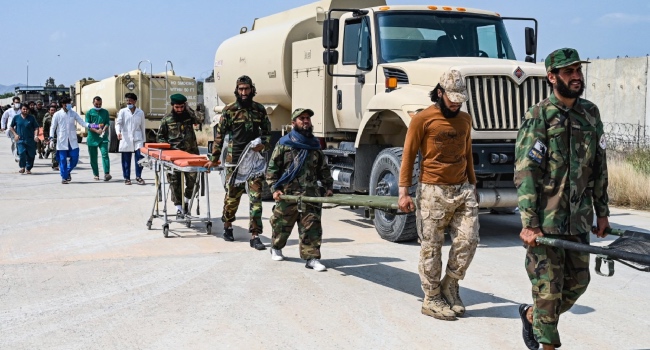
A large-scale rescue operation is underway in Afghanistan after a powerful 6.0-magnitude earthquake struck late Sunday night, killing more than 800 people and injuring thousands, Taliban authorities confirmed.
The quake, which hit just before midnight, was felt across Kabul and neighboring Islamabad in Pakistan, collapsing homes and trapping families in remote, mountainous regions.
Officials said casualties were reported in at least five provinces, with Kunar province near the epicenter suffering the heaviest toll of around 800 deaths and 2,500 injuries. In Nangarhar province, 12 people were confirmed dead and 255 injured, while Laghman province recorded 58 injuries. Taliban government spokesman Zabihullah Mujahid warned that the death toll could rise as rescue efforts continued.
Rescue workers, residents, and Taliban security forces were seen digging through rubble, sometimes with bare hands, to recover victims. Helicopters were deployed to evacuate the injured, with many taken to hospitals in Jalalabad city. Survivors described scenes of chaos, collapsed homes, and cries for help, as roads remained blocked nearly a day after the disaster, making some areas inaccessible.
“There is a lot of fear and tension… Children and women were screaming. We had never experienced anything like this in our lives,” said Ijaz Ulhaq Yaad, a local agricultural official from Nurgal district.
The United Nations Migration Agency confirmed that some severely affected areas remain cut off. The majority of homes in Afghanistan are low-rise, mud-brick structures, making them highly vulnerable to collapse during shallow earthquakes like this one.
International figures, including UN Secretary-General Antonio Guterres and Pope Leo XIV, expressed deep condolences. Guterres said he stood in “full solidarity” with the Afghan people, while Pope Leo XIV shared his sorrow over the “significant loss of life.”
Afghanistan frequently experiences seismic activity due to its location near the junction of the Eurasian and Indian tectonic plates. Recent years have seen devastating quakes, including a 6.3-magnitude earthquake in Herat province in 2023 that killed over 1,500 people, and a 2022 quake in Paktika province that claimed more than 1,000 lives.
Already suffering from decades of conflict, poverty, and reduced foreign aid following the Taliban’s return to power in 2021, Afghanistan’s disaster response capacity remains severely limited. The UN Development Programme reports that 85 percent of Afghans live on less than one dollar per day, further compounding the country’s humanitarian challenges.
Source: AFP





FCT youth leaders congratulate new leadership team

Free Internet for Learning: NCC launches zero-rated educational data initiative

CBN Africa trains over 30 Journalists in TV Production, AI Skills

Katsina Vaccinates 150,346 People in Five Days as Diphtheria Outbreak Response Intensifies

53-Year-Old Woman Jailed One Month for Dumping Refuse in Lagos Drain

Former SSS DG, Pioneer NIA DG Albert Horsfall Dies

2027: Obi Supporters to Track Election Results From Polling Units to Abuja — Yesufu

Two FUTO Female Students Abducted in Owerri Regain Freedom

National Assembly Suspends Official Visits to South Africa Over Xenophobic Attacks

Julius Berger, Lagos State outline path to $1 Trillion economy through long-term value creation
Two FUTO Female Students Abducted in Owerri Regain Freedom

Bago Approves Two Tranches of Funds for Ward Development Projects Across 274 Wards
Julius Berger, Lagos State outline path to $1 Trillion economy through long-term value creation
National Assembly Suspends Official Visits to South Africa Over Xenophobic Attacks
2027: Obi Supporters to Track Election Results From Polling Units to Abuja — Yesufu
Former SSS DG, Pioneer NIA DG Albert Horsfall Dies
53-Year-Old Woman Jailed One Month for Dumping Refuse in Lagos Drain
Katsina Vaccinates 150,346 People in Five Days as Diphtheria Outbreak Response Intensifies
CBN Africa trains over 30 Journalists in TV Production, AI Skills
Free Internet for Learning: NCC launches zero-rated educational data initiative
-
 News2 days ago
Two FUTO Female Students Abducted in Owerri Regain Freedom
-
 News2 days ago
Bago Approves Two Tranches of Funds for Ward Development Projects Across 274 Wards
-
 News2 days ago
Julius Berger, Lagos State outline path to $1 Trillion economy through long-term value creation
-
 News2 days ago
National Assembly Suspends Official Visits to South Africa Over Xenophobic Attacks
-
 News2 days ago
2027: Obi Supporters to Track Election Results From Polling Units to Abuja — Yesufu
-
 News2 days ago
Former SSS DG, Pioneer NIA DG Albert Horsfall Dies
-
 News2 days ago
53-Year-Old Woman Jailed One Month for Dumping Refuse in Lagos Drain
-
 News2 days ago
Katsina Vaccinates 150,346 People in Five Days as Diphtheria Outbreak Response Intensifies