
World News
Trump says oil tankers resuming movement through Strait of Hormuz amid uncertainty over Iran deal

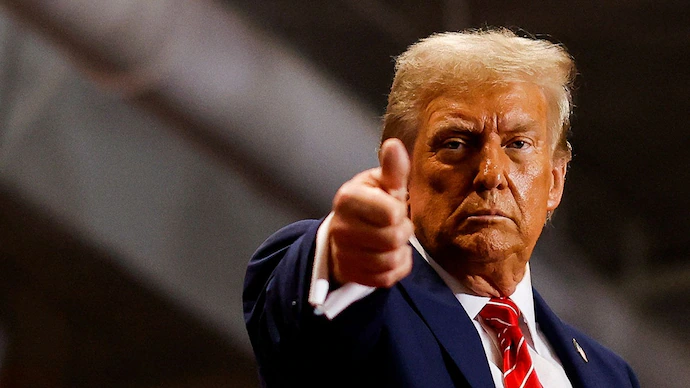
United States President Donald Trump has said oil tankers are once again moving through the Strait of Hormuz following a reported peace agreement between the United States and Iran, although uncertainty remains over the full implementation of the deal and maritime charges in the strategic waterway.
Mediator Pakistan had announced on Sunday that both countries reached an agreement on an “immediate and permanent termination” of military operations. However, the full text of the agreement has not yet been made public.
According to reports, the peace deal is expected to be formally signed on Friday in Switzerland, after which additional technical negotiations are expected to define long-term terms.
Speaking on Monday en route to a G7 summit in France, Trump said shipping activity had resumed in the Strait of Hormuz, describing the vessels as “loaded up with oil” and moving along what he called a “southern highway” route through the waterway.
“They are going along the Southern ‘Highway,’ which is totally safe, secure, and pristine,” he posted on his Truth Social platform.
Trump also claimed that the US military had earlier facilitated the safe passage of more than 200 commercial vessels carrying over 100 million barrels of oil through the strait since May, without providing operational details.
The Strait of Hormuz, a critical global energy corridor, had reportedly been disrupted earlier after Iran restricted maritime movement in response to US-Israeli military strikes that began in late February. The disruption contributed to a spike in global energy prices.
However, questions remain over the status of maritime operations under the new arrangement.
US Vice President JD Vance said the expectation in Washington is that the strait would be reopened for long-term, toll-free navigation, subject to ongoing technical negotiations with Tehran.
Iranian officials, meanwhile, have indicated that while transit may resume, maritime service charges could still apply, rejecting the characterization of “tolls” as previously described by US officials.
Vance also noted that any sanctions relief for Iran would depend on strict verification mechanisms, particularly concerning Tehran’s nuclear programme.
Uncertainty persists over key components of the agreement, including access to frozen Iranian assets and the scope of international sanctions relief.














NUJ demands independent probe into deaths of 37 miners in NSCDC custody

Tunji-Ojo leads FG delegation to Niger over deaths of miners in NSCDC custody

IGP Disu visits Niger, vows thorough probe into deaths of 37 miners in NSCDC custody

INEC opens recruitment portal for 1.4 Million Ad Hoc Staff for 2027 elections

Police rescue eight kidnap victims in Benue forest, one dies from injuries

Soludo grants pardon to native doctor Akwa Okuko, gives him new role in Anambra

Appeal Court upholds NDC registration, says Lokoja Court abused judicial power

APC Campaign Council accuses Atiku of compromising Nigeria’s interests over Mambilla dispute

Tinubu orders full investigation into deaths of 37 miners in NSCDC custody

Gov Bago orders immediate curfew in Minna as tension mounts over miners’ deaths
Tinubu orders full investigation into deaths of 37 miners in NSCDC custody
APC Campaign Council accuses Atiku of compromising Nigeria’s interests over Mambilla dispute
Appeal Court upholds NDC registration, says Lokoja Court abused judicial power
IGP Disu visits Niger, vows thorough probe into deaths of 37 miners in NSCDC custody

Macron hosts Tinubu to private dinner in Paris (Photos)
Gov Bago orders immediate curfew in Minna as tension mounts over miners’ deaths
Soludo grants pardon to native doctor Akwa Okuko, gives him new role in Anambra
NUJ demands independent probe into deaths of 37 miners in NSCDC custody
Police rescue eight kidnap victims in Benue forest, one dies from injuries
INEC opens recruitment portal for 1.4 Million Ad Hoc Staff for 2027 elections
-
 National News1 day ago
Tinubu orders full investigation into deaths of 37 miners in NSCDC custody
-
 News1 day ago
APC Campaign Council accuses Atiku of compromising Nigeria’s interests over Mambilla dispute
-
 News1 day ago
Appeal Court upholds NDC registration, says Lokoja Court abused judicial power
-
 News15 hours ago
IGP Disu visits Niger, vows thorough probe into deaths of 37 miners in NSCDC custody
-
 National News1 day ago
Macron hosts Tinubu to private dinner in Paris (Photos)
-
 News1 day ago
Gov Bago orders immediate curfew in Minna as tension mounts over miners’ deaths
-
 News1 day ago
Soludo grants pardon to native doctor Akwa Okuko, gives him new role in Anambra
-
 News1 day ago
Police rescue eight kidnap victims in Benue forest, one dies from injuries