
National News
30-Day Petrol Discount Is Not Subsidy, Funded by NNPC Retail’s Profit Margin — Oyedele


The Minister of Finance and Coordinating Minister of the Economy, Taiwo Oyedele, has said the 30-day petrol discount introduced by Nigerian National Petroleum Company Limited (NNPC) Retail is not a return to fuel subsidy, insisting that the cost is being borne by the company’s profit margin rather than public funds.
Oyedele disclosed this in a statement shared on his X platform on Friday, explaining that the initiative was a commercial decision by NNPC Retail to temporarily reduce its margin and provide relief to consumers.
Motorists have been paying lower prices for petrol at NNPC Retail filling stations since October 1, 2026, following the company’s decision to reduce its retail margin.
The minister welcomed the relief for households, commuters and transport operators but cautioned against describing the initiative as a revival of the fuel subsidy regime abolished by the Federal Government in 2023.
He explained that a margin discount occurs when a retailer reduces or temporarily forgoes part or all of its profit margin to lower the price paid by customers. A subsidy, by contrast, involves the government using public revenue to cover part of the cost of a product.
According to Oyedele, NNPC Retail purchases petrol from the Dangote Refinery and other suppliers at prevailing market prices before adding its retail margin to determine the pump price.
“The cost of the discount is borne by the retailer alone,” he said, maintaining that the discounted price remained reflective of market conditions.
The minister distinguished the arrangement from the sale of crude oil belonging to the Federation below market prices, which he said would amount to a subsidy because the resulting shortfall would be borne by public revenue.
Oyedele Defends NNPC Retail’s Decision
Oyedele described the reduction in NNPC Retail’s margin as consistent with the company’s mandate to promote the availability, distribution and affordability of refined petroleum products across the country.
He said NNPC Retail, a wholly owned subsidiary of NNPC Limited, was established more than 20 years ago as a petroleum marketing and retail business and had historically sold petrol at prices below those of some other marketers.
According to the minister, the current discount is a commercial option available to retailers and is intended to offer consumers temporary relief while supporting the company’s business objectives.
Addressing concerns that the reduced margin could affect NNPC Limited’s profits and the dividends paid to the Federation, Oyedele argued that higher sales volumes and stronger customer loyalty could compensate for lower earnings per litre.
He said the strategy could ultimately increase NNPC Retail’s overall profits and the dividends remitted to the Federation, potentially benefiting both consumers and government.
The minister also dismissed concerns that the discount could distort the domestic fuel market or encourage petrol smuggling into neighbouring countries.
He said the retail margin accounted for less than five per cent of the pump price, arguing that a discount within that margin was unlikely to significantly widen the price gap between Nigeria and neighbouring countries.
Oyedele put petrol prices in neighbouring countries at between 20 and 40 per cent above Nigerian prices, saying the difference made it unlikely that the temporary discount would create the kind of market distortions associated with previous subsidy arrangements.
FG Lists Other Measures to Ease Fuel Costs
The minister acknowledged that high petrol prices continued to place pressure on households and businesses, adding that the discount was one of several measures being pursued to reduce the burden.
Other measures, according to him, include expanding compressed natural gas-powered transportation, waiving taxes and duties on petrol, and removing illegal levies that contribute to higher transportation costs.
He said the measures were intended to provide relief to consumers without returning Nigeria to a fuel subsidy regime that the government considers financially unsustainable.
Oyedele maintained that the distinction between a retailer reducing its profit margin and the government using public funds to subsidise petrol was central to understanding the initiative.
He said NNPC Retail’s decision should therefore be viewed as a temporary commercial intervention rather than a reversal of the Federal Government’s 2023 subsidy-removal policy.


Triple Crown for Julius Berger at Eurocham Nigeria Awards 2026

‘Nigerians Deserve Affordable Petrol’ — Obidient Movement Faults FG’s 30-Day Discount

30-Day Petrol Discount Is Not Subsidy, Funded by NNPC Retail’s Profit Margin — Oyedele

NLC Issues Two-Week Ultimatum to FG Over Petrol Price, Minimum Wage

Federal High Court Dismisses El’Rufai’s Fundamental Rights Suit Against ICPC, DSS, Others For Lacking In Merit

Renowned Communication Scholar, Prof Idowu Sobowale, Dies at 85

NYSC Kidnap: Mother Reveals How She Paid N6m to Secure Son’s Release

NAF Helicopter Makes Precautionary Landing in Makurdi, Returns Safely to Base

Aiyedatiwa Orders Search to Continue Until NAF Aircraft, Victims Are Recovered

BREAKING: Security Forces Rescue 20 Prospective NYSC Members, Civilian Abducted in Imo
BREAKING: NLC declares indefinite strike in FCT

State Police Must Protect Nigerians, Not Intimidate Them — Comrade Grace Ike
NLC Issues Two-Week Ultimatum to FG Over Petrol Price, Minimum Wage
‘Nigerians Deserve Affordable Petrol’ — Obidient Movement Faults FG’s 30-Day Discount
Aiyedatiwa Orders Search to Continue Until NAF Aircraft, Victims Are Recovered
30-Day Petrol Discount Is Not Subsidy, Funded by NNPC Retail’s Profit Margin — Oyedele
NAF Helicopter Makes Precautionary Landing in Makurdi, Returns Safely to Base
BREAKING: Security Forces Rescue 20 Prospective NYSC Members, Civilian Abducted in Imo
NYSC Kidnap: Mother Reveals How She Paid N6m to Secure Son’s Release
Federal High Court Dismisses El’Rufai’s Fundamental Rights Suit Against ICPC, DSS, Others For Lacking In Merit
-
 News2 days ago
BREAKING: NLC declares indefinite strike in FCT
-
 NUJ FCT2 days ago
State Police Must Protect Nigerians, Not Intimidate Them — Comrade Grace Ike
-
National News59 minutes ago
NLC Issues Two-Week Ultimatum to FG Over Petrol Price, Minimum Wage
-
 News46 minutes ago
‘Nigerians Deserve Affordable Petrol’ — Obidient Movement Faults FG’s 30-Day Discount
-
 News23 hours ago
Aiyedatiwa Orders Search to Continue Until NAF Aircraft, Victims Are Recovered
-
 News21 hours ago
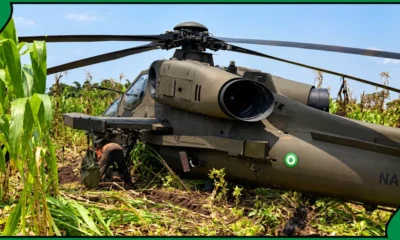
NAF Helicopter Makes Precautionary Landing in Makurdi, Returns Safely to Base
-
 News2 days ago
BREAKING: Security Forces Rescue 20 Prospective NYSC Members, Civilian Abducted in Imo
-
 News21 hours ago
NYSC Kidnap: Mother Reveals How She Paid N6m to Secure Son’s Release