
News
Soyinka slams heavy security escort for Seyi Tinubu

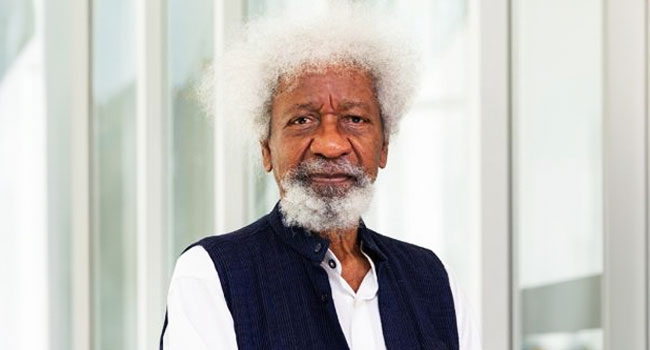
Nobel Laureate, Prof. Wole Soyinka, on Tuesday raised serious concerns over what he described as an alarming and unnecessary display of armed security personnel attached to Seyi Tinubu, son of President Bola Ahmed Tinubu.
Speaking at the 20th Wole Soyinka Centre for Investigative Journalism (WSCIJ) Awards in Lagos, the globally acclaimed playwright said the sheer number of heavily armed operatives accompanying the president’s son sends the wrong message about Nigeria’s priorities, especially at a time when insecurity continues to weigh heavily on citizens across the country.
Soyinka, who narrated his encounter at an Ikoyi hotel, said he initially mistook the scene for a movie production because of the massive tactical presence on the premises.
According to him, he saw “nearly a battalion”—about 15 heavily armed officers—spread across the grounds, prompting him to inquire who was being protected with such intensity. It was only after a polite exchange with a young man he met—who turned out to be Seyi Tinubu—that he realised the elaborate display was not a film set but a security escort.
The Nobel Laureate expressed deep worry over what he described as the misuse of state power and resources, stressing that while it is normal for presidents globally to have families, such privileges must not be abused or turned into extravagant security parades.
He stated that the spectacle he witnessed was enough “to take over a small neighbouring country,” questioning why such an overwhelming force would be deployed around the president’s son.
Soyinka disclosed that the incident shocked him to the point that he immediately placed a call to the National Security Adviser, Mallam Nuhu Ribadu, seeking clarification on whether the deployment was official or justifiable.
Although Ribadu was reportedly in a meeting with the president at the time, Soyinka insisted on delivering his concerns, saying the experience left him deeply unsettled about Nigeria’s security architecture and governance culture.
His remarks have renewed public conversations about elitism, state resources, and the widening gap between government officials and ordinary Nigerians who continue to contend with banditry, kidnapping, and general insecurity without adequate protection.








Tunji-Ojo leads FG delegation to Niger over deaths of miners in NSCDC custody

IGP Disu visits Niger, vows thorough probe into deaths of 37 miners in NSCDC custody

INEC opens recruitment portal for 1.4 Million Ad Hoc Staff for 2027 elections

Police rescue eight kidnap victims in Benue forest, one dies from injuries

Soludo grants pardon to native doctor Akwa Okuko, gives him new role in Anambra

Appeal Court upholds NDC registration, says Lokoja Court abused judicial power

APC Campaign Council accuses Atiku of compromising Nigeria’s interests over Mambilla dispute

Tinubu orders full investigation into deaths of 37 miners in NSCDC custody

Gov Bago orders immediate curfew in Minna as tension mounts over miners’ deaths

Macron hosts Tinubu to private dinner in Paris (Photos)

Court Jails South African Woman 25 Years for Importing 5.75kg Heroin

Oyedele Begins Work on 2027 Finance Bill, Inaugurates Fiscal Policy Subcommittee

DSS Re-Arraigns Five Alleged Ansaru Leaders Over Oyo School Kidnap, Two Deaths

Lagos APC Unveils 2027 Campaign Council, Names Sanwo-Olu, Fashola, Ambode Leaders

FAAC Disburses N2.338tn August Revenue, FG Gets N804.9bn

‘He Got Away With It in 2023’ — Keyamo Says Nigerians Will Scrutinise Obi’s Claims This Time

33 Suspected illegal miners die in NSCDC custody in Niger, Police launch probe

Obi-Kwankwaso Movement names 59-Member Campaign Council ahead of 2027 election (Full List)
APC Campaign Council accuses Atiku of compromising Nigeria’s interests over Mambilla dispute
IGP Disu visits Niger, vows thorough probe into deaths of 37 miners in NSCDC custody
-
 News2 days ago
Court Jails South African Woman 25 Years for Importing 5.75kg Heroin
-
 National News2 days ago
Oyedele Begins Work on 2027 Finance Bill, Inaugurates Fiscal Policy Subcommittee
-
 News2 days ago
DSS Re-Arraigns Five Alleged Ansaru Leaders Over Oyo School Kidnap, Two Deaths
-
 News2 days ago
Lagos APC Unveils 2027 Campaign Council, Names Sanwo-Olu, Fashola, Ambode Leaders
-
 National News2 days ago
FAAC Disburses N2.338tn August Revenue, FG Gets N804.9bn
-
 News2 days ago
‘He Got Away With It in 2023’ — Keyamo Says Nigerians Will Scrutinise Obi’s Claims This Time
-
 News2 days ago
33 Suspected illegal miners die in NSCDC custody in Niger, Police launch probe
-
 News2 days ago
Obi-Kwankwaso Movement names 59-Member Campaign Council ahead of 2027 election (Full List)