









National News
FG strengthens fight against antimicrobial resistance

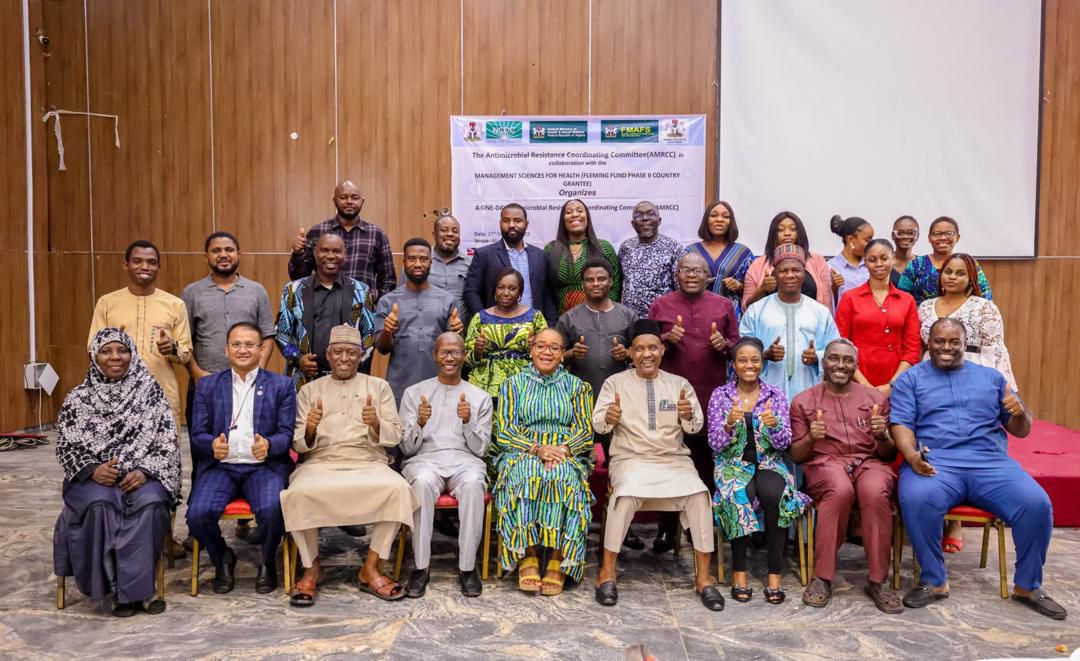
The fight against antimicrobial resistance (AMR) gained fresh momentum as key stakeholders convened in Abuja for the first-quarter meeting of the AMR Technical Working Group (TWG) and the AMR Coordinating Committee.
The meeting brought together stakeholders from human health, animal health, agriculture, and the environment to assess progress, tackle challenges, and reinforce the nation’s response to AMR, which is a growing public health threat that weakens essential medicines and increases the burden of infectious diseases.
The Director-General of the Nigeria Centre for Disease Control and Prevention (NCDC), Dr. Jide Idris, who was represented by the Chairman of the AMR Coordinating Committee, Dr. Tochi Okwor, lauded the technical working group for advancing the AMR agenda and delivering the first National Action Plan (NAP 1.0).
Dr. Okwor also praised their efforts in securing political and technical support for the second National Action Plan (NAP 2.0), which will guide AMR response from 2024 to 2028.
Prof. Kabir Junaid, the co-chairman of the Technical Working Group (TWG), emphasized the need for collaboration among all AMR pillars to strategize and clarify the expectations for each pillar, as well as gather feedback on their previous activities.
“The National Action Plan (NAP) 2.0 demonstrated the Nigerian government’s commitment to combating AMR over the next five years, from 2024 to 2028. It aims to build upon and sustain the achievements of the first AMR NAP (NAP 1.0), which was implemented from 2017 to 2023.”
Head Corporate Communications, Sani Datti, in a statement, said the meeting with stakeholders reviewed progress in AMR surveillance, antimicrobial stewardship, infection prevention and control (IPC), and awareness campaigns.
According to the statement, it also focused on strengthening the implementation of National Action Plan 2.0, improving coordination across the human, animal, and environmental health sectors to foster a One Health approach to AMR mitigation, and exploring opportunities for increased funding.
Antimicrobial resistance (AMR) occurs when germs such as bacteria, viruses, or fungi that cause infections resist the effects of the medicines used to treat them. These resistant bacteria can spread and may infect people or animals.
Ifeoma Nwovu





News1 hour ago
NAF reinforces airpower support for operation HADIN KAI in Northeast

News5 hours ago
IGP urges court to dismiss El-Rufai’s ₦1bn rights suit

Sports5 hours ago
Anthony Joshua relocates to Dubai, family confirms

National News5 hours ago
NiMet issues Meningitis alert across Northern Nigeria

National News5 hours ago
UK tightens security as Tinubu begins state visit to Windsor

News5 hours ago
PDP, Labour Party lose 11 Lawmakers to APC, ADC in fresh defections

Business5 hours ago
30 Nigerian Banks meet CBN recapitalisation rarget ahead of deadline

National News6 hours ago
FCCPC probes airlines over Christmas fare hike, sanctions loom

News6 hours ago
PSC promotes 13 commissioners of Police to AIG rank

News14 hours ago
South African Army chief visits Nigerian military institutions to strengthen cooperation

Uncategorized15 hours ago
Empowering Women: Economic, social necessity –Faleye

Sports2 days ago
Kano Governor sacks Head of Service Abdullahi Musa

News2 days ago
Iran warns protesters supporting foreign enemies will be treated as ‘enemies’

News15 hours ago
Celebrating Funke Ishola: A Trailblazer and pillar of empowerment

News1 day ago
Traders shut down Lagos International Trade Fair Complex over takeover concerns

Sports2 days ago
Flying Eagles midfielder Daniel Daga sentenced to six months in Norway

World News1 day ago
Iran’s new Supreme Leader Mojtaba Khamenei injured but safe, official says

World News1 day ago
Nigerian among victims as UAE intercepts Iranian missiles

National News1 day ago
Reps amend electoral act 2026, impose N10m fine for dual party membership

National News1 day ago
Tinubu nominates Lamido Yuguda as CBN Deputy Governor
-
 Uncategorized15 hours ago
Empowering Women: Economic, social necessity –Faleye
-
 News2 days ago
Iran warns protesters supporting foreign enemies will be treated as ‘enemies’
-
 Sports2 days ago
Kano Governor sacks Head of Service Abdullahi Musa
-
 Sports2 days ago
Flying Eagles midfielder Daniel Daga sentenced to six months in Norway
-
 News15 hours ago
Celebrating Funke Ishola: A Trailblazer and pillar of empowerment
-
 News1 day ago
Traders shut down Lagos International Trade Fair Complex over takeover concerns
-
 National News1 day ago
Reps amend electoral act 2026, impose N10m fine for dual party membership
-
 National News1 day ago
Tinubu nominates Lamido Yuguda as CBN Deputy Governor