








Metro
Sheda community faces worsening gully erosion crisis amid years of infrastructural neglect

By Oladosu Adebola Oluwaseun
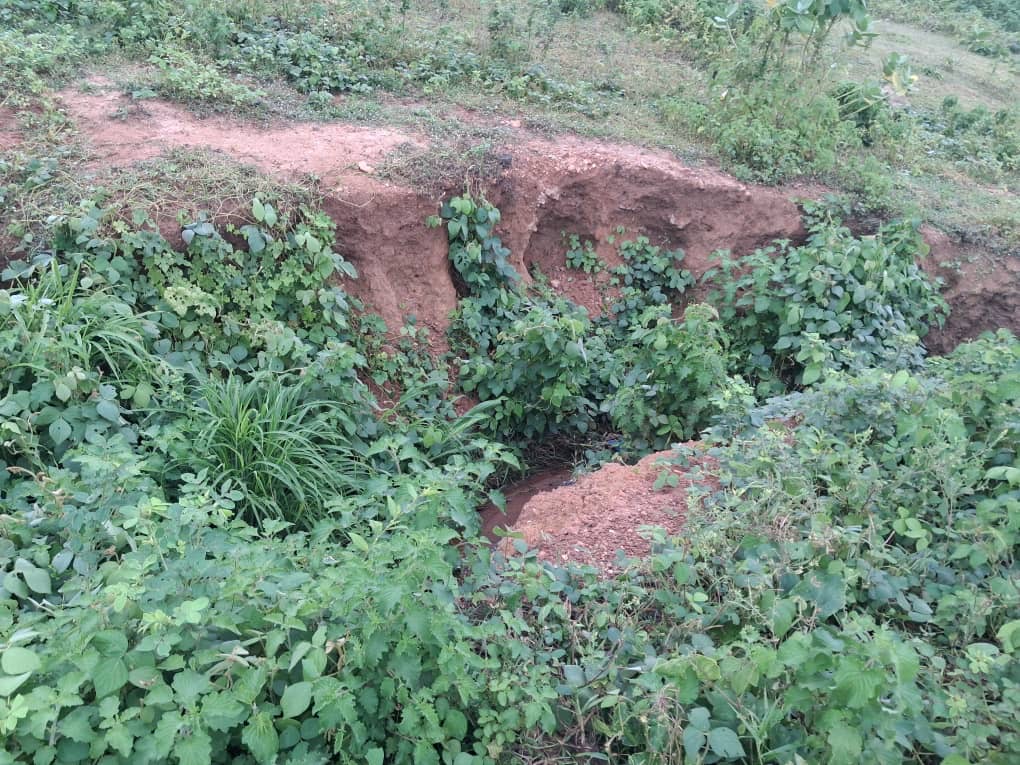
The devastating gully erosion threatening the Sheda community in the Kwali Area Council of the Federal Capital Territory is a profound environmental crisis rooted fundamentally in infrastructural neglect.
The primary cause of the crisis in Sheda is clearly the absence of adequate storm water drainage channels. As Solomon, the resident, observed, “When the water comes, it should find its way.” In a naturally developed area, without dedicated channels (culverts, gutters, and drains), rainwater from the surrounding village flows to the lowest point.
In this case, that point is the key road connecting the local primary school and the Chief’s residence.
When a large volume of water concentrates on an unpaved or poorly surfaced road, its velocity and erosive power increase dramatically. The water starts by washing away fine soil particles (sheet erosion), then carves small channels (rill erosion), and finally, these rills merge and deepen into gullies that can become metres deep.
The soil’s capacity to absorb the runoff is quickly overwhelmed, turning the road itself into a temporary, destructive riverbed.
This is a progressive and self-perpetuating cycle: as the gully deepens, it captures more runoff from a wider area, thus increasing the volume and velocity, which in turn accelerates the erosion process.
Furthermore, the necessity for villagers to continuously seek “alternative, difficult routes” places an unnecessary economic burden on the community, increasing travel time, fuel consumption, and the difficulty of transporting agricultural produce or goods, stifling local commerce. The deep, unstable trenches themselves also constitute significant safety hazards, especially during darkness or flash floods, underscoring the immediate risk to human life and property.
The fact that residents describe this lack of essential infrastructure as a “long-standing issue” points directly to a systemic failure in public works provision and highlights years of developmental neglect by the Kwali Area Council and the wider Federal Capital Territory Administration.
The community reports that this lack of essential infrastructure has been a long-standing issue, posing a significant challenge to daily life and highlighting the urgent need for a solution to protect their roads and prevent further land degradation.








News1 day ago
NUJ FCT charges new SOPTCAM executives to raise standards, embrace digital innovation

News1 day ago
FCT Police Commissioner’s son, Ahmed Sharafadeen Sanusi, weds in Katsina

News1 day ago
Projects, performance, and people: Obi Aguocha’s re-Election argument

News1 day ago
Nigeria Police Force to strengthen Complaint Response Unit, boost media engagement

National News2 days ago
NGF commends Tinubu over expansion of Nigerian Army

Sports2 days ago
CAS fixes October 8 hearing in Senegal’s challenge to Morocco’s 2025 AFCON title

World News2 days ago
Nigeria, Seven African Nations hit with 12.5% US tariff

National News2 days ago
No kobo was released to controversial investment Council, Budget Office DG Tells Reps

Sports2 days ago
Ezuruike claims Silver to hand Nigeria first Commonwealth Games medal

National News3 days ago
Tinubu approves expansion of Nigerian Army to 12 Divisions, authorises recruitment of 28,000 personnel
News1 day ago
Nigeria Police Force to strengthen Complaint Response Unit, boost media engagement
News1 day ago
Projects, performance, and people: Obi Aguocha’s re-Election argument
News1 day ago
FCT Police Commissioner’s son, Ahmed Sharafadeen Sanusi, weds in Katsina
News1 day ago
NUJ FCT charges new SOPTCAM executives to raise standards, embrace digital innovation
-
 News1 day ago
Nigeria Police Force to strengthen Complaint Response Unit, boost media engagement
-
 News1 day ago
Projects, performance, and people: Obi Aguocha’s re-Election argument
-
 News1 day ago
FCT Police Commissioner’s son, Ahmed Sharafadeen Sanusi, weds in Katsina
-
 News1 day ago
NUJ FCT charges new SOPTCAM executives to raise standards, embrace digital innovation