







World News
UK introduces tougher sentencing powers to restrict criminals’ freedoms

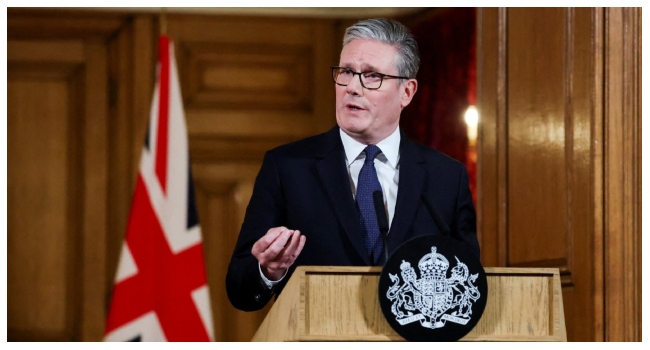
The United Kingdom government has announced new sentencing measures that will bar criminals from pubs, concerts, and sports venues as part of its Plan for Change.
The reforms will give judges the power to impose restrictions such as travel bans, driving limits, and confinement to specific zones in a bid to cut crime and reduce reoffending.
According to the government, the new powers will not only apply to offenders in prison but also to those under community supervision by the Probation Service. An expanded drug testing regime will also be introduced, extending scrutiny to offenders without a history of substance misuse. Anyone who violates these conditions risks being sent back to court or returned to prison, depending on their sentence.
Lord Chancellor and Justice Secretary, Shabana Mahmood, said the reforms were designed to reinforce punishment and improve public safety.
“When criminals break society’s rules, they must be punished. Those serving their sentences in the community must have their freedom restricted there, too. These new punishments should remind all offenders that, under this Government, crime does not pay,” Mahmood stated.
Currently, judges can only impose limited bans in specific cases, such as football-related offences on match days. Under the new law, however, restrictions will be applicable to a wider range of crimes and circumstances.
The reforms form part of broader sentencing changes to ensure punishments are tougher, while dangerous offenders are accommodated in prisons. Since July 2024, over 2,400 new prison places have been created, with the government investing £7 billion to provide 14,000 more spaces.
In addition, the Probation Service will receive a funding boost of up to £700 million by 2028/29, raising its annual budget from £1.6 billion. The service has recorded a 7% increase in probation officers in the past year, alongside a 15% rise in trainee recruits. The government also plans to employ an additional 1,300 officers this year, building on the 1,000 recruited in 2024.
New technology, including artificial intelligence, will be deployed to reduce administrative workload, enabling probation staff to focus more on supervising high-risk offenders.

















News3 hours ago
IGP urges court to dismiss El-Rufai’s ₦1bn rights suit

Sports3 hours ago
Anthony Joshua relocates to Dubai, family confirms

National News3 hours ago
NiMet issues Meningitis alert across Northern Nigeria

National News3 hours ago
UK tightens security as Tinubu begins state visit to Windsor

News4 hours ago
PDP, Labour Party lose 11 Lawmakers to APC, ADC in fresh defections

Business4 hours ago
30 Nigerian Banks meet CBN recapitalisation rarget ahead of deadline

National News4 hours ago
FCCPC probes airlines over Christmas fare hike, sanctions loom

News4 hours ago
PSC promotes 13 commissioners of Police to AIG rank

News12 hours ago
South African Army chief visits Nigerian military institutions to strengthen cooperation

News12 hours ago
Five rescued, three dead as bus plunges into river in Ibadan

Uncategorized13 hours ago
Empowering Women: Economic, social necessity –Faleye

News2 days ago
Iran warns protesters supporting foreign enemies will be treated as ‘enemies’

Sports2 days ago
Kano Governor sacks Head of Service Abdullahi Musa

Sports2 days ago
Flying Eagles midfielder Daniel Daga sentenced to six months in Norway

News13 hours ago
Celebrating Funke Ishola: A Trailblazer and pillar of empowerment

News1 day ago
Traders shut down Lagos International Trade Fair Complex over takeover concerns

National News1 day ago
Tinubu nominates Lamido Yuguda as CBN Deputy Governor

World News1 day ago
Iran’s new Supreme Leader Mojtaba Khamenei injured but safe, official says

World News1 day ago
Nigerian among victims as UAE intercepts Iranian missiles

National News1 day ago
Reps amend electoral act 2026, impose N10m fine for dual party membership
-
 Uncategorized13 hours ago
Empowering Women: Economic, social necessity –Faleye
-
 Sports2 days ago
Kano Governor sacks Head of Service Abdullahi Musa
-
 News2 days ago
Iran warns protesters supporting foreign enemies will be treated as ‘enemies’
-
 News13 hours ago
Celebrating Funke Ishola: A Trailblazer and pillar of empowerment
-
 News1 day ago
Traders shut down Lagos International Trade Fair Complex over takeover concerns
-
 Sports2 days ago
Flying Eagles midfielder Daniel Daga sentenced to six months in Norway
-
 World News1 day ago
Iran’s new Supreme Leader Mojtaba Khamenei injured but safe, official says
-
 World News1 day ago
Nigerian among victims as UAE intercepts Iranian missiles