




News
2027: INEC assures electronic result transmission, says perfect poll not guaranteed

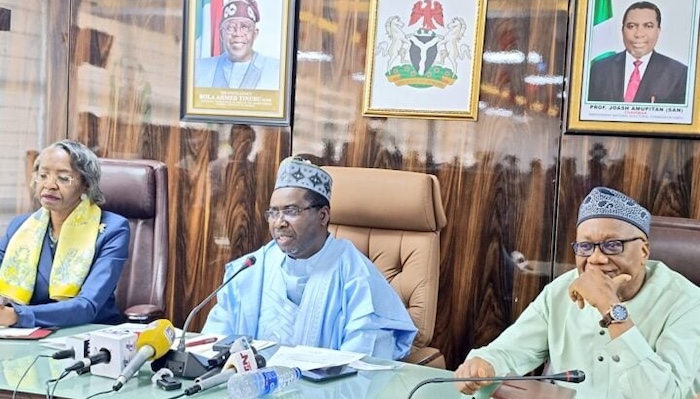
The Chairman of the Independent National Electoral Commission, Prof. Joash Amupitan, has assured Nigerians that the commission possesses the capacity to electronically transmit election results in the 2027 general elections, even as he cautioned that a “100 per cent perfect election” may not be achievable.
Amupitan gave the assurance on Sunday during the Citizens’ Town Hall programme titled ‘Electoral Act 2026: What it means for your votes and the 2027 elections’, aired live on major television networks. The debate was anchored by Seun Okinbaloye and the Executive Director of Yiaga Africa, Samson Itodo, with prominent political stakeholders in attendance.
Appealing to Nigerians to moderate expectations, the INEC boss said while the commission would strive to deliver the best possible process, perfection remains difficult in practical terms. He maintained that electronic transmission of results would be implemented, noting that the major challenge lies in defining and achieving real-time transmission, particularly in remote areas.
Citing the recent FCT Area Council elections, Amupitan explained that while results from five area councils were transmitted on time, one ward in Kuje experienced delays due to poor terrain and communication challenges. According to him, election officials and security personnel deployed to the area were temporarily unreachable, forcing the commission to retrieve and collate results physically before declaration.
He stressed that logistics remain central to election credibility, warning that operational lapses can erode public confidence. Nonetheless, he expressed optimism that the 2027 elections would surpass previous exercises, citing heightened voter awareness and increasing demand for transparency and accountability.
INEC, he disclosed, played an active role in shaping the Electoral Act 2026 and has since commenced a comprehensive review of its regulations governing political parties to align with the new legal framework. The commission is examining issues such as party primaries, financial disclosures, dispute resolution and inclusive participation, particularly for women, youth and Persons with Disabilities.
The reform process, supported by the Westminster Foundation for Democracy, is expected to produce a revised 2026 edition of INEC’s regulations and guidelines ahead of the next electoral cycle.
Meanwhile, major political parties have begun digital membership registration to comply with the Electoral Act 2026. The Peoples Democratic Party announced the commencement of nationwide electronic membership registration, while the African Democratic Congress launched an online registration portal and directed members to revalidate their records.
The ruling All Progressives Congress is also expected to resume its e-registration exercise following internal consultations.
Originally scheduled for February and March 2027, the elections were rescheduled after legislative amendments shortened the mandatory notice period, with presidential and National Assembly polls now slated for January 16, 2027, and governorship and state assembly elections for February 6, 2027.
INEC reaffirmed its commitment to continuous reform, pledging to strengthen transparency, reduce pre-election disputes and ensure credible leadership choices for Nigerians.












World News44 minutes ago
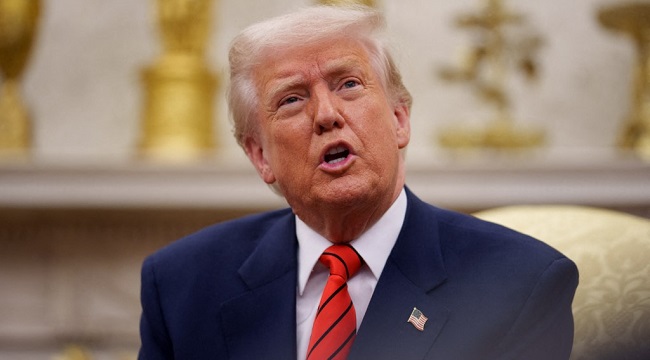
US issues global alert urging Americans to stay vigilant after Iran strikes

FCT News49 minutes ago
2025 tax returns: FCT residents must file by March 31 — IRS

News51 minutes ago
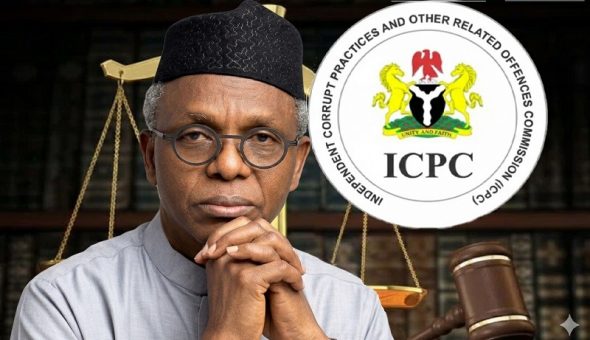
No wiretapping equipment found In El-Rufai’s home — Family insists

News53 minutes ago
DSS nabs suspect over attack on Peter Obi in Edo

News5 hours ago
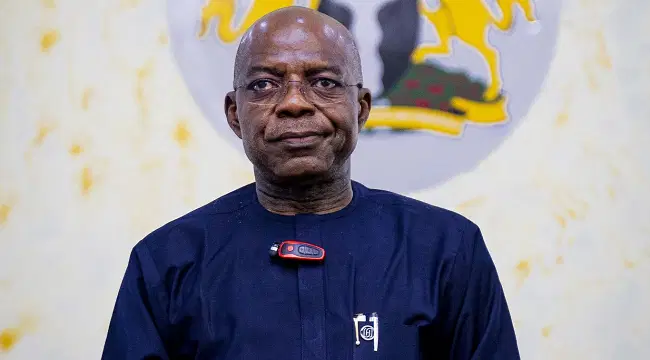
NUJ condemns harassment of Journalists by Alex Otti over legitimate questioning

National News8 hours ago
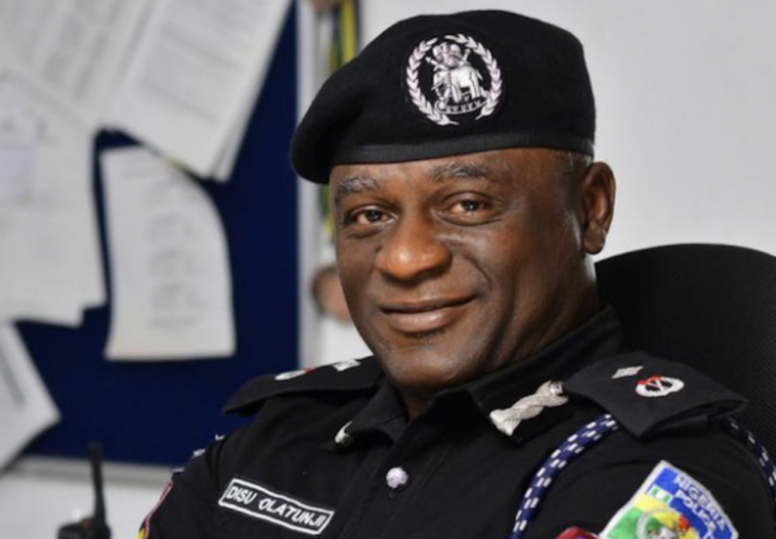
Tunji Disu confirmed as substantive IGP by Police Council

News9 hours ago
IMN protesters take to Lagos streets over killing of Iran’s Supreme Leader

National News9 hours ago
Tinubu presides over police council meeting to confirm Disu as IGP

News9 hours ago
Iyabo Obasanjo joins APC, declares Ogun governorship ambition

Metro9 hours ago
NAF neutralises senior terrorists in Sambisa air strikes

News16 hours ago
Four killed in Ramadan alms stampede in Katsina
Metro9 hours ago
NAF neutralises senior terrorists in Sambisa air strikes

News1 day ago
NEMSAS expands emergency medical services nationwide, urges NCC to strengthen 112 access

News16 hours ago
Northern states witness protests over Iran leader’s death

News9 hours ago
Ireti Kingibe won’t return to Senate in 2027, Wike declares

World News2 days ago
BREAKING: Iran confirms death of Supreme Leader Ali Khamenei after US-Israeli attack

World News9 hours ago
China backs Iran’s ‘self-defence’ as middle East war escalates

News15 hours ago
Troops repel ISWAP attacks on Borno bases, Army major killed

News15 hours ago
2027: INEC assures electronic result transmission, says perfect poll not guaranteed

News1 day ago
NUJ confirms death of Bauchi TV cameraman after auto crash
-
 Metro9 hours ago
NAF neutralises senior terrorists in Sambisa air strikes
-
 News16 hours ago
Four killed in Ramadan alms stampede in Katsina
-
 News9 hours ago
Ireti Kingibe won’t return to Senate in 2027, Wike declares
-
 World News9 hours ago
China backs Iran’s ‘self-defence’ as middle East war escalates
-
 World News2 days ago
BREAKING: Iran confirms death of Supreme Leader Ali Khamenei after US-Israeli attack
-
 News1 day ago
NEMSAS expands emergency medical services nationwide, urges NCC to strengthen 112 access
-
 News16 hours ago
Northern states witness protests over Iran leader’s death
-
 News15 hours ago
Troops repel ISWAP attacks on Borno bases, Army major killed