News
2027: We won’t accept compromised polls – Sharia Council to INEC

The Supreme Council for Shari’ah in Nigeria has declared that it will not recognise elections it deems compromised, emphasising that public confidence in the democratic process is essential for national stability ahead of the 2027 general elections.
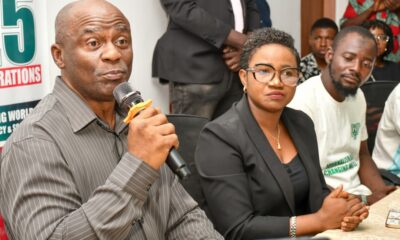
The statement was delivered during the Council’s Annual Pre-Ramadan Lecture and General Assembly held in Abuja, which brought together Islamic scholars, traditional and community leaders, professionals, representatives of Islamic organisations, and media practitioners.
Council’s Position on Elections
Addressing the gathering, Sheikh Bashir Aliyu Umar, President of the Shariah Council, said elections conducted under questionable circumstances or presided over by officials of “dubious integrity” would lack credibility and public trust.
“The Council has clearly stated that the Ummah will not recognise or legitimise any election presided over by a character with questionable integrity, as democratic credibility must never be compromised,” Umar said, stressing that electoral integrity is central to Nigeria’s stability.
The Council also raised concerns over developments at the Independent National Electoral Commission (INEC), noting that public trust in institutions responsible for elections must be protected.
Nation Under Pressure: Security, Economy, Governance
Beyond elections, the Shariah Council described Nigeria as facing worsening insecurity, economic hardship, and declining public trust. Umar highlighted inflation, unemployment, and rising costs of living as challenges confronting millions of Nigerians.
“The nation is confronted by worsening insecurity, widespread loss of lives, economic hardship, erosion of public trust, and deep social anxiety,” he said, urging effective security measures alongside peaceful reconciliation.
The Council also provided data showing that Muslim communities have been disproportionately affected by ongoing violence and terrorism, while affirming that every human life, Muslim or Christian, is sacred. It condemned misleading narratives around religious violence, including the so-called “Christian genocide” claims.
On economic matters, the Council criticised aspects of tax reform and budget implementation, stressing that fiscal policies should not impose undue hardship on ordinary Nigerians and must be fair and socially responsible.
The Council further expressed concern over federal appointments, warning that systemic imbalances undermine constitutional equity and national cohesion.
Religious Rights and International Issues
Reaffirming the constitutional right of Muslims to implement Shari’ah law for themselves, the Council emphasised peaceful coexistence with other religious groups.
The Council also condemned the ongoing conflict in Gaza, describing it as genocide and decrying what it called a global conspiracy of silence over Palestinian suffering.
Call for Moral Leadership
Mallam Muhammadu Munir Ja’afaru, Madakin Zazzau, praised the Shariah Council as a principled voice for the Nigerian Muslim Ummah, highlighting its role in promoting justice, unity, and national stability.
With Ramadan approaching, the Council urged Islamic scholars to use Tafseer sessions to encourage moral reformation, responsible civic engagement, and ethical leadership, stressing that national renewal requires collective moral responsibility.



News52 minutes ago
IGP Disu urges Police Officers to uphold integrity during surprise visit to NUJ FCT

FCT News2 hours ago
Police recover stolen vehicle, arrest suspect in Abuja

FCT News14 hours ago
Journalists are professionals deserving Respect- IGP Disu

NUJ FCT21 hours ago
NUJ FCT raises alarm over fuel prices, water scarcity, security

News24 hours ago
IGP Disu commends FCT Journalists, seeks stronger Police–Media partnership

News1 day ago
Fasawe, NUJ President seek philanthropists’ sponsor of health insurance for journalists

NUJ FCT1 day ago
Fasawe, NUJ President urge philanthropists to sponsor health insurance for journalists as NUJ FCT launches scheme

Business2 days ago
CBN warns Banks against lending to loan defaulters

News2 days ago
Troops repel terrorist attacks on military positions in Borno

News2 days ago
Engine anomaly forced Arik Air flight diversion — NSIB report
News1 day ago
Fasawe, NUJ President seek philanthropists’ sponsor of health insurance for journalists
NUJ FCT1 day ago
Fasawe, NUJ President urge philanthropists to sponsor health insurance for journalists as NUJ FCT launches scheme
News24 hours ago
IGP Disu commends FCT Journalists, seeks stronger Police–Media partnership
NUJ FCT21 hours ago
NUJ FCT raises alarm over fuel prices, water scarcity, security
FCT News14 hours ago
Journalists are professionals deserving Respect- IGP Disu
FCT News2 hours ago
Police recover stolen vehicle, arrest suspect in Abuja
News52 minutes ago
IGP Disu urges Police Officers to uphold integrity during surprise visit to NUJ FCT
-
 News1 day ago
Fasawe, NUJ President seek philanthropists’ sponsor of health insurance for journalists
-
 NUJ FCT1 day ago
Fasawe, NUJ President urge philanthropists to sponsor health insurance for journalists as NUJ FCT launches scheme
-
 News24 hours ago
IGP Disu commends FCT Journalists, seeks stronger Police–Media partnership
-
 NUJ FCT21 hours ago
NUJ FCT raises alarm over fuel prices, water scarcity, security
-
 FCT News2 hours ago
Police recover stolen vehicle, arrest suspect in Abuja
-
 FCT News14 hours ago
Journalists are professionals deserving Respect- IGP Disu
-
 News52 minutes ago
IGP Disu urges Police Officers to uphold integrity during surprise visit to NUJ FCT