World News
Nigeria, Seven African Nations hit with 12.5% US tariff

The United States has imposed a 12.5 per cent tariff on exports from Nigeria and seven other African countries over what it described as their failure to effectively curb forced labour within global supply chains.
The measure, announced by the Office of the United States Trade Representative (USTR) under Section 301 of the US Trade Act of 1974, forms part of a broader trade action targeting countries that Washington says have not adequately prohibited the importation of goods produced through forced labour.
Other African countries affected by the new tariff are Algeria, Angola, Egypt, Libya, Mauritania, Morocco and South Africa.
According to the USTR, the affected nations have not implemented or effectively enforced measures to prevent goods produced with forced labour from entering their markets.
The agency said countries that fail to prohibit such imports gain an unfair competitive advantage by allowing cheaper products into global supply chains, thereby distorting international trade and placing American businesses and workers at a disadvantage.
It added that the practice also diverts products made without forced labour away from foreign markets and into the United States, creating additional pressure on domestic industries.
US Trade Representative Ambassador Jamieson Greer said the latest action was aimed at strengthening global efforts to eliminate forced labour from international trade.
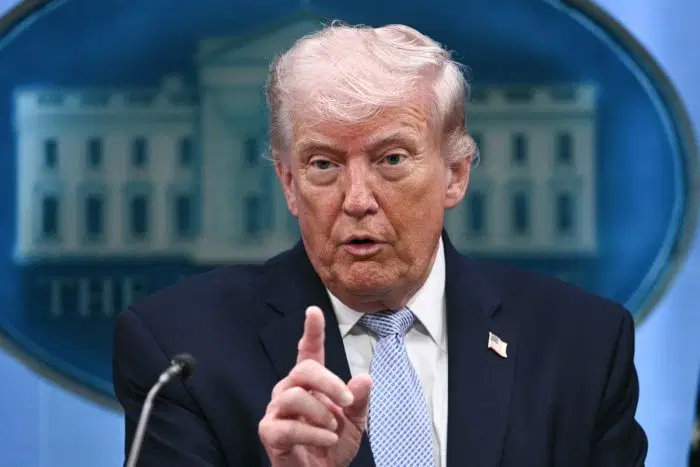
“President Trump recognises that decades of moral suasion have not eradicated forced labour from global supply chains,” Greer said.
“The United States has had a forced labour import ban for nearly a century and rigorously enforces it. It is well past time for our trading partners to do the same.”
He added that the tariffs were intended to address both human rights concerns and unfair trade practices while encouraging countries to strengthen enforcement against forced labour.
The USTR launched investigations into 60 trading partners in June before concluding that several countries had taken meaningful steps to prohibit imports linked to forced labour.
Those countries include Argentina, Bangladesh, Cambodia, Canada, Ecuador, El Salvador, Guatemala, Honduras, India, Indonesia, Jordan, Malaysia, Mexico, Pakistan, Sri Lanka, Trinidad and Tobago, and the United Kingdom, all of which will face a lower 10 per cent tariff after adopting or committing to stronger enforcement measures.
The agency also approved tariffs of 10 per cent or 12.5 per cent, depending on product categories, for certain goods imported from the European Union, Taiwan, Japan, South Korea and Switzerland.
However, Nigeria and other countries that failed to meet the required enforcement standards were placed under the higher 12.5 per cent tariff.
The USTR said the new policy is intended to create a level playing field in global trade, stressing that only countries with credible legal frameworks and effective enforcement mechanisms against forced labour would avoid the higher tariff regime.

BYM condemns killing Of 60-year-old woman, after attack at Gwom-Ajang

Ebola Patient in Nigeria Is Wife of Swiss Diplomat, Switzerland Says

Uba Sani Vows Massive Kaduna Support for Tinubu Ahead of 2027 Election

Atiku Asks Tinubu to Identify Those Behind Alleged Ministerial Appointment Bribes

One Dead, Three Rescued After Two-Storey Building Collapses in Lagos

CBN grants JPMorgan approval-in-principle to establish Merchant Bank in Nigeria

BREAKING: Veteran Nollywood Actor Francis Duru Dies at 57

Ebola: FG Orders Nationwide Awareness Campaign After Reported Case in Abuja

Sultan of Sokoto Meets Tinubu, Prays for Peaceful Elections

NEC Endorses 90-Day Plan to Ease Cost of Living, Targets Single-Digit Inflation
Atiku Asks Tinubu to Identify Those Behind Alleged Ministerial Appointment Bribes
CBN grants JPMorgan approval-in-principle to establish Merchant Bank in Nigeria
Uba Sani Vows Massive Kaduna Support for Tinubu Ahead of 2027 Election
One Dead, Three Rescued After Two-Storey Building Collapses in Lagos
Ebola Patient in Nigeria Is Wife of Swiss Diplomat, Switzerland Says
BYM condemns killing Of 60-year-old woman, after attack at Gwom-Ajang
-
 News2 days ago
Atiku Asks Tinubu to Identify Those Behind Alleged Ministerial Appointment Bribes
-
 Business2 days ago
CBN grants JPMorgan approval-in-principle to establish Merchant Bank in Nigeria
-
 News2 days ago
Uba Sani Vows Massive Kaduna Support for Tinubu Ahead of 2027 Election
-
 Metro2 days ago
One Dead, Three Rescued After Two-Storey Building Collapses in Lagos
-
 News2 days ago
Ebola Patient in Nigeria Is Wife of Swiss Diplomat, Switzerland Says
-
 News6 hours ago
BYM condemns killing Of 60-year-old woman, after attack at Gwom-Ajang