
News
Freedom at Last: How Becheve Women and Girls Broke Free from the ‘Money Woman’ Tradition

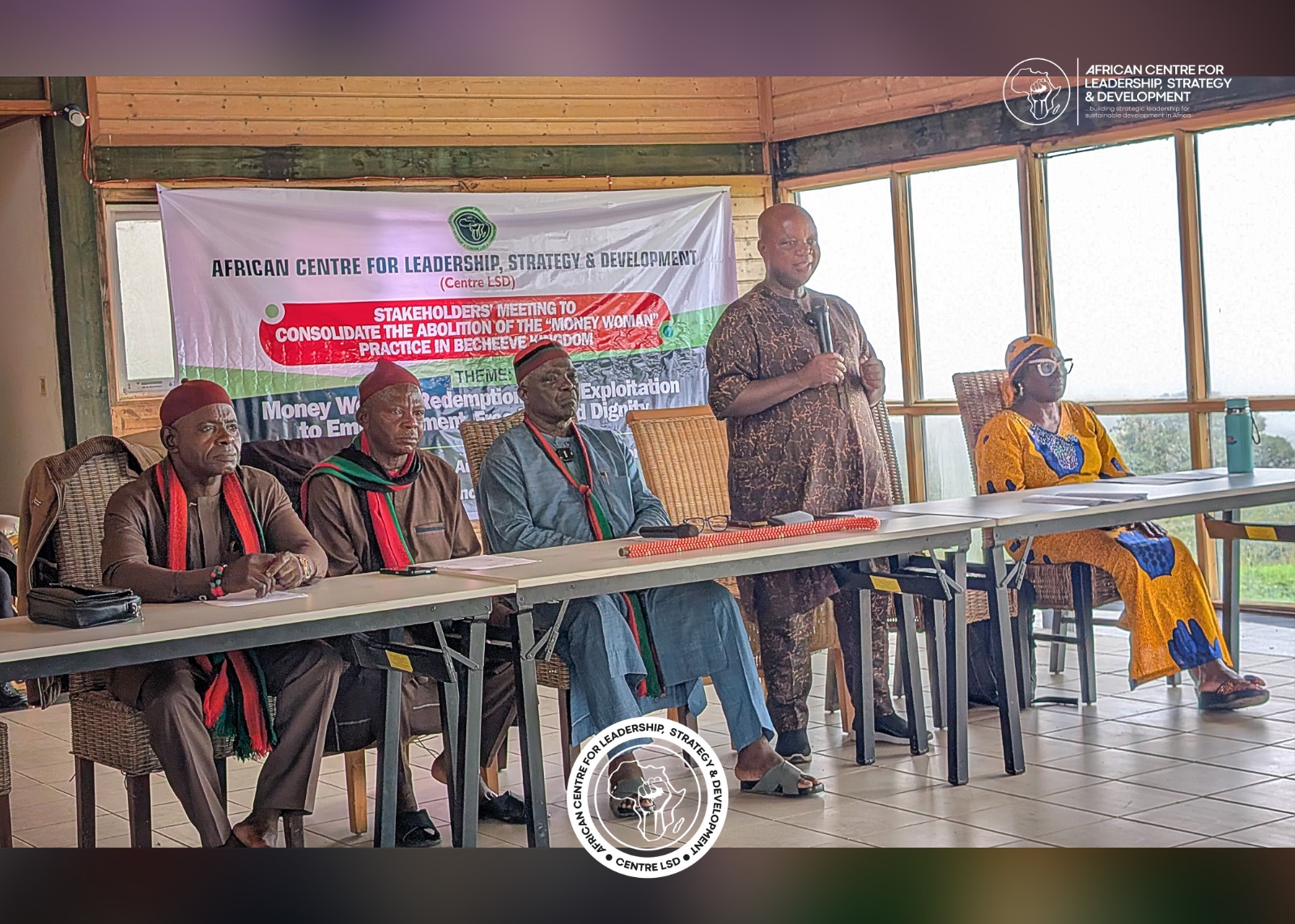
By Monday Osasah
For years, the women of Becheve in Obalinkwu Local Government Area of Cross River State lived under a tradition that could determine their fate before they were old enough to understand what marriage meant.
For some girls, the decision about whom they would marry was made when they were still children. For others, it was made even before they were born.
They were not consulted. They did not choose their husbands. In some cases, they were given in marriage to men old enough to be their fathers as part of arrangements involving debts and financial obligations.
The practice was known locally as “Money Woman.”
On Wednesday, 19 August 2026, that long and painful chapter in the history of Becheve reached what community leaders described as its final closure.
More than 57 women and girls who survived the practice were formally emancipated, following the refund of ₦100,000 to each man involved in the arrangements.
The payment was intended to remove the financial claims that some men had continued to use to resist the community’s earlier abolition of the practice.
For the women and girls affected, the significance went far beyond the money.
It was about freedom.
It was about dignity.
And, perhaps most importantly, it was about the right to determine the course of their own lives.
A Tradition That Stole Childhoods
The “Money Woman” practice was a deeply entrenched traditional arrangement in which female children could be used to settle debts or other financial obligations.
A girl could be promised in marriage to a man without her consent and, in some cases, without her parents having any meaningful say beyond the circumstances that created the obligation.
The practice could begin before a child was born.
When the girl eventually arrived, she would grow up knowing that her future had already been determined.
She could spend only a few years in her parents’ home—sometimes between six and eight years—before being taken to the household of the man to whom she had been pledged.
There, the first wife often played the role of caregiver and guardian. She could raise the young girl as she would her own child, supervise her upbringing and monitor her development until she was considered ready for marital relations.
What should have been the normal journey of childhood—school, friendships, play, dreams and preparation for adulthood—was therefore replaced by a predetermined path into marriage.
Education was also frequently sacrificed.
Children born to women subjected to the practice were often denied opportunities to attend school, perpetuating a cycle of poverty, limited choices and dependence.
The consequences did not end with marriage.
Because some of the girls were married to considerably older men, Becheve also witnessed cases of women becoming widows while still very young.
Some women in their twenties and thirties found themselves widows, while others whose husbands remained alive became primary providers for their families as their ageing husbands became increasingly unable to work.
A practice that was originally embedded in a system of social and economic obligations had therefore evolved into a mechanism that could reproduce vulnerability from one generation to another.
When the Community Said Enough
The turning point came in 2019.
That year, the African Centre for Leadership, Strategy & Development (Centre LSD) entered Becheve as an implementing partner under the Spotlight Initiative, a major European Union and United Nations programme designed to address violence against women and girls.
Centre LSD’s intervention focused particularly on male engagement.
This was deliberate.
Rather than treating women and girls only as victims who needed protection, the organisation recognised that sustainable change also required engaging the men, traditional institutions and other community actors who had the power to sustain or dismantle harmful practices.
The strategy required patience.
It required listening.
And it required entering the community not as an outside organisation arriving with ready-made answers, but through a process of dialogue and relationship-building.
Centre LSD engaged traditional rulers, men, women, community leaders, local government authorities and other stakeholders.
There were advocacy meetings, community dialogues, trainings and retraining sessions.
The objective was not simply to persuade people that the practice was harmful.
It was to build community ownership of the decision to end it.
The process eventually produced a historic outcome.
In August 2020, the Becheve community publicly proclaimed the abolition of the “Money Woman” practice at a World Press Conference.
The declaration was made by the Paramount Ruler of Obanliku Local Government Area, HRM Amos Item, the Clan Head of Becheve, Chief Sunday Ichile, and other village heads.
Representatives of the European Union and UN Women were also present.
For many observers, it appeared that the battle had been won.
But the story was not over.
The Pushback
Abolishing a practice on paper is one thing.
Making sure that people who have lived with it for generations actually let go is another.
After the proclamation, Centre LSD continued to receive feedback from the community indicating that some men were resisting the implementation of the abolition.
Their argument was straightforward: they had spent money to enter into the arrangements and could not simply accept that the agreements had become worthless.
The women remained caught in the middle.
The community had abolished the practice, but some of the old financial claims remained.
This created a difficult question: How could the community permanently end the practice when some of the men involved still believed they had unresolved financial claims?
The answer eventually emerged through another round of dialogue.
Six Years Later
In March 2026, Centre LSD returned to Becheve.
Six years had passed since the formal proclamation of the abolition.
The organisation convened a town hall meeting with the leadership of the community and men from across the Becheve clan.
The discussions were frank.
The community examined the remaining obstacles to the complete implementation of the abolition and eventually reached an agreement.
The sum of ₦100,000 would be paid to each man involved, effectively removing the financial claims that had become a major obstacle to the full emancipation of the women.
It was not simply a financial transaction.
It was conceived as the final bridge between the community’s declaration of abolition and the actual freedom of the women and girls affected by the practice.
Centre LSD then began mobilising resources.
Letters were written to organisations and individuals considered capable of supporting the process.
The organisation’s own Board members and staff also contributed.
The effort eventually produced the resources required to complete the process.
And on 19 August 2026, the women were finally released from the financial obligations associated with the “Money Woman” practice.
The Meaning of 57 Freed Women
The number—57—may appear small when viewed against the scale of Nigeria’s population.
But in Becheve, each number represents a human story.
Each represents a woman or girl whose choices were once constrained by a tradition she did not create.
Each represents a family affected by a practice that connected marriage to debt and financial obligation.
And each represents a reminder of the cost of allowing harmful social norms to persist unchecked.
The formal redemption of the survivors therefore carries a significance that extends beyond those directly affected.
It sends a message to younger generations that a girl’s future should not be used as a means of settling a debt.
It tells parents that daughters are not property.
It tells men that marriage must be based on consent and dignity.
And it tells the community that traditions can be challenged and changed when they violate fundamental human rights.
Building a Firewall Against Reversal
But those involved in the process know that declaring victory is not enough.
Harmful practices can return if the structures that sustained them are not dismantled.
For this reason, the community has established a five-member Gender-Based Violence Committee, with representatives drawn from the various Becheve villages.
The committee will monitor developments, receive reports and alert the Paramount Ruler, Clan Head and relevant community leaders to any attempt to revive the practice or introduce arrangements that resemble it.
The mechanism is intended to ensure that the abolition does not remain merely a historic declaration but becomes a living community norm.
The message is clear: there must be no return to “Money Woman.”
Freedom Must Be Followed by Opportunity
For Centre LSD, however, emancipation is not the end of the journey.
It is the beginning of another phase.
Freedom from a harmful practice must be accompanied by the opportunity to rebuild lives.
Many survivors need education, vocational skills, economic opportunities, psychosocial support and social reintegration.
A woman cannot be considered fully empowered simply because a harmful marriage arrangement has been terminated if she remains without the means to support herself and her children.
Centre LSD therefore plans to work with development partners, government institutions, philanthropists and other well-meaning organisations to train and empower the survivors.
The objective is to help them develop sustainable livelihoods and participate fully in the social and economic life of their communities.
The ultimate measure of the intervention, therefore, will not only be that the “Money Woman” practice has ended.
It will be whether the women who survived it are able to build independent, productive and dignified lives.
‘My Joy Knows No Bounds’
For Mr. Monday Osasah, Executive Director of Centre LSD, who has been involved in the process from its early stages, the events of 19 August represent the culmination of a journey that began seven years ago.
Reflecting on the occasion, he said:
“I feel very fulfilled that the journey to freedom from this harmful traditional practice for women and girls in Becheve, which started in 2019, has finally produced the desired result—freedom.”
For Osasah, the significance lies in having witnessed the entire process—from the first community engagements, through the 2020 abolition proclamation, the subsequent resistance and renewed dialogue, to the final redemption of the survivors.
“As somebody who was there from the beginning up until this day, where the freedom is sealed with the refund of the bride price, and with a committee set up to monitor adherence and a mechanism put in place to deal with anyone who attempts to revive the practice, my joy knows no bounds,” he said.
The statement captures the emotion surrounding the event.
For those who worked on the intervention, the journey was never simply about changing a policy or securing a public declaration.
It was about changing lives.
A Community’s New Beginning
The story of Becheve demonstrates the complexity of changing harmful traditional practices.
It shows that legislation and public declarations are important, but they may not by themselves change deeply rooted social norms.
It shows why men must be part of conversations about gender justice.
It shows the importance of traditional institutions in shaping community behaviour.
It also demonstrates that sustainable change sometimes requires returning to a community years after a project has formally ended to ask a difficult question:
Has the change really taken root?
In Becheve, the answer has now moved closer to yes.
The abolition created the foundation.
The 2020 public proclamation gave the decision legitimacy.
The 2026 town hall reopened the conversation around the unresolved financial claims.
The refund of ₦100,000 to each affected man removed a major obstacle.
The emancipation of 57 survivors provided a tangible expression of freedom.
And the establishment of the five-member monitoring committee provides a mechanism for protecting the gains.
The work ahead remains substantial.
The survivors must be supported.
Young people must be educated about their rights.
Men must continue to challenge harmful norms.
Traditional leaders must remain vigilant.
And the community must ensure that the practice does not return under another name or in another form.
But on 19 August 2026, Becheve had reason to celebrate.
For decades, the fate of girls could be determined by debts they did not incur.
Today, the community is saying something different.
A girl is not a debt.
A daughter is not a commodity.
Marriage is not a transaction imposed on a child.
And freedom, once reclaimed, must be protected.
For the women and girls of Becheve, the long journey from “Money Woman” to freedom has finally entered a new chapter.






Zenith Bank to Launch Maiden Girl-Child Empowerment Programme on October 12

Late filing of SERAP’s brief bungles hearing in their appeals against ₦101m judgment debt

NNPC extends N66 Petrol discount at its stations nationwide until October 31, denies subsidy return

Triple Crown for Julius Berger at Eurocham Nigeria Awards 2026

‘Nigerians Deserve Affordable Petrol’ — Obidient Movement Faults FG’s 30-Day Discount

30-Day Petrol Discount Is Not Subsidy, Funded by NNPC Retail’s Profit Margin — Oyedele

NLC Issues Two-Week Ultimatum to FG Over Petrol Price, Minimum Wage

Federal High Court Dismisses El’Rufai’s Fundamental Rights Suit Against ICPC, DSS, Others For Lacking In Merit

Renowned Communication Scholar, Prof Idowu Sobowale, Dies at 85

NYSC Kidnap: Mother Reveals How She Paid N6m to Secure Son’s Release
NLC Issues Two-Week Ultimatum to FG Over Petrol Price, Minimum Wage
30-Day Petrol Discount Is Not Subsidy, Funded by NNPC Retail’s Profit Margin — Oyedele
‘Nigerians Deserve Affordable Petrol’ — Obidient Movement Faults FG’s 30-Day Discount
Federal High Court Dismisses El’Rufai’s Fundamental Rights Suit Against ICPC, DSS, Others For Lacking In Merit
Triple Crown for Julius Berger at Eurocham Nigeria Awards 2026
Late filing of SERAP’s brief bungles hearing in their appeals against ₦101m judgment debt
NNPC extends N66 Petrol discount at its stations nationwide until October 31, denies subsidy return
Zenith Bank to Launch Maiden Girl-Child Empowerment Programme on October 12
-
 National News1 day ago
NLC Issues Two-Week Ultimatum to FG Over Petrol Price, Minimum Wage
-
 National News1 day ago
30-Day Petrol Discount Is Not Subsidy, Funded by NNPC Retail’s Profit Margin — Oyedele
-
 News1 day ago
‘Nigerians Deserve Affordable Petrol’ — Obidient Movement Faults FG’s 30-Day Discount
-
 News1 day ago
Late filing of SERAP’s brief bungles hearing in their appeals against ₦101m judgment debt
-
 News2 days ago
Federal High Court Dismisses El’Rufai’s Fundamental Rights Suit Against ICPC, DSS, Others For Lacking In Merit
-
 News1 day ago
Triple Crown for Julius Berger at Eurocham Nigeria Awards 2026
-
 News1 day ago
NNPC extends N66 Petrol discount at its stations nationwide until October 31, denies subsidy return
-
 News3 hours ago
Zenith Bank to Launch Maiden Girl-Child Empowerment Programme on October 12