
National News
Customs blame poor ports patronage, insecurity for revenue loss

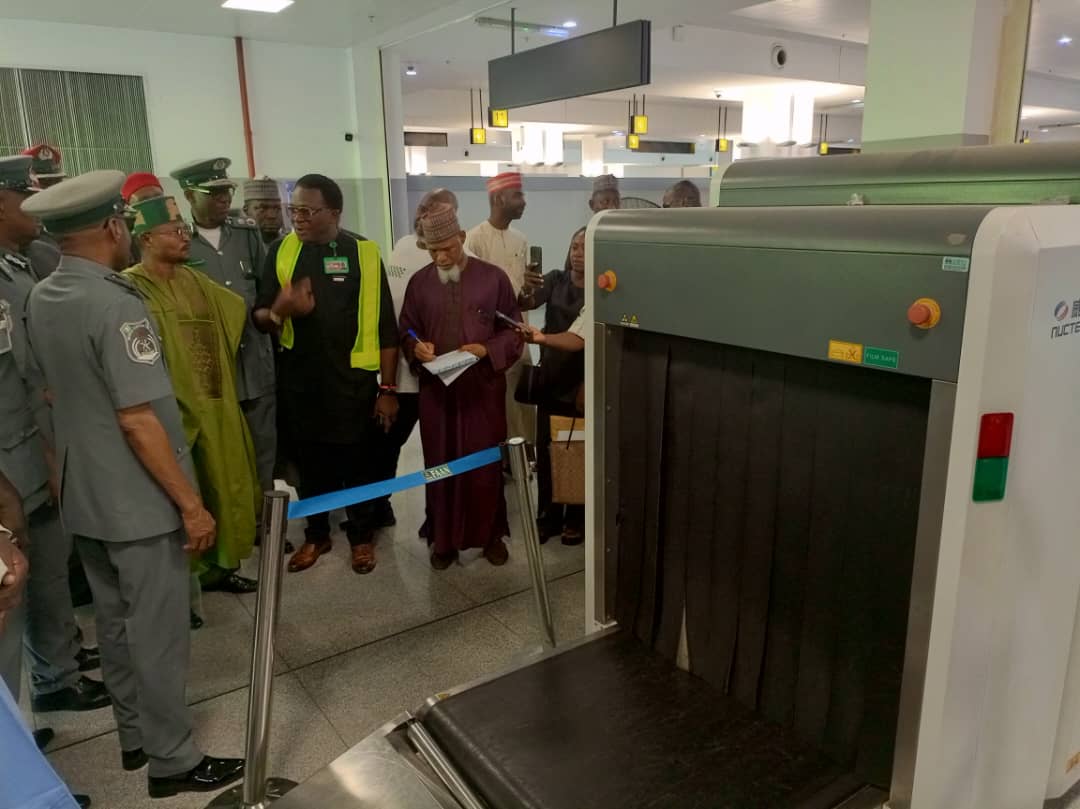
The Zone C Command of the Nigeria Customs Service, which oversees operations in the South-South and South-East regions, has blamed insecurity, under-utilisation of ports, and shallow shipping channels for the significant drop in revenue generation in the zone.
Assistant Comptroller General Sambo Dangaladima, who oversees Zone C, made the disclosure during an oversight visit by the House of Representatives Committee on Customs and Excise to the Zonal Headquarters in Port Harcourt. He was joined by various Customs Controllers from the region.
Dangaladima highlighted a number of issues affecting revenue, including poor road networks, security challenges, and low patronage of the ports. He also noted that federal government concessions on selected food items had further reduced the volume of chargeable imports, impacting revenue collection.
The zone comprises the six South-South states and the five South-East states. It includes nine area commands, several free trade zones, and bonded terminals.
“We are engaging with relevant government agencies to resolve these issues,” Dangaladima said. “We also appeal to the National Assembly for support in enhancing revenue generation. Our goal is to build a robust system that aligns with global best practices.”
Mustapha Hashim, Controller of Port Harcourt I Command, disclosed that the command lost approximately ₦34 billion in revenue between August and December 2024 due to government concessions on selected food imports.
Despite these setbacks, the command managed to generate ₦200 billion in 2024, an increase of about ₦84 billion over 2023. It has already collected ₦56.1 billion in the first quarter of 2025. However, Hashim lamented that no container-laden vessels currently dock at the port. The only such vessel that used to berth monthly has ceased operations, and the port now relies solely on bulk cargo.
He emphasised the urgent need to dredge the port’s channels, which are too shallow to accommodate even vessels with a draft of 7.8 metres. He added that freight rate differentials between Port Harcourt and Onne Ports had discouraged shippers from using the former.
“The federal government’s concessions have directly impacted our revenue. From August to December 2024 alone, we lost over ₦34 billion,” Hashim said.
Chukwudi Ogbonna, Controller of the Akwa Ibom/Cross River Command, raised similar concerns, noting that Calabar Port receives very few vessels due to low patronage.
Judith Kalu, Comptroller of the Edo/Delta Command, reported that her command generated ₦56.3 billion in the first quarter of 2025. However, she echoed the concerns about shallow channels, which limit the port’s ability to receive larger vessels. In 2024, the command handled approximately 65.77 million barrels of crude oil and 91,116 metric tonnes of LPG.
Chairman of the House Committee, Rep. Leke Abejide, commended the zone for its progress in revenue generation but stressed the urgent need to combat drug smuggling, which remains a persistent challenge.
“Drug smuggling is a serious national concern. All the commands we visited in Zone A, Lagos, reported substantial drug seizures, reflecting the magnitude of the issue,” he stated.



Burna Boy Presents Socrates Award to Arsenal Star Bukayo Saka at Ballon d’Or Ceremony

Man, Teenage Girl Swept Away While Attempting Rescue in Aba Flood

NDC Inaugurates New National Secretariat in Abuja Ahead of 2027 Elections

Man United Consider Howe, Nagelsmann, Conte as Carrick Faces Uncertain Future

Shettima Says Obi Has Nothing to Offer Nigerians Beyond ‘Dubious Statistics’

Uba Sani Says APC Will Consider 25% Opposition Vote in Kaduna a Failure

Court Orders El-Rufai to Open Defence in Alleged NSA Phone Interception Case

WHO Says Nigeria Has No Active Ebola Cases After Patient’s Evacuation to Switzerland

BYM condemns killing Of 60-year-old woman, after attack at Gwom-Ajang

Ebola Patient in Nigeria Is Wife of Swiss Diplomat, Switzerland Says
WHO Says Nigeria Has No Active Ebola Cases After Patient’s Evacuation to Switzerland
NDC Inaugurates New National Secretariat in Abuja Ahead of 2027 Elections
Uba Sani Says APC Will Consider 25% Opposition Vote in Kaduna a Failure
Shettima Says Obi Has Nothing to Offer Nigerians Beyond ‘Dubious Statistics’
Court Orders El-Rufai to Open Defence in Alleged NSA Phone Interception Case
Burna Boy Presents Socrates Award to Arsenal Star Bukayo Saka at Ballon d’Or Ceremony
Man United Consider Howe, Nagelsmann, Conte as Carrick Faces Uncertain Future
Man, Teenage Girl Swept Away While Attempting Rescue in Aba Flood
-
 National News23 hours ago
WHO Says Nigeria Has No Active Ebola Cases After Patient’s Evacuation to Switzerland
-
 News16 hours ago
NDC Inaugurates New National Secretariat in Abuja Ahead of 2027 Elections
-
 News22 hours ago
Uba Sani Says APC Will Consider 25% Opposition Vote in Kaduna a Failure
-
 News22 hours ago
Shettima Says Obi Has Nothing to Offer Nigerians Beyond ‘Dubious Statistics’
-
 News23 hours ago
Court Orders El-Rufai to Open Defence in Alleged NSA Phone Interception Case
-
 Sports16 hours ago
Burna Boy Presents Socrates Award to Arsenal Star Bukayo Saka at Ballon d’Or Ceremony
-
 Sports22 hours ago
Man United Consider Howe, Nagelsmann, Conte as Carrick Faces Uncertain Future
-
 Metro16 hours ago
Man, Teenage Girl Swept Away While Attempting Rescue in Aba Flood