
News
DSS DG orders operatives not to arrest anyone over civil matters

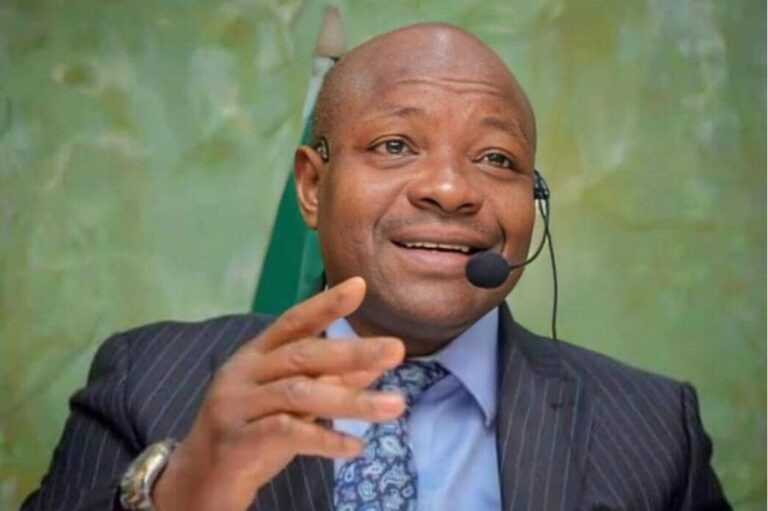
The Director-General of the Department of State Services (DSS), Oluwatosin Ajayi, has directed operatives of the agency to stop arresting individuals over civil disputes.
Ajayi said the directive formed part of reforms introduced since he assumed office, aimed at strengthening the agency’s adherence to the rule of law and improving its human rights record.
The DSS boss disclosed this in a media interview on Thursday, where he outlined reforms being implemented across the agency.
According to him, the reforms focus on five major areas: law enforcement, inter-agency collaboration, accountability, respect for human rights, and infrastructural and administrative development.
Ajayi said the reforms had also helped establish a clearer distinction between civil and criminal matters handled by the agency.
He acknowledged that the DSS had, in the past, sometimes conflated the two areas, but maintained that the use of force was inappropriate in civil disputes.
“You cannot apply the use of force in civil matters. Even some criminal matters don’t require force,” he said.
The DSS director-general cited the case involving political economist, Professor Pat Utomi, over allegations surrounding an attempt to establish what was described as a “shadow government”.
According to Ajayi, rather than arresting Utomi, the agency approached the court for judicial interpretation of the matter.
“Rather than arrest him, we sought judicial interpretation. And the Court ruled that his adventure was unconstitutional, illegal, and a threat to national security,” he said.
Ajayi also referenced a case involving the Socio-Economic Rights and Accountability Project (SERAP), which had approached the court over allegations that two DSS operatives invaded its premises.
He said the agency opted to allow the matter to be determined through the courts without making any arrest.
According to him, the court subsequently awarded more than N100 million in favour of SERAP.
Asked whether the DSS had now adopted litigation as its preferred approach in civil matters, Ajayi answered in the affirmative.
“I have told my people that there should be no arrest in any civil case,” he said.
The DSS boss added that the agency had similarly chosen to approach the courts in cases involving journalists rather than resorting to arrest.
“I’m sure you have found out that, even in cases involving journalists, we would rather approach the court because we do the same job,” he said.
Describing journalists as the agency’s “professional colleagues”, Ajayi said the major difference between the two institutions was the nature of the information they provide.
“I call you guys our professional colleagues. The only difference is that, while you inform the public, we inform the government,” he said.
“And because we inform the government, our information is classified until we declassify it.”
Ajayi said the reforms were part of broader efforts to reposition the DSS, strengthen accountability and ensure that its operations remained within the boundaries of the law.
















Plateau Indigenous Youths Reject Petition Against DSS, Accuse Fulani Groups of Orchestrating ‘Calumny’ to Halt Security Operations

Seven-Year-Old Boy Found Dead After Kidnap, N2.5m Ransom Demand in Jos

Jonathan Urges Nigeria to Boost Local Manufacturing, Reduce Imports

Dele Giwa: Forty Years After The Parcel That Shook Nigeria – By Shu’aibu Usman Leman

BREAKING: FG announces Ebola case in FCT, identifies 44 people for contact tracing

NUJ FCT Chairman Grace Ike Leads Tributes for Younger Brother on His 40th Birthday

If Buhari Could Not End Insecurity, Tinubu Cannot Be Blamed Alone — Yari

Military Says Air Strikes Killed 103 Terrorists in Borno, Adamawa

FCT Police Summon Farmers, Herders Over Violence in Gwagwalada

“A National Disgrace”: Northern Group Slams Sowore Over Harassment of Lawyer in Court
“A National Disgrace”: Northern Group Slams Sowore Over Harassment of Lawyer in Court
BREAKING: FG announces Ebola case in FCT, identifies 44 people for contact tracing
FCT Police Summon Farmers, Herders Over Violence in Gwagwalada
Military Says Air Strikes Killed 103 Terrorists in Borno, Adamawa
If Buhari Could Not End Insecurity, Tinubu Cannot Be Blamed Alone — Yari
NUJ FCT Chairman Grace Ike Leads Tributes for Younger Brother on His 40th Birthday
Dele Giwa: Forty Years After The Parcel That Shook Nigeria – By Shu’aibu Usman Leman
Jonathan Urges Nigeria to Boost Local Manufacturing, Reduce Imports
Seven-Year-Old Boy Found Dead After Kidnap, N2.5m Ransom Demand in Jos
Plateau Indigenous Youths Reject Petition Against DSS, Accuse Fulani Groups of Orchestrating ‘Calumny’ to Halt Security Operations
-
 News2 days ago
“A National Disgrace”: Northern Group Slams Sowore Over Harassment of Lawyer in Court
-
 News1 day ago
FCT Police Summon Farmers, Herders Over Violence in Gwagwalada
-
 Metro1 day ago
Military Says Air Strikes Killed 103 Terrorists in Borno, Adamawa
-
 FCT News24 hours ago
BREAKING: FG announces Ebola case in FCT, identifies 44 people for contact tracing
-
 News1 day ago
If Buhari Could Not End Insecurity, Tinubu Cannot Be Blamed Alone — Yari
-
 News1 day ago
NUJ FCT Chairman Grace Ike Leads Tributes for Younger Brother on His 40th Birthday
-
 News5 hours ago
Jonathan Urges Nigeria to Boost Local Manufacturing, Reduce Imports
-
 News5 hours ago
Seven-Year-Old Boy Found Dead After Kidnap, N2.5m Ransom Demand in Jos