
News
EFCC Chairman Olukoyede highlights three years of reforms, recoveries and convictions

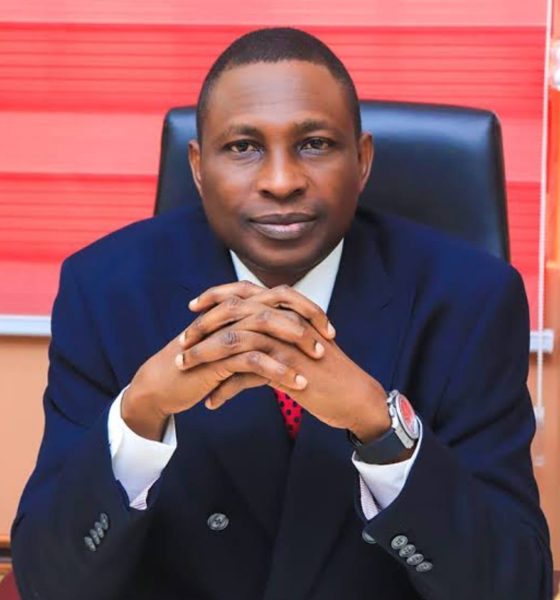
The Executive Chairman of the Economic and Financial Crimes Commission (EFCC), Ola Olukoyede, on Monday presented a detailed account of the agency’s achievements over the past 34 months, saying the commission has recorded major gains in enforcement, asset recovery, institutional reform and collaboration.
Olukoyede said the period had been marked by “work, commitment and passionate engagement” in the fight against economic and financial crimes, adding that his leadership was guided by a three-pronged agenda focused on refocusing the EFCC’s mandate, using anti-graft efforts to stimulate economic growth, and strengthening the rule of law while improving Nigeria’s image and attracting foreign direct investment.
According to him, between October 2023 and July 2026, the EFCC received 49,673 petitions, investigated 39,615 cases, filed 14,476 cases in court and secured 10,872 convictions, representing a conviction-to-filing ratio of 75.1 percent. In the first half of 2026 alone, the commission secured 1,370 convictions from 1,889 filings.
He said the commission’s data also showed changing patterns in financial crime, with advance fee fraud and cybercrime accounting for nearly two-thirds of the 46,288 offences recorded across nine major categories between 2024 and 2026.
He noted that offences rose by 24.1 percent between 2024 and 2025, with notable increases in procurement fraud, bank fraud, cybercrime and economic-governance offences.
Olukoyede said the EFCC remained committed to pursuing high-profile cases without regard to status, stressing that no office or title places anyone above the law.
He noted that recent convictions included former public officials such as Saleh Mamman, Robert Orya and Chukwunyere Nwabuoku.
The EFCC chairman also said the commission recorded 920 specialised cases in areas including money laundering, unlicensed bureaux de change, illegal mining, virtual assets and terrorist financing, with 212 convictions secured.
He added that the agency is also responding to emerging threats in virtual assets and illicit financial flows from the extractive sector.
On asset recovery, Olukoyede said the EFCC recovered more than ₦1.23 trillion, $684.48 million, £373,905.78 and €9.34 million between October 1, 2023 and June 30, 2026.
He said about ₦397.26 billion represented direct recoveries for the Federal Government, while ₦836.34 billion was recovered on behalf of ministries, departments and agencies, state revenue services, companies, individuals and foreign victims.
He added that ₦661.32 billion and $492.37 million were released to beneficiaries during the period, including payments to individuals, corporate bodies, MDAs and state revenue authorities.
According to him, recovered funds were also used to support public projects, including allocations to the Nigerian Education Loan Fund and the Nigerian Consumer Credit Corporation.
Olukoyede said the EFCC also secured forfeiture of 10,053 tangible assets, including real estate, vehicles, electronics, schools, factories, hotels, oil rigs and aircraft, as well as 102 tonnes of solid minerals.
He said proceeds from final forfeiture sales amounted to about ₦12.07 billion.
The chairman noted that the commission’s efforts contributed to Nigeria’s removal from the Financial Action Task Force grey list in October 2025, describing it as a national achievement.
He also said enforcement against unlicensed bureaux de change supported reforms in the foreign exchange market and helped improve macroeconomic stability.
Olukoyede thanked domestic and international partners, including the judiciary, security agencies, regulators and foreign law enforcement bodies, for their support.
He also highlighted reforms within the EFCC, including new operational guidelines, new departments and directorates, a stronger ethics framework and the digitalisation of about 60 percent of the commission’s processes.
He said the EFCC would continue to deepen prevention, accelerate restitution, improve technology and strengthen professionalism in its engagement with citizens.







NUJ FCT Chairman Grace Ike Leads Tributes for Younger Brother on His 40th Birthday

If Buhari Could Not End Insecurity, Tinubu Cannot Be Blamed Alone — Yari

Military Says Air Strikes Killed 103 Terrorists in Borno, Adamawa

FCT Police Summon Farmers, Herders Over Violence in Gwagwalada

“A National Disgrace”: Northern Group Slams Sowore Over Harassment of Lawyer in Court

CACL condemns AAC’S declaration Of Federal High Court as campaign venue, warns against incitement, threats to democratic order

BREAKING: Emmanuel Uduaghan, Former Delta Governor, Dies at 71

DSS arrests of NYSC kidnappers, Faisal Maina: Why intelligence must take centre stage By Olufemi Lawson

Dr Adedayo Benjamins-Laniyi: The woman leading Nigeria’s National Centre for Women Development

Inauguration of NSITF’s ACTU to promote integrity, public trust – MD Faleye
CACL condemns AAC’S declaration Of Federal High Court as campaign venue, warns against incitement, threats to democratic order
DSS arrests of NYSC kidnappers, Faisal Maina: Why intelligence must take centre stage By Olufemi Lawson
BREAKING: Emmanuel Uduaghan, Former Delta Governor, Dies at 71
“A National Disgrace”: Northern Group Slams Sowore Over Harassment of Lawyer in Court
FCT Police Summon Farmers, Herders Over Violence in Gwagwalada
Military Says Air Strikes Killed 103 Terrorists in Borno, Adamawa
If Buhari Could Not End Insecurity, Tinubu Cannot Be Blamed Alone — Yari
NUJ FCT Chairman Grace Ike Leads Tributes for Younger Brother on His 40th Birthday
-
 News24 hours ago
CACL condemns AAC’S declaration Of Federal High Court as campaign venue, warns against incitement, threats to democratic order
-
 News2 days ago
DSS arrests of NYSC kidnappers, Faisal Maina: Why intelligence must take centre stage By Olufemi Lawson
-
 News1 day ago
BREAKING: Emmanuel Uduaghan, Former Delta Governor, Dies at 71
-
 News20 hours ago
“A National Disgrace”: Northern Group Slams Sowore Over Harassment of Lawyer in Court
-
 News9 hours ago
FCT Police Summon Farmers, Herders Over Violence in Gwagwalada
-
 Metro9 hours ago
Military Says Air Strikes Killed 103 Terrorists in Borno, Adamawa
-
 News9 hours ago
If Buhari Could Not End Insecurity, Tinubu Cannot Be Blamed Alone — Yari
-
 News4 hours ago
NUJ FCT Chairman Grace Ike Leads Tributes for Younger Brother on His 40th Birthday