News
G100: Opposition Parties Begin Talks To Unite Ahead Of 2027, Adopt Single-Term Transition Plan

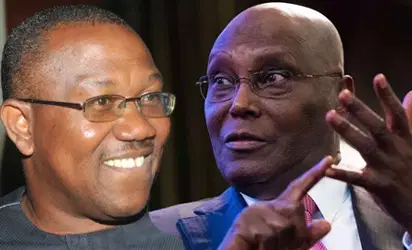
Leaders of six major opposition political parties on Monday converged on the Shehu Musa Yar’Adua Centre in Abuja for the first opposition parties’ summit, where they began discussions on a framework for political cooperation ahead of the 2027 general elections.
However, some of the major opposition figures, including the presidential candidate of the African Democratic Congress (ADC), Atiku Abubakar; the Nigeria Democratic Congress (NDC) candidate, Peter Obi; and the Allied Peoples Movement (APM) presidential candidate and Oyo State Governor, Seyi Makinde, were absent from the meeting.
The summit, organised with the involvement of the G100, was attended by several presidential and vice-presidential candidates, national working committee members and members of the boards of trustees of the participating parties.
Among those present were the Social Democratic Party (SDP) presidential candidate, Adewole Adebayo; Peoples Redemption Party (PRP) presidential candidate, Donald Duke; and APM vice-presidential candidate, Lawal Musa Daura.
Opposition Proposes Four-Year Transition Government
In his opening remarks, delivered on behalf of the G100, Salihu Moh. Lukman proposed the establishment of what he described as a “Government of National Competence” based on a single four-year transition term.
Lukman said the proposal would be anchored on competence, integrity, national inclusion and fair representation, with participating parties expected to commit themselves to an enforceable Transition Charter.
He stressed that any agreement reached by the opposition must go beyond political promises and be legally and politically enforceable.
“This gathering does not need more sincerity. Nigerian politics has never suffered from a shortage of sincere promises. What it has suffered from is promises that nobody could enforce when the person who made them changed his or her mind,” he said.
According to him, every agreement must be written, witnessed and backed by consequences for non-compliance.
Opposition Blames 2023 Defeat On Division
Lukman said the opposition’s experience in the 2023 presidential election demonstrated the danger of contesting elections as fragmented political blocs.
He recalled that opposition parties had contested previous presidential elections separately in 2003, 2007 and 2011, but were able to defeat the then ruling party in 2015 after agreeing on rules of engagement.
He argued that the failure to replicate that unity in 2023 allowed opposition votes to become divided.
“Nobody stole thirteen million votes. We divided them ourselves, in public, and we did it knowing exactly what the consequence would be,” he said.
Lukman cited political developments in Kenya and Malaysia as examples of opposition forces defeating long-standing ruling parties after choosing unity over fragmentation.
“In neither case did the opposition win because it had become more virtuous. It won because it had become one,” he said.
Three Committees, Five Working Groups Proposed
The summit was told that three standing bodies would form part of the proposed opposition cooperation structure.
They include a Central Leadership Committee comprising national chairmen, national secretaries and presidential and vice-presidential candidates; a Publicity and Communication Committee to coordinate joint messaging; and a Legal Committee to provide legal strategy and advice.
Lukman also announced plans for five working groups to develop proposals on a National Covenant for Democratic Renewal, Single-Term Transition Charter, National Reform Programme, Framework for Opposition Unity and Roadmap to a Common Presidential Candidate.
The groups are expected to submit their reports within four weeks for consideration at a second opposition summit.
He stressed that Monday’s meeting was not intended to force any political party to dissolve or any presidential candidate to withdraw.
“It is not asking any party to dissolve. It is not asking any party to disappear into another party. It is not asking any candidate to stand down this morning,” he said.
He explained that the immediate objective was to establish the framework for negotiations before decisions were taken on leadership and candidacy.
Minority Leader Urges Opposition To Learn From 2015
The Minority Leader of the House of Representatives, Fred Agbedi, urged opposition parties to close ranks and replicate the strategy that produced the APC’s historic victory in 2015.
Agbedi said the Minority Caucus had decided to work with the G100 to help opposition parties streamline their ambitions and build a stronger platform for the 2027 election.
He warned that a divided opposition could once again squander millions of votes.
“What will it benefit us when we are divided and scattered, and we go into an election, and we come back to collate the millions of votes we had divided amongst ourselves that could not give us victory?” he asked.
Donald Duke Offers To Step Aside
PRP presidential candidate Donald Duke said he was prepared to sacrifice his personal ambition for a candidate jointly agreed upon by the participating opposition parties.
Duke argued that personal ego had repeatedly stood in the way of opposition cooperation.
“If we think we can go it all alone, then we will fail,” he declared.
Parties Back Opposition Cooperation
Representing the ADC, its National Vice Chairman, South-South, Usani Uguru Usani, expressed confidence in the coalition initiative but warned opposition parties against attacking one another.
“There is something that is happening among the opposition people or party. We seem to be attacking ourselves much more than we attack a common enemy, which is not correct,” he said.
APM National Chairman Yusuf Mamman Dantalle described the summit as a historic moment and urged politicians to put national interest above personal ambitions.
Representing the Tanimu Turaki-led faction of the PDP, the party’s Board of Trustees Secretary, Babangida Aliyu, also backed the initiative and called for similar cooperation meetings at state and local government levels.
PRP National Chairman Hakeem Baba-Ahmed described the gathering as historic, saying the participating parties faced what he called an “existential threat” through ongoing litigation.
“Our back is against the wall, but we’ll fight back. In 2027, we will together remove this government and put the Nigerian nation in a different trajectory,” he said.
SDP National Chairman Sadiq Gombe pledged his party’s commitment to the coalition process and urged participating parties to honour existing agreements on opposition unity.
The NDC National Chairman, Moses Cleopas Zuwoghe, also expressed support for the initiative on behalf of his party and Peter Obi, describing the coalition effort as necessary to rescue the country from what he called its current “comatose” state.
Opposition Demands Release Of Tinubu’s US Records
At the end of the summit, the six parties adopted a joint communiqué committing them to a structured negotiation process ahead of the 2027 election.
They formally established the Central Leadership Committee, Publicity and Communication Committee and Legal Committee.
The parties also agreed to constitute the five working groups and directed them to prepare their respective reports within four weeks ahead of a second summit.
In a significant part of the communiqué, the opposition parties called on the United States Government to ensure the timely and lawful release of all non-exempt official records concerning President Bola Tinubu that they said were relevant to legitimate public interest.
The parties referenced the ongoing Freedom of Information Act case before the United States District Court for the District of Columbia.
However, they clarified that their demand did not presume the contents of any undisclosed records or amount to a finding of wrongdoing against the President.
The opposition parties also resolved to communicate their position to the ECOWAS Commission.
The G100, meanwhile, is expected to remain in the role of facilitator and observer without taking over the decision-making authority of the political parties.
The summit marks the latest effort by opposition parties to forge a common front ahead of the 2027 elections, with the question of a possible joint presidential candidate expected to become a major issue in subsequent negotiations.




NUJ FCT Chairman Grace Ike Leads Tributes for Younger Brother on His 40th Birthday

If Buhari Could Not End Insecurity, Tinubu Cannot Be Blamed Alone — Yari

Military Says Air Strikes Killed 103 Terrorists in Borno, Adamawa

FCT Police Summon Farmers, Herders Over Violence in Gwagwalada

“A National Disgrace”: Northern Group Slams Sowore Over Harassment of Lawyer in Court

CACL condemns AAC’S declaration Of Federal High Court as campaign venue, warns against incitement, threats to democratic order

BREAKING: Emmanuel Uduaghan, Former Delta Governor, Dies at 71

DSS arrests of NYSC kidnappers, Faisal Maina: Why intelligence must take centre stage By Olufemi Lawson

Dr Adedayo Benjamins-Laniyi: The woman leading Nigeria’s National Centre for Women Development

Inauguration of NSITF’s ACTU to promote integrity, public trust – MD Faleye
CACL condemns AAC’S declaration Of Federal High Court as campaign venue, warns against incitement, threats to democratic order
BREAKING: Emmanuel Uduaghan, Former Delta Governor, Dies at 71
“A National Disgrace”: Northern Group Slams Sowore Over Harassment of Lawyer in Court
FCT Police Summon Farmers, Herders Over Violence in Gwagwalada
Military Says Air Strikes Killed 103 Terrorists in Borno, Adamawa
If Buhari Could Not End Insecurity, Tinubu Cannot Be Blamed Alone — Yari
NUJ FCT Chairman Grace Ike Leads Tributes for Younger Brother on His 40th Birthday
-
 News1 day ago
CACL condemns AAC’S declaration Of Federal High Court as campaign venue, warns against incitement, threats to democratic order
-
 News21 hours ago
“A National Disgrace”: Northern Group Slams Sowore Over Harassment of Lawyer in Court
-
 News1 day ago
BREAKING: Emmanuel Uduaghan, Former Delta Governor, Dies at 71
-
 News10 hours ago
FCT Police Summon Farmers, Herders Over Violence in Gwagwalada
-
 Metro10 hours ago
Military Says Air Strikes Killed 103 Terrorists in Borno, Adamawa
-
 News10 hours ago
If Buhari Could Not End Insecurity, Tinubu Cannot Be Blamed Alone — Yari
-
 News5 hours ago
NUJ FCT Chairman Grace Ike Leads Tributes for Younger Brother on His 40th Birthday