





FCT News
FCT residents lament rising transport fares after fuel price hike

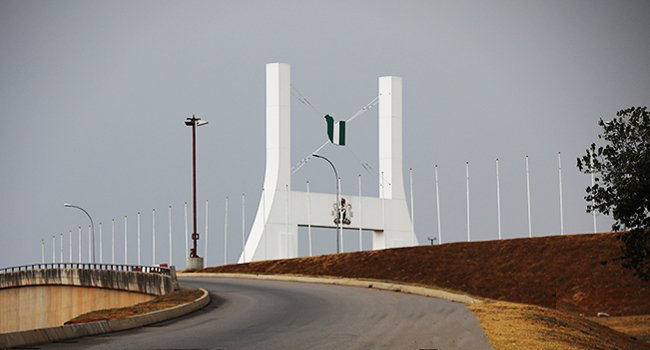
Residents of the Federal Capital Territory have raised concerns over rising transport fares following the recent increase in the pump price of petrol across the country.
The News Agency of Nigeria reports that petrol, which was previously sold between N835 and N875 per litre in the FCT, is now being sold between N1,200 and N1,350.
Following the price adjustment, transport fares across several routes in the territory have reportedly increased by about 100 per cent.
Some commuters who spoke with the News Agency of Nigeria on Friday said commercial vehicle operators had already raised fares, warning that the development could further worsen the cost of living.
Mrs Ngozi Okeke, a civil servant in Garki, said the fare from Nyanya to the city centre had increased within days of the fuel price change.
“Last week, I paid N800 to work, but today I paid N1,000. It may look small, but when you calculate it for the whole week, it is a lot,” she said.
Another commuter, Theresa Godspower, said she paid N700 from Nyanya to the Federal Secretariat, compared to the N500 she previously paid.
Mr Musa Abdullahi also said he paid N1,200 from Masaka to the city centre, up from the N700 he used to pay.
Similarly, Mr Godwin Ameh noted that the fare from Lugbe to Wuse had increased from N800 to N1,000, with some drivers charging as much as N1,200.
Mr Amos Badifu, a public servant, warned that increases in transport fares often lead to higher food prices in markets.
“Whenever fuel goes up, transporters increase fares and traders also raise the cost of food items because of transportation. The fare from Kuje to Berger has increased from N1,300 to N1,500, and even bike fares have also gone up,” he said.
He added that prices of food items could rise further as traders adjust to the increased cost of transportation.
A taxi driver, Mr John Eze, explained that operators had little option but to raise fares in order to remain in business.
“Yesterday, I bought fuel at N1,250 per litre, but today it is N1,350. We have to adjust fares or we will run at a loss,” he said.
The News Agency of Nigeria also observed that fewer vehicles were seen on some major roads in the city as motorists begin to feel the impact of the higher fuel prices.
An economist, Dr Ibrahim Sule, said increases in fuel prices usually have a ripple effect across the economy, particularly on transportation and food supply.
According to him, transportation costs form a significant part of the final price of goods in Nigeria, especially food transported from rural areas to urban markets.
“When fuel prices rise, transport costs increase, and traders usually pass the additional cost to consumers. This is why people fear food inflation may follow,” he said.
Sule advised the government to strengthen social protection measures and improve mass transit systems to cushion the impact on residents.
He also recommended investment in alternative transport systems to reduce the country’s heavy dependence on petrol-powered mobility.













News10 minutes ago
Troops repel terrorist attacks on military positions in Borno

News33 minutes ago
Engine anomaly forced Arik Air flight diversion — NSIB report

FCT News38 minutes ago
FCT residents lament rising transport fares after fuel price hike

National News48 minutes ago
Tinubu Polytechnic, Epe University get N2bn funding each from FG

Business1 hour ago
ECOWAS raises alarm over border tensions between Guinea, Liberia, Sierra Leone

Sports1 hour ago
World Cup Row: Iran responds to Trump’s safety concerns

World News1 hour ago
Turkey confirms third missile interception amid middle East war

Entertainment2 hours ago
Comedian Broda Shaggi hospitalised after alleged shooting in Ogun

News3 hours ago
Legor Idagbo hails Wike on APC FCT Poll Win, predicts Tinubu’s 2027 Re-election

News7 hours ago
Julius Berger demonstrates commitment to CSR as Academy graduates 36

Uncategorized1 day ago
Empowering Women: Economic, social necessity –Faleye

News1 day ago
Celebrating Funke Ishola: A Trailblazer and pillar of empowerment

News2 days ago
Traders shut down Lagos International Trade Fair Complex over takeover concerns

National News2 days ago
Tinubu nominates Lamido Yuguda as CBN Deputy Governor

World News2 days ago
Nigerian among victims as UAE intercepts Iranian missiles

News1 day ago
FRSC Corps Marshal effects strategic shake-up, appoints new ACM Operations, Corps Spokesperson, others

World News2 days ago
Iran’s new Supreme Leader Mojtaba Khamenei injured but safe, official says

Business19 hours ago
30 Nigerian Banks meet CBN recapitalisation rarget ahead of deadline

National News2 days ago
Reps amend electoral act 2026, impose N10m fine for dual party membership

News19 hours ago
PDP, Labour Party lose 11 Lawmakers to APC, ADC in fresh defections
-
 Uncategorized1 day ago
Empowering Women: Economic, social necessity –Faleye
-
 News1 day ago
Celebrating Funke Ishola: A Trailblazer and pillar of empowerment
-
 News2 days ago
Traders shut down Lagos International Trade Fair Complex over takeover concerns
-
 National News2 days ago
Tinubu nominates Lamido Yuguda as CBN Deputy Governor
-
 World News2 days ago
Nigerian among victims as UAE intercepts Iranian missiles
-
 News1 day ago
FRSC Corps Marshal effects strategic shake-up, appoints new ACM Operations, Corps Spokesperson, others
-
 World News2 days ago
Iran’s new Supreme Leader Mojtaba Khamenei injured but safe, official says
-

 News19 hours ago
PSC promotes 13 commissioners of Police to AIG rank