
News
ICPC defends El-Rufai’s detention, alleges wiretapping devices found

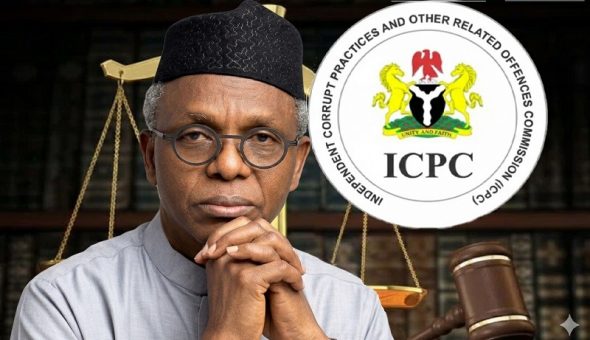
The Independent Corrupt Practices and Other Related Offences Commission (ICPC) has maintained that it lawfully detained former Kaduna State governor, Nasir El-Rufai, after recovering equipment allegedly capable of tapping conversations and accessing sensitive security documents from his Abuja residence.
In an affidavit deposed to by a Litigation Officer, David Efuk, before the High Court of the Federal Capital Territory, the commission said it obtained a 14-day remand order from a Magistrate Court in Bwari, FCT, to detain the former governor. The order is expected to lapse on March 5, 2026.
The anti-graft agency denied allegations of arbitrary detention and political repression, urging the High Court to dismiss El-Rufai’s fundamental human rights enforcement suit for lacking merit.
Alleged Recovery of Sensitive Equipment
According to the ICPC, a search warrant was executed on February 19, 2026, at No. 12 Mambila Street, Aso Drive, Asokoro District, Abuja, in the presence of El-Rufai’s wife, Hadiza Isma El-Rufai, and his son, Mohammed Bello El-Rufai.
The commission claimed it retrieved electronic magnetic devices allegedly capable of intercepting communications, as well as sensitive security documents belonging to various government agencies.
It further alleged that El-Rufai declined to grant consent for investigators to access the equipment and refused to respond to interview questions, opting instead to exercise his right to silence until formally arraigned in court.
The agency also claimed that one of his aides linked to the investigation had fled the country and that a potential prosecution witness had sought protection over alleged threats.
Detention and Investigation
The ICPC said it began investigating El-Rufai following a petition alleging corrupt practices during his tenure as governor. It stated that preliminary investigations involved retrieving documents from banks and government institutions.
According to the affidavit, efforts to invite the former governor through formal letters were unsuccessful until he was located at his Abuja residence and served with an invitation letter. The commission noted that he had earlier been detained by the Economic and Financial Crimes Commission (EFCC) and was later transferred to its custody.
The ICPC insisted that it followed due process and acted within its statutory mandate to investigate corruption and related offences. It said charges would be filed before the expiration of the detention order.
Corruption Allegations
The petition against El-Rufai includes allegations of:
Unclear cash withdrawals in foreign currency amounting to €1.4 million
180 suspicious payments totalling N2.15 billion from a Consolidated Revenue Account linked to Kaduna State’s IGR
Transfers of N428.12 million to undisclosed accounts
Diversion of public funds and alleged violations of procurement laws
Use of a debit card on a revenue account involving transactions of N721.67 million
Domestic and foreign loans allegedly mismanaged during his administration
The petition further questioned the execution of projects funded by loans and alleged breaches of the Kaduna State Public Procurement Law, 2016.
El-Rufai’s Response
In a statement on oath, El-Rufai denied wrongdoing and described the investigation as political persecution. He said he is a leading member of the African Democratic Congress (ADC) and claimed his opposition role was the real reason behind the probe.
He maintained that he would only respond to the allegations in a court of law, stating that he was exercising his constitutional right to remain silent until arraigned before a judicial tribunal.
The High Court of the Federal Capital Territory is expected to determine the legality of his detention and whether the ICPC can proceed with prosecution as investigations continue.







World News46 minutes ago
US issues global alert urging Americans to stay vigilant after Iran strikes

FCT News51 minutes ago
2025 tax returns: FCT residents must file by March 31 — IRS

News54 minutes ago
No wiretapping equipment found In El-Rufai’s home — Family insists

News55 minutes ago
DSS nabs suspect over attack on Peter Obi in Edo

News5 hours ago
NUJ condemns harassment of Journalists by Alex Otti over legitimate questioning

National News8 hours ago
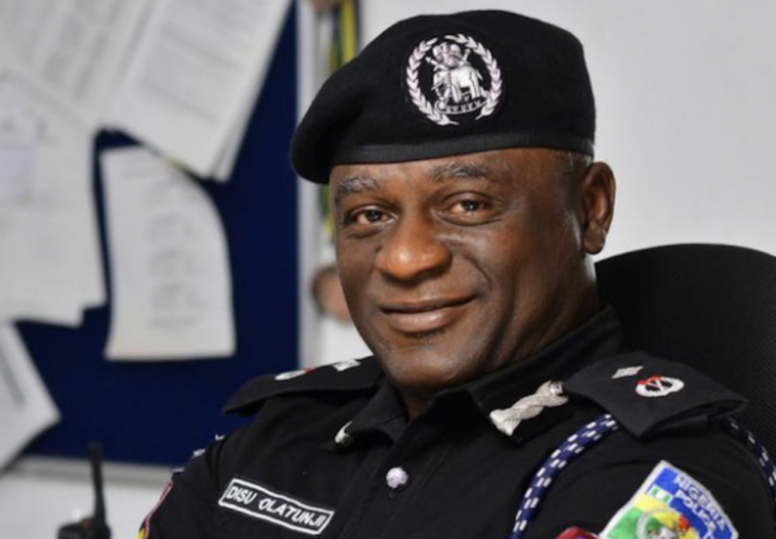
Tunji Disu confirmed as substantive IGP by Police Council

News9 hours ago
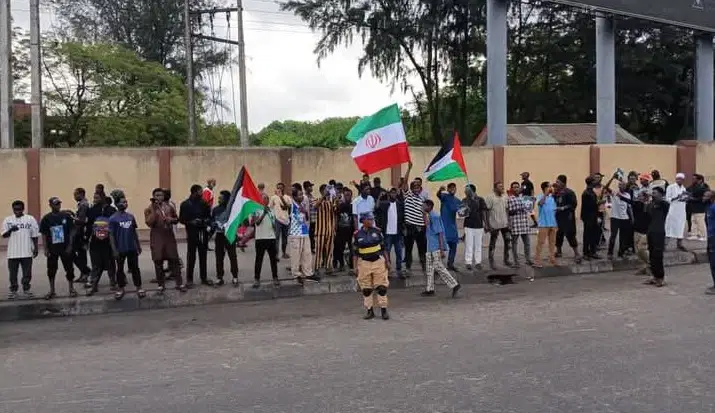
IMN protesters take to Lagos streets over killing of Iran’s Supreme Leader

National News9 hours ago
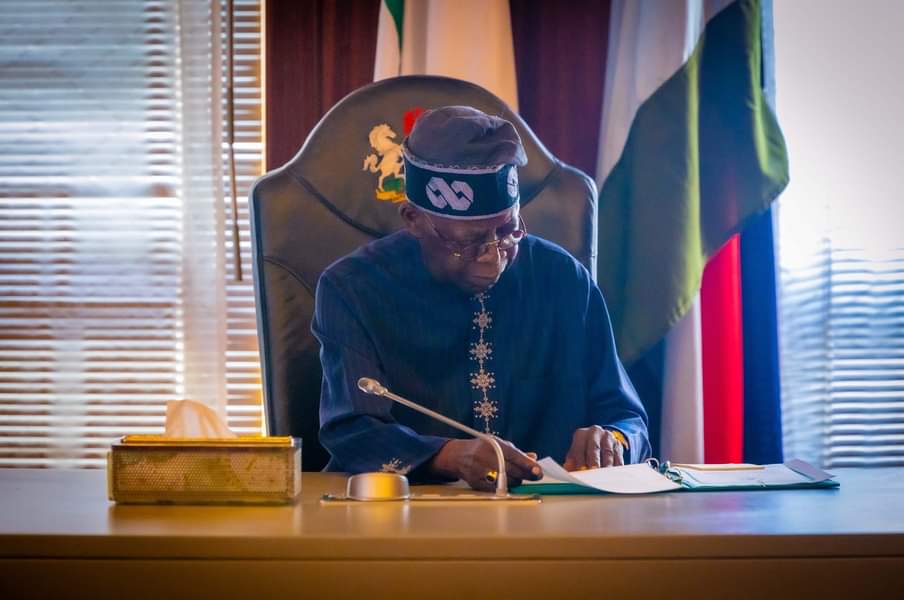
Tinubu presides over police council meeting to confirm Disu as IGP

News9 hours ago
Iyabo Obasanjo joins APC, declares Ogun governorship ambition

Metro9 hours ago
NAF neutralises senior terrorists in Sambisa air strikes
Metro9 hours ago
NAF neutralises senior terrorists in Sambisa air strikes

News16 hours ago
Four killed in Ramadan alms stampede in Katsina

News16 hours ago
Northern states witness protests over Iran leader’s death

News9 hours ago
Ireti Kingibe won’t return to Senate in 2027, Wike declares

World News2 days ago
BREAKING: Iran confirms death of Supreme Leader Ali Khamenei after US-Israeli attack

World News9 hours ago
China backs Iran’s ‘self-defence’ as middle East war escalates

News1 day ago
NEMSAS expands emergency medical services nationwide, urges NCC to strengthen 112 access

News15 hours ago
2027: INEC assures electronic result transmission, says perfect poll not guaranteed

News1 day ago
NUJ confirms death of Bauchi TV cameraman after auto crash

News16 hours ago
Troops repel ISWAP attacks on Borno bases, Army major killed
-
 News16 hours ago
Four killed in Ramadan alms stampede in Katsina
-
 News16 hours ago
Northern states witness protests over Iran leader’s death
-
 Metro9 hours ago
NAF neutralises senior terrorists in Sambisa air strikes
-
 News1 day ago
NEMSAS expands emergency medical services nationwide, urges NCC to strengthen 112 access
-
 News15 hours ago
2027: INEC assures electronic result transmission, says perfect poll not guaranteed
-
 News9 hours ago
Ireti Kingibe won’t return to Senate in 2027, Wike declares
-
 World News9 hours ago
China backs Iran’s ‘self-defence’ as middle East war escalates
-
 World News2 days ago
BREAKING: Iran confirms death of Supreme Leader Ali Khamenei after US-Israeli attack