


Metro
Sheda community faces worsening gully erosion crisis amid years of infrastructural neglect

By Oladosu Adebola Oluwaseun
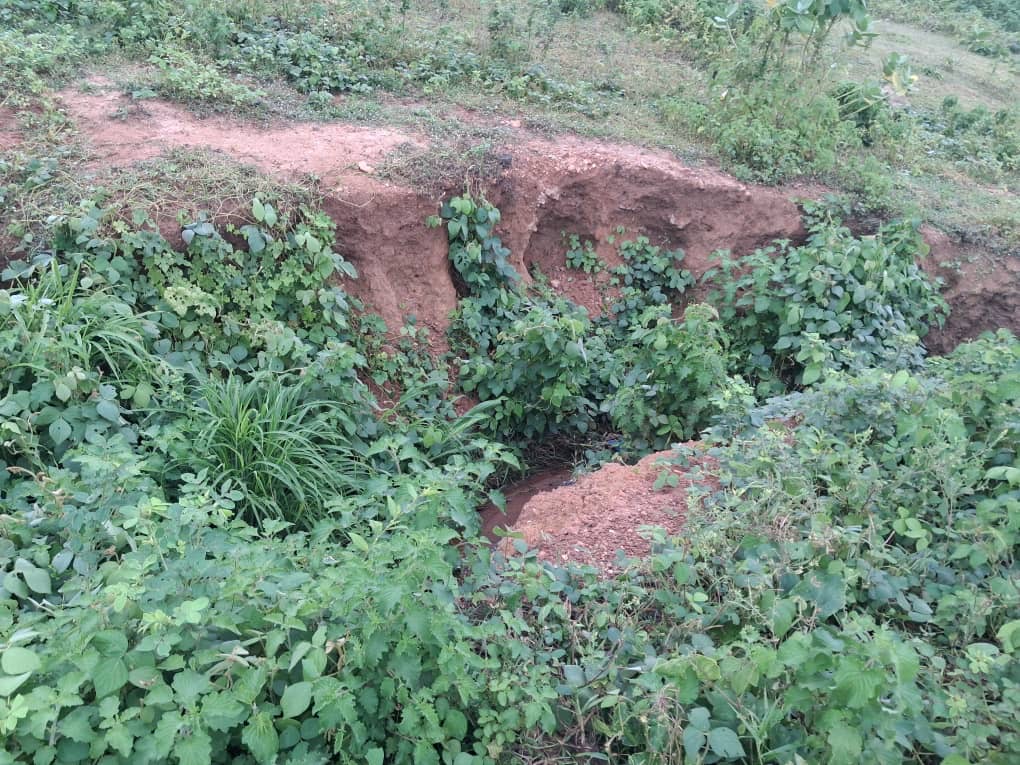
The devastating gully erosion threatening the Sheda community in the Kwali Area Council of the Federal Capital Territory is a profound environmental crisis rooted fundamentally in infrastructural neglect.
The primary cause of the crisis in Sheda is clearly the absence of adequate storm water drainage channels. As Solomon, the resident, observed, “When the water comes, it should find its way.” In a naturally developed area, without dedicated channels (culverts, gutters, and drains), rainwater from the surrounding village flows to the lowest point.
In this case, that point is the key road connecting the local primary school and the Chief’s residence.
When a large volume of water concentrates on an unpaved or poorly surfaced road, its velocity and erosive power increase dramatically. The water starts by washing away fine soil particles (sheet erosion), then carves small channels (rill erosion), and finally, these rills merge and deepen into gullies that can become metres deep.
The soil’s capacity to absorb the runoff is quickly overwhelmed, turning the road itself into a temporary, destructive riverbed.
This is a progressive and self-perpetuating cycle: as the gully deepens, it captures more runoff from a wider area, thus increasing the volume and velocity, which in turn accelerates the erosion process.
Furthermore, the necessity for villagers to continuously seek “alternative, difficult routes” places an unnecessary economic burden on the community, increasing travel time, fuel consumption, and the difficulty of transporting agricultural produce or goods, stifling local commerce. The deep, unstable trenches themselves also constitute significant safety hazards, especially during darkness or flash floods, underscoring the immediate risk to human life and property.
The fact that residents describe this lack of essential infrastructure as a “long-standing issue” points directly to a systemic failure in public works provision and highlights years of developmental neglect by the Kwali Area Council and the wider Federal Capital Territory Administration.
The community reports that this lack of essential infrastructure has been a long-standing issue, posing a significant challenge to daily life and highlighting the urgent need for a solution to protect their roads and prevent further land degradation.





News2 hours ago
IGP urges court to dismiss El-Rufai’s ₦1bn rights suit

Sports3 hours ago
Anthony Joshua relocates to Dubai, family confirms

National News3 hours ago
NiMet issues Meningitis alert across Northern Nigeria

National News3 hours ago
UK tightens security as Tinubu begins state visit to Windsor

News3 hours ago
PDP, Labour Party lose 11 Lawmakers to APC, ADC in fresh defections

Business3 hours ago
30 Nigerian Banks meet CBN recapitalisation rarget ahead of deadline

National News3 hours ago
FCCPC probes airlines over Christmas fare hike, sanctions loom

News3 hours ago
PSC promotes 13 commissioners of Police to AIG rank

News11 hours ago
South African Army chief visits Nigerian military institutions to strengthen cooperation

News12 hours ago
Five rescued, three dead as bus plunges into river in Ibadan

Uncategorized13 hours ago
Empowering Women: Economic, social necessity –Faleye

News1 day ago
Iran warns protesters supporting foreign enemies will be treated as ‘enemies’

Sports1 day ago
Kano Governor sacks Head of Service Abdullahi Musa

News1 day ago
Traders shut down Lagos International Trade Fair Complex over takeover concerns

Sports1 day ago
Flying Eagles midfielder Daniel Daga sentenced to six months in Norway

News13 hours ago
Celebrating Funke Ishola: A Trailblazer and pillar of empowerment

World News1 day ago
Iran’s new Supreme Leader Mojtaba Khamenei injured but safe, official says

World News1 day ago
Nigerian among victims as UAE intercepts Iranian missiles

National News1 day ago
Tinubu nominates Lamido Yuguda as CBN Deputy Governor

National News1 day ago
Reps amend electoral act 2026, impose N10m fine for dual party membership
-
 Uncategorized13 hours ago
Empowering Women: Economic, social necessity –Faleye
-
 News1 day ago
Iran warns protesters supporting foreign enemies will be treated as ‘enemies’
-
 Sports1 day ago
Kano Governor sacks Head of Service Abdullahi Musa
-
 Sports1 day ago
Flying Eagles midfielder Daniel Daga sentenced to six months in Norway
-
 News13 hours ago
Celebrating Funke Ishola: A Trailblazer and pillar of empowerment
-
 News1 day ago
Traders shut down Lagos International Trade Fair Complex over takeover concerns
-
 National News1 day ago
Tinubu nominates Lamido Yuguda as CBN Deputy Governor
-
 World News1 day ago
Iran’s new Supreme Leader Mojtaba Khamenei injured but safe, official says