National News
Tinubu to sign Tax Reform Bills into Law Thursday

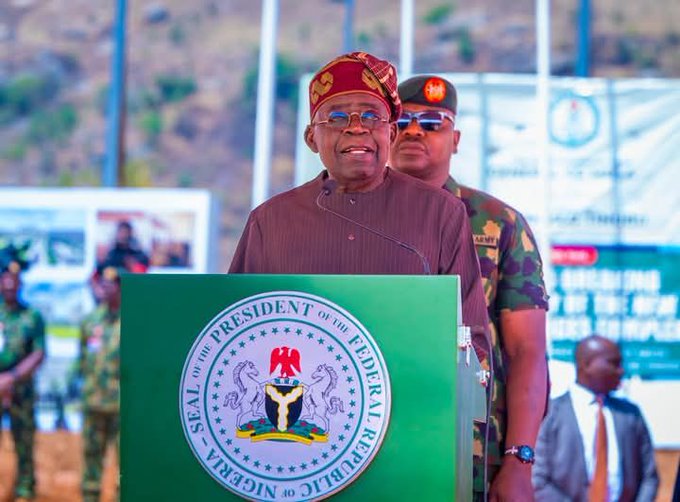
President Bola Ahmed Tinubu is expected to officially sign into law four landmark tax reform bills on Thursday, aiming to reshape Nigeria’s fiscal environment, enhance tax administration and attract fresh investments into the country.
The four bills — the Nigeria Tax Bill, Nigeria Tax Administration Bill, Nigeria Revenue Service (Establishment) Bill, and the Joint Revenue Board (Establishment) Bill — recently received approval from the National Assembly after a series of stakeholder meetings and technical evaluations.
According to a statement released on Wednesday by the Special Adviser to the President on Information and Strategy, Bayo Onanuga, the signing will take place at the State House in Abuja. He described the reforms as a major milestone in the president’s economic plan, pointing out that the new laws would simplify tax processes, increase government revenue, and improve the ease of doing business in Nigeria.
“These laws will significantly transform tax administration in the country, leading to increased revenue generation, an improved business environment, and a boost in domestic and foreign investments,” the statement said.
The signing event will be attended by several government dignitaries, including the President of the Senate, Speaker of the House of Representatives, top leaders from both chambers of the National Assembly, finance ministers, and heads of relevant government agencies.
Among the reforms is the Nigeria Tax Bill (Ease of Doing Business), which aims to merge Nigeria’s fragmented tax laws into a single, unified statute, cutting down on multiple taxation and easing the burden of compliance for businesses and individuals.
The Nigeria Tax Administration Bill will set a consistent legal and operational framework for tax administration across federal, state, and local government levels, seeking to reduce conflict and duplication in tax collection.
Also slated for signing is the Nigeria Revenue Service (Establishment) Bill, which will repeal the current Federal Inland Revenue Service (FIRS) Act and set up a new autonomous Nigeria Revenue Service (NRS). This agency will be tasked not only with tax collection but also the collection of other government revenues, operating under stricter transparency and performance guidelines.
The fourth bill, the Joint Revenue Board (Establishment) Bill, will establish a formal body to ensure better coordination and cooperation among tax authorities across the country. It will also introduce accountability structures such as a Tax Appeal Tribunal and an Office of the Tax Ombudsman to handle tax-related disputes fairly.
These reforms are expected to modernise Nigeria’s tax system, improve revenue inflow, and create a more business-friendly environment.





Zone 7 Police Abuja to Host 2-Day Media Conference on Security Communication

NOTAP Unveils NTIS 2.0 to Drive Technology Sovereignty in Nigeria

Jonathan Sees Off Ex-Sierra Leone President Koroma as He Returns Home

British-Nigerian Businessman Dies After Penis Enlargement Procedure in Thailand

2027: None of Tinubu’s Opponents Can Improve Nigeria, Including Peter Obi — Datti

Amadi charges INEC to stop desperate politicians from rigging in 2027

Millions of Nigerians Still Trapped in Poverty Despite Hard Work — Makinde

Osimhen Scores Again as Galatasaray Edge Başakşehir in Five-Goal Thriller

Young Nigerians Selling Kidneys to Survive Under Tinubu, Atiku Alleges

Thousands Gather in Gumel as Emir Ahmad Muhammad Sani II Is Buried
Amadi charges INEC to stop desperate politicians from rigging in 2027
2027: None of Tinubu’s Opponents Can Improve Nigeria, Including Peter Obi — Datti
British-Nigerian Businessman Dies After Penis Enlargement Procedure in Thailand
NOTAP Unveils NTIS 2.0 to Drive Technology Sovereignty in Nigeria
Jonathan Sees Off Ex-Sierra Leone President Koroma as He Returns Home
Zone 7 Police Abuja to Host 2-Day Media Conference on Security Communication
-
 News1 day ago
Amadi charges INEC to stop desperate politicians from rigging in 2027
-
 News14 hours ago
2027: None of Tinubu’s Opponents Can Improve Nigeria, Including Peter Obi — Datti
-
 Entertainment14 hours ago
British-Nigerian Businessman Dies After Penis Enlargement Procedure in Thailand
-
 National News3 hours ago
NOTAP Unveils NTIS 2.0 to Drive Technology Sovereignty in Nigeria
-
 News3 hours ago
Zone 7 Police Abuja to Host 2-Day Media Conference on Security Communication
-
 News14 hours ago
Jonathan Sees Off Ex-Sierra Leone President Koroma as He Returns Home