
National News
Reps reject bill to criminalise delegate inducement during party primaries


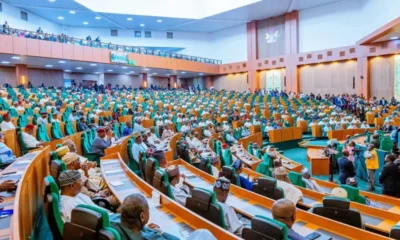
The House of Representatives has rejected a proposal seeking to criminalise the inducement of delegates during party primaries, leaving the controversial practice outside the scope of criminal sanctions under the Electoral Act.
The lawmakers voted against the proposal on Thursday during the clause-by-clause consideration of a report seeking to amend the Electoral Act 2022.
The rejected clause proposed a two-year jail term, without the option of a fine, for any individual who financially or materially induces a delegate to influence the outcome of party primaries, congresses, or conventions.
Clause 89(4) of the amendment report had stated that any person who “financially or materially induces a delegate for the purpose of influencing the outcome of party primaries, congresses and conventions commits an offence and is liable on conviction to imprisonment of two years without an option of fine.”
However, the proposal was unanimously voted down when Benjamin Kalu, the deputy speaker who presided over the session, called for a voice vote.
Inducement of delegates — where aspirants allegedly offer cash or material benefits to sway votes during party congresses and conventions — has remained a recurring feature of party primaries in Nigeria.
The practice is largely attributed to the delegate-based primary system, which concentrates decision-making power in the hands of a limited number of party members, often making the process vulnerable to financial influence.
—
Penalty for Ballot Offences
While rejecting sanctions for delegate inducement, the lawmakers approved a separate provision imposing stiff penalties for offences related to ballot papers and election materials.
Under the approved clause, any person who, without lawful authority, prints ballot papers, result forms, or any item capable of being used as a ballot paper, or prints quantities beyond what is authorised by the Independent National Electoral Commission (INEC), commits an offence.
The provision also criminalises the possession of ballot papers or result forms by unauthorised persons during an ongoing election.
In addition, anyone found to have manufactured, constructed, imported, possessed, supplied to an election official, or used ballot boxes or election materials designed to secretly divert, manipulate, or compromise ballot papers or result forms will face severe punishment.
Upon conviction, offenders are liable to a fine of up to N75 million, imprisonment for a term of not less than 10 years, or both.













Renowned Communication Scholar, Prof Idowu Sobowale, Dies at 85

NYSC Kidnap: Mother Reveals How She Paid N6m to Secure Son’s Release

NAF Helicopter Makes Precautionary Landing in Makurdi, Returns Safely to Base

Aiyedatiwa Orders Search to Continue Until NAF Aircraft, Victims Are Recovered

BREAKING: Security Forces Rescue 20 Prospective NYSC Members, Civilian Abducted in Imo

State Police Must Protect Nigerians, Not Intimidate Them — Comrade Grace Ike

BREAKING: NLC declares indefinite strike in FCT

Lagos hosts Chartered Risk Management Institute’s silver jubilee conference, spotlights youth challenge and national awards

BREAKING: NAF names 25 people killed in ATR 42 crash in Ondo (Full List)

KONEF celebrates World Teachers’ Day, urges greater investment in teaching
BREAKING: NLC declares indefinite strike in FCT
State Police Must Protect Nigerians, Not Intimidate Them — Comrade Grace Ike
Aiyedatiwa Orders Search to Continue Until NAF Aircraft, Victims Are Recovered
NAF Helicopter Makes Precautionary Landing in Makurdi, Returns Safely to Base
BREAKING: Security Forces Rescue 20 Prospective NYSC Members, Civilian Abducted in Imo
NYSC Kidnap: Mother Reveals How She Paid N6m to Secure Son’s Release
Renowned Communication Scholar, Prof Idowu Sobowale, Dies at 85
-
 News2 days ago
BREAKING: NLC declares indefinite strike in FCT
-
 NUJ FCT2 days ago
State Police Must Protect Nigerians, Not Intimidate Them — Comrade Grace Ike
-
 News18 hours ago
Aiyedatiwa Orders Search to Continue Until NAF Aircraft, Victims Are Recovered
-
 News16 hours ago
NAF Helicopter Makes Precautionary Landing in Makurdi, Returns Safely to Base
-
 News1 day ago
BREAKING: Security Forces Rescue 20 Prospective NYSC Members, Civilian Abducted in Imo
-
 News16 hours ago
NYSC Kidnap: Mother Reveals How She Paid N6m to Secure Son’s Release
-
 News16 hours ago
Renowned Communication Scholar, Prof Idowu Sobowale, Dies at 85