
Business
Naira records mixed performance as official rate weakens, parallel market gains

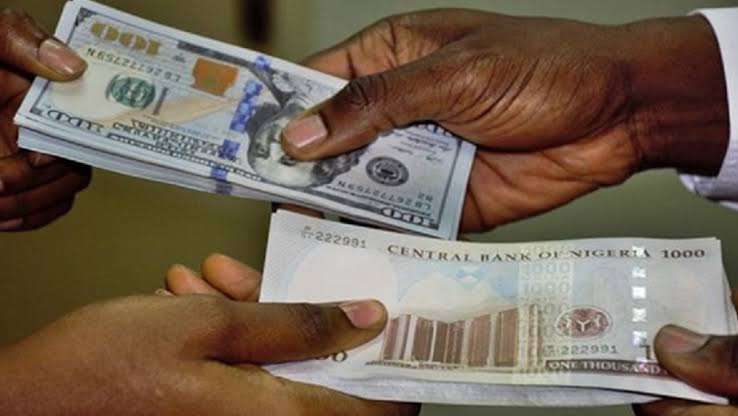
The naira posted a mixed outing on Wednesday, depreciating slightly at the official foreign exchange window while gaining marginally in the parallel market.
Data from the Nigerian Foreign Exchange Market (NFEM), published on the Central Bank of Nigeria (CBN) website, showed that the local currency weakened to ₦1,420.69 per dollar at the official window.
In contrast, the naira strengthened in the parallel market, appreciating to ₦1,480 per dollar, according to figures from Cowry Asset Management Limited. However, CardinalStone reported a slight depreciation in the informal market, placing the naira at ₦1,492/$, down from ₦1,490/$ recorded on Tuesday.
Despite the mixed performance, analysts say recent trends point to improving stability at the official window.
In a market update released on Tuesday, AIICO Capital noted that the naira had traded below the ₦1,420/$ threshold at the official market, supported by improved dollar supply from local market participants. The firm said trades were executed within a range of ₦1,421.00 to ₦1,418.40 per dollar.
AIICO Capital also highlighted a continued rise in Nigeria’s external reserves, which increased by $49.34 million to $45.95 billion as of January 19, 2026, further supporting near-term currency stability.
Market analysts expect the naira to hover around current levels in the short term, unless there is a significant shift in foreign exchange supply dynamics.
Meanwhile, research firms remain optimistic about the naira’s medium-term outlook, despite lingering volatility in the parallel market.
In its 2026 outlook titled “Building Momentum Beyond the Rebound”, Cordros Securities projected a stronger naira, supported by improved agricultural output and easing global oil prices. The firm expects the currency to trade within the range of ₦1,350–₦1,450 per dollar, compared to its year-end 2025 estimate of ₦1,450/$.
Cordros also forecast a gradual easing of inflationary pressures, with headline inflation projected at 16.3 per cent year-on-year, declining to 14.7 per cent by December 2026.
According to analysts, a firmer naira would lower the cost of imported goods and industrial raw materials, particularly food and manufactured products. In addition, average fuel prices, projected at ₦817.50 per litre, are expected to reduce logistics and production costs.
The research firm further noted that increased mechanisation and improved access to agricultural inputs would boost output, helping to stabilise or moderate food prices. With food accounting for about 40 per cent of Nigeria’s consumer price index, improved harvests are expected to play a critical role in the anticipated disinflationary trend.
Overall, the currency’s mixed performance highlights the persistent gap between the official and parallel markets, even as broader macroeconomic indicators suggest a gradually strengthening naira and moderating inflation in the year ahead.








Lagos-Ibadan Expressway Gridlock Lasts 14 Hours After Seven-Vehicle Crash at Kara

Presidency Dares Peter Obi to Quit 2027 Race Over Anambra Debt Claims

INEC Explains Amupitan’s Absence, Says Chairman Can Delegate Powers to National Commissioners

JAMB Begins Major UTME Review, Plans Life Skills, Critical Thinking Test

Supreme Court Reserves Judgment on Electoral Act 2026 Dispute

Court Orders Tinubu to Be Served With Atiku’s Suit Seeking His Disqualification

BREAKING: Nollywood Icon Olu Jacobs Dies at 84

I Don’t Need a Son to Inherit My Empire, My Daughters Can Lead — Dangote

Wike’s Rainbow Coalition Threat to APC Survival, Cohesion — Onoh

King’s College Concession: Education Workers Threaten Nationwide Shutdown of Unity Colleges

2027: INEC Promises Transparent, Credible and Peaceful General Election
King’s College Concession: Education Workers Threaten Nationwide Shutdown of Unity Colleges
BREAKING: Nollywood Icon Olu Jacobs Dies at 84
Wike’s Rainbow Coalition Threat to APC Survival, Cohesion — Onoh
Court Orders Tinubu to Be Served With Atiku’s Suit Seeking His Disqualification

BREAKING: Nigeria’s Inflation Rate Falls to 15.39% in August — NBS
Supreme Court Reserves Judgment on Electoral Act 2026 Dispute
JAMB Begins Major UTME Review, Plans Life Skills, Critical Thinking Test
INEC Explains Amupitan’s Absence, Says Chairman Can Delegate Powers to National Commissioners
Presidency Dares Peter Obi to Quit 2027 Race Over Anambra Debt Claims
-
 News2 days ago
2027: INEC Promises Transparent, Credible and Peaceful General Election
-
 News2 days ago
King’s College Concession: Education Workers Threaten Nationwide Shutdown of Unity Colleges
-
 Entertainment23 hours ago
BREAKING: Nollywood Icon Olu Jacobs Dies at 84
-
 News2 days ago
Wike’s Rainbow Coalition Threat to APC Survival, Cohesion — Onoh
-
 News17 hours ago
Court Orders Tinubu to Be Served With Atiku’s Suit Seeking His Disqualification
-
 News2 days ago
BREAKING: Nigeria’s Inflation Rate Falls to 15.39% in August — NBS
-
 News2 days ago
I Don’t Need a Son to Inherit My Empire, My Daughters Can Lead — Dangote
-
 News15 hours ago
Supreme Court Reserves Judgment on Electoral Act 2026 Dispute