News
World Bank’s Nigeria portfolio hits $16bn as managing Director begins Three-Day visit

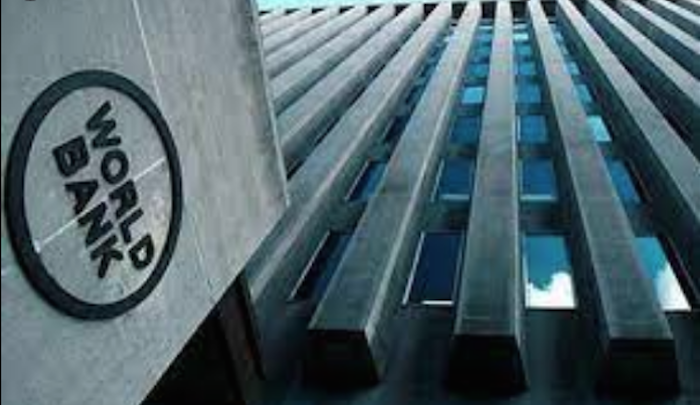
The World Bank has disclosed that its total ongoing and approved development projects and lending operations in Nigeria now exceed $16 billion, spanning key sectors including education, health, social protection, energy, agriculture and infrastructure.
The disclosure was made on Sunday as the Managing Director of Operations of the World Bank Group, Ms Anna Bjerde, commenced a three-day official visit to Nigeria aimed at deepening engagement on how the institution can best support the country’s drive for economic growth and job creation.
As part of the visit, Bjerde met with Lagos State Governor, Babajide Sanwo-Olu, who reaffirmed his administration’s readiness to strengthen partnerships with the Bretton Woods institution, particularly in energy, agriculture, tourism and human capital development.
Sanwo-Olu said Lagos was open to more investments and strategic collaborations that would improve the living standards of residents, stressing that the state government would take all necessary steps to attract increased World Bank support for infrastructure development.
Receiving the World Bank Group delegation at Lagos House, Marina, the governor highlighted the achievements of his administration over the last six years through the implementation of the THEMES+ development agenda, which he said had positively impacted millions of Lagosians.
In a statement issued by his Special Adviser on Media and Publicity, Gboyega Akosile, Sanwo-Olu disclosed that Lagos had moved from 29th position to first place on the national Ease of Doing Business ranking within four years, after significantly improving performance across all indicators.
In her remarks, Bjerde commended the Sanwo-Olu-led administration, describing its progress as a model with national relevance. She noted that recent reforms had contributed to greater economic stability and investor confidence.
“Nigeria has been very consistent. Policies haven’t been changing much, and that is helping predictability, especially for investors. We appreciate the government’s efforts on Ease of Doing Business and reducing bureaucratic bottlenecks,” she said.
Bjerde also revealed that the World Bank Group plans to conduct a five-year country review to assess Nigeria’s development trajectory, with particular attention to Lagos as a subnational government playing a major role in the bank’s intervention portfolio.
She added that the bank was prepared to leverage Lagos State’s institutional capacity to strengthen private-sector financing models, especially in infrastructure, energy, agriculture, tourism and human capital development.
According to the World Bank, Bjerde is scheduled to meet with Vice President Kashim Shettima, Minister of Finance and Coordinating Minister of the Economy, Wale Edun, and Central Bank Governor, Olayemi Cardoso, during the visit.
She is also accompanied by World Bank Vice President for Western and Central Africa, Ousmane Diagana, IFC Regional Vice President for Africa, Ethiopia Tafara, and Multilateral Investment Guarantee Agency Vice President, Ed Mountfield.
The bank disclosed that the International Finance Corporation’s (IFC) investment portfolio in Nigeria currently stands at over $1.2 billion, with a focus on private sector-led growth.
During the visit, consultations will be held with senior government officials, private sector leaders and civil society groups on the World Bank Group’s forthcoming Country Partnership Framework (CPF) for Nigeria. The strategy prioritises jobs, energy access and private sector growth as pillars of national development.
Stakeholders are expected to provide feedback on four key areas: improving the enabling environment, unlocking human capital, building resilience and maximising private capital mobilisation.
The visit also reinforces Nigeria’s role in advancing global development initiatives, including Mission 300, a joint World Bank Group–African Development Bank project aimed at providing 300 million Africans with access to affordable and reliable electricity by 2030.
In Nigeria, this is being implemented through the $750 million Distributed Access through Renewable Energy Scale-up (DARES) project, designed to deliver clean electricity to over 17.5 million Nigerians via mini-grids, solar home systems and household energy solutions. Other initiatives include AgriConnect, targeted at transforming smallholder farming into a commercially viable engine for jobs and food security.
The World Bank said discussions would also cover digital connectivity, power sector reforms, social protection and human capital development.
While the World Bank continues to provide concessional financing to federal and state governments, the IFC’s strategy in Nigeria focuses on diversifying growth, expanding financial inclusion, promoting sustainability and creating jobs, particularly through support for MSMEs, agribusiness, manufacturing and green energy adoption.




Gov. Bago Attends Funeral of In-Law, Alhaji Umaru Baba Chegungi, in Minna

20 Die, Five Injured in Fatal Crash at Hawan Kibo, Plateau

Suspected Boko Haram Terrorists Kill 15 Farmers in Borno, Three Missing

Amaechi: I’ll Withdraw From ADC Ticket, Campaign for Tinubu If Petrol Hits ₦600

Police Foil Bandits’ Attack on Sokoto Village, Recover Two Rocket Launchers

Veteran Actor Olu Jacobs Buried in Lagos as Nollywood Stars, Dignitaries Pay Tribute

WAEC Appoints Amos Dangut as Registrar, Begins Five-Year Tenure

2027: APM Presidential Candidate, Makinde, Appoints Amos Dunia as Special Adviser, Public Affairs

Livestock Minister Commends Niger Governor Bago’s Agricultural Drive, Backs Large-Scale Development

2027: Abuja Indigenous Youths declare support for President Tinubu
Amaechi: I’ll Withdraw From ADC Ticket, Campaign for Tinubu If Petrol Hits ₦600
WAEC Appoints Amos Dangut as Registrar, Begins Five-Year Tenure
Veteran Actor Olu Jacobs Buried in Lagos as Nollywood Stars, Dignitaries Pay Tribute
Police Foil Bandits’ Attack on Sokoto Village, Recover Two Rocket Launchers
20 Die, Five Injured in Fatal Crash at Hawan Kibo, Plateau
Suspected Boko Haram Terrorists Kill 15 Farmers in Borno, Three Missing
Gov. Bago Attends Funeral of In-Law, Alhaji Umaru Baba Chegungi, in Minna
-
 News2 days ago
Amaechi: I’ll Withdraw From ADC Ticket, Campaign for Tinubu If Petrol Hits ₦600
-
 News2 days ago
WAEC Appoints Amos Dangut as Registrar, Begins Five-Year Tenure
-
 Entertainment2 days ago
Veteran Actor Olu Jacobs Buried in Lagos as Nollywood Stars, Dignitaries Pay Tribute
-
 News2 days ago
Police Foil Bandits’ Attack on Sokoto Village, Recover Two Rocket Launchers
-
 News2 days ago
Suspected Boko Haram Terrorists Kill 15 Farmers in Borno, Three Missing
-
 Metro1 day ago
20 Die, Five Injured in Fatal Crash at Hawan Kibo, Plateau
-
 News8 hours ago
Gov. Bago Attends Funeral of In-Law, Alhaji Umaru Baba Chegungi, in Minna