News
Process critical minerals before export, Okonjo-Iweala tells Nigeria, Africa

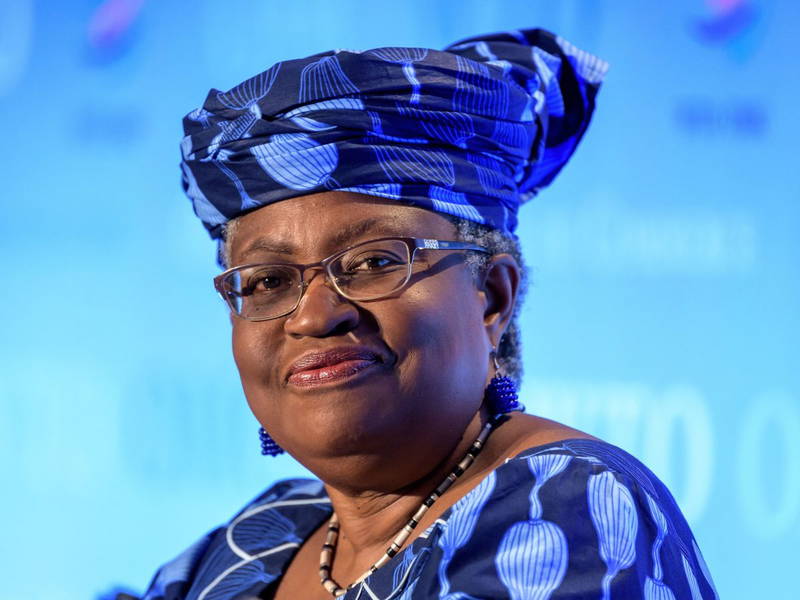
The Director-General of the World Trade Organization (WTO), Dr. Ngozi Okonjo-Iweala, has urged Nigeria and other African countries to process their critical minerals locally before exporting them, saying the continent must move beyond exporting raw materials to maximise economic benefits.
She made the call on Wednesday while speaking at the Fireplace Dialogue on Building Africa’s Resilience in a Changing Global Economic Order during the 7th Africa Emerging Markets Forum in Abuja.
Okonjo-Iweala, a former Minister of Finance and Coordinating Minister of the Economy, said Nigeria should leverage its abundant critical minerals to manufacture electric vehicle (EV) batteries and other green energy products, positioning itself as a major player in the global clean energy transition.
She argued that the continued extraction and export of raw critical minerals has contributed to corruption, conflict, terrorism and banditry across Nigeria and other African countries.
> “One high-potential sector is critical minerals, where the green transition is driving demand for lithium, bauxite, cobalt and other elements necessary to manufacture EV batteries and other low-carbon goods.
> “Africa holds an estimated 30 per cent of the world’s mineral reserves, and estimates for Latin America are similar.
> “For Africa, instead of the extract-and-export model that has been the source of so much volatility, economic underperformance and, let me be blunt, corruption, conflict and banditry, the goal should be higher value, higher productivity growth driven by the development of sub-regional value chains and integration into potential supply networks.”
She warned that Africa risks missing a major economic opportunity if it fails to act quickly.
> “Quite frankly, the time to seize this opportunity is now. As geopolitics exerts demand pressure for critical mineral supply chain diversification, if we miss this opportunity, I’m afraid we would have missed a lot.”
Okonjo-Iweala noted that some African countries have already begun adding value to their mineral resources, citing Morocco’s production of electric vehicle components and similar efforts in Zambia, the Democratic Republic of Congo, Mozambique, Angola and Nigeria.
However, she stressed that such initiatives require greater coordination across the continent.
> “These efforts need more systematisation and harmonisation, including sub-regional approaches, so that countries are not picked off one by one in suboptimal bilateral agreements. The continent can seize green comparative advantages by harnessing abundant renewable energy to power mineral processing.”
She also urged African countries to diversify their trading partners rather than relying heavily on a few export and import destinations.
> “A second way to make the trading system more robust and resilient is by ensuring more countries and regions become substantial sources of global supply and demand.”
Nigerians must feel impact of reforms
Okonjo-Iweala said Nigeria should sustain its macroeconomic reforms while adopting prudent fiscal and debt management policies.
She emphasised that the ultimate goal of economic reforms should be job creation and improved living standards.
> “Nigeria needs to continue the work on overall macroeconomic reforms with a careful approach to fiscal issues, contracting of debt and debt management.
> “Above all, Nigeria needs to focus on creating jobs and economic opportunities for a young and hungry population. Nigerians have to feel the dividends of reform in the real economy.”
Cardoso urges removal of African trade barriers
Also speaking, the Governor of the Central Bank of Nigeria (CBN), Olayemi Cardoso, called for the elimination of trade barriers across Africa to strengthen regional commerce.
He said changing global trade patterns present both risks and opportunities for the continent.
> “With intra-African trade still accounting for only about 16 per cent of our total trade, we must build stronger regional value chains, produce more of what we consume and trade more with one another.”
Cardoso urged African governments to move beyond trade agreements by improving transport infrastructure, harmonising customs procedures and making cross-border payments faster and cheaper.
He also called for greater mobilisation of domestic capital, including pension funds, insurance assets, local savings and diaspora investments, to finance development.
According to him, Africa must also invest in artificial intelligence, digital infrastructure, reliable electricity and youth development to compete effectively in the global economy.
> “We must become creators, developing African solutions to African challenges and building businesses capable of taking those solutions to the world,” Cardoso said.



I Don’t Need a Son to Inherit My Empire, My Daughters Can Lead — Dangote

Wike’s Rainbow Coalition Threat to APC Survival, Cohesion — Onoh

King’s College Concession: Education Workers Threaten Nationwide Shutdown of Unity Colleges

2027: INEC Promises Transparent, Credible and Peaceful General Election

BREAKING: Nigeria’s Inflation Rate Falls to 15.39% in August — NBS

Police Issue Nationwide Red Alert Over Planned Terrorist Attacks on Schools, Churches, Mosques

BBNaija Season 11: Barry Becomes First Finalist After Winning Week 8 HOH

Tinubu Orders Release of Funds to Regional Development Commissions

Africa Day for Technology, IPR: NOTAP Charts Path to Technological Independence

Court Adjourns Suit Challenging David Mark-Led ADC Leadership to September 28

Soludo Still Servicing Loans Inherited From Peter Obi, Obiano — Anambra Govt

Tinubu Will Win 2027 Presidential Election by Wide Majority — Reno Omokri

FG Condemns Killing of Two Nigerians in South Africa, Demands Urgent Probe
Court Adjourns Suit Challenging David Mark-Led ADC Leadership to September 28
Africa Day for Technology, IPR: NOTAP Charts Path to Technological Independence
Tinubu Orders Release of Funds to Regional Development Commissions
2027: INEC Promises Transparent, Credible and Peaceful General Election
King’s College Concession: Education Workers Threaten Nationwide Shutdown of Unity Colleges
Police Issue Nationwide Red Alert Over Planned Terrorist Attacks on Schools, Churches, Mosques
BBNaija Season 11: Barry Becomes First Finalist After Winning Week 8 HOH
-
 News2 days ago
Soludo Still Servicing Loans Inherited From Peter Obi, Obiano — Anambra Govt
-
 News2 days ago
Tinubu Will Win 2027 Presidential Election by Wide Majority — Reno Omokri
-
 News16 hours ago
2027: INEC Promises Transparent, Credible and Peaceful General Election
-
 National News2 days ago
FG Condemns Killing of Two Nigerians in South Africa, Demands Urgent Probe
-
 News2 days ago
Court Adjourns Suit Challenging David Mark-Led ADC Leadership to September 28
-
 News2 days ago
Africa Day for Technology, IPR: NOTAP Charts Path to Technological Independence
-
 National News1 day ago
Tinubu Orders Release of Funds to Regional Development Commissions
-
 News1 day ago
Police Issue Nationwide Red Alert Over Planned Terrorist Attacks on Schools, Churches, Mosques