
News
Dangote: Of Patriotism and Vendetta by Jacob EDI

The resignation, by close of work on Wednesday, of Engineer Farouk Ahmed of the Nigerian Midstream and Downstream Petroleum Regulatory Authority (NMDPRA) and Gbenga Komolafe of the Nigerian Upstream Petroleum Regulatory Commission (NUPRC) crystallised, in one decisive moment, the depth of dysfunction within Nigeria’s oil and gas sector.
Both men were appointed in 2021 by former President Muhammadu Buhari to lead the twin regulatory institutions birthed by the Petroleum Industry Act (PIA).
Their exit was not routine administrative hygiene. It was a stress signal from a sector long battling credibility, coherence and public trust.
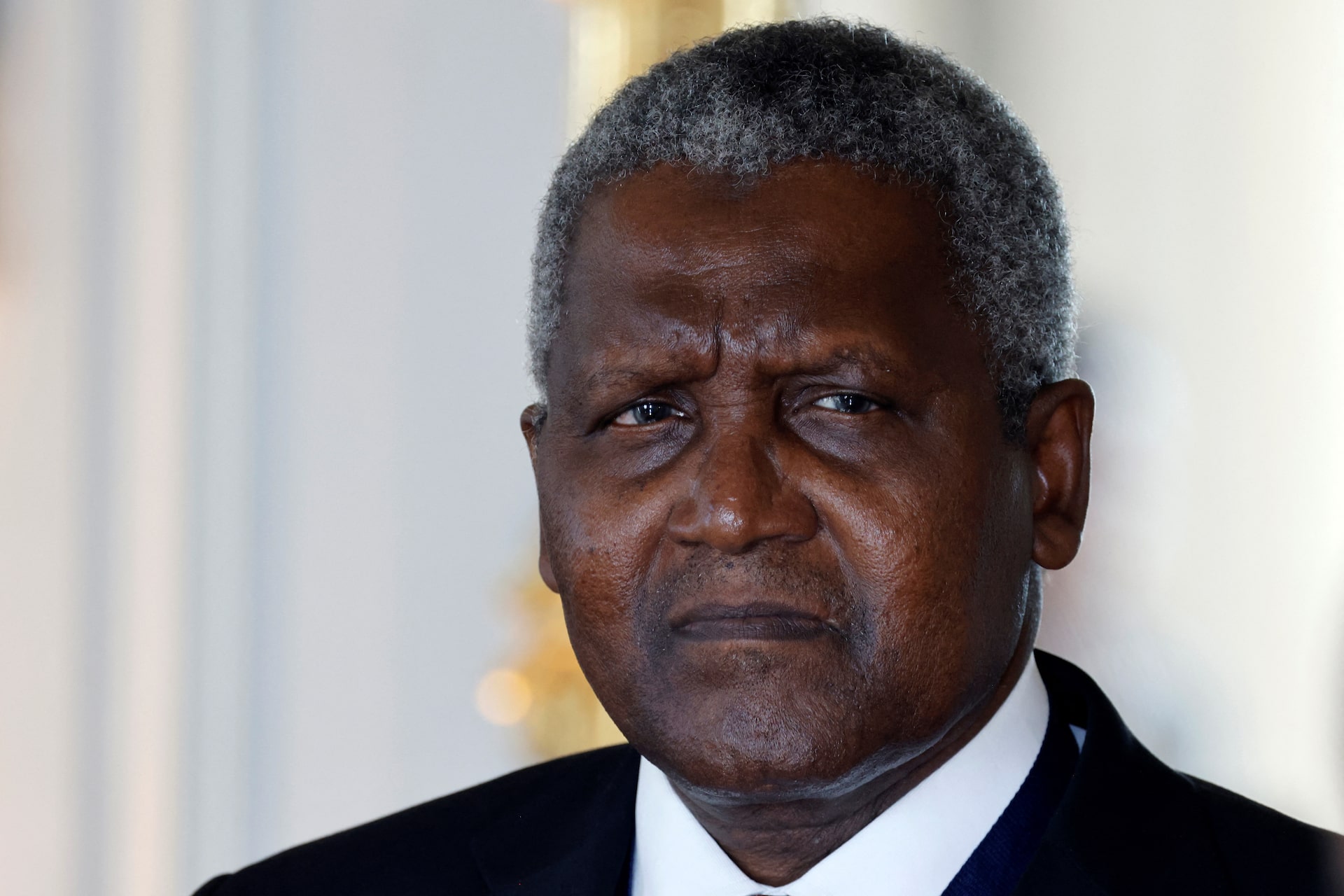
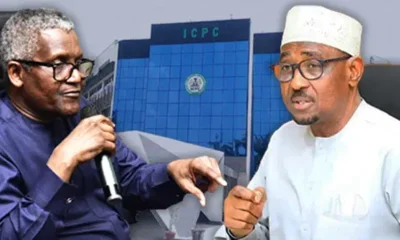
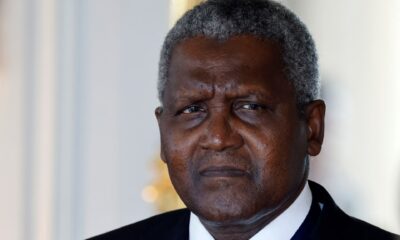
At the centre of this unfolding crisis stands Aliko Dangote, Africa’s richest man and, arguably, Nigeria’s most consequential private investor of the moment.
His recent interventions, pointed, public, unyielding and unusually combative, have walked a thin and uneasy line between patriotism and vendetta.
And that matters.
Not merely for Dangote, but for a country struggling to reset an industry historically captured by rent-seeking, opacity and power games.
Dangote’s economic footprint is vast.
Cement, sugar, salt, fertiliser and now oil refining. Few private actors since independence have occupied so much strategic space in the Nigerian economy.
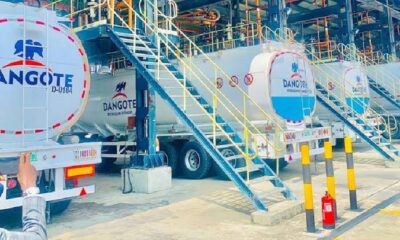
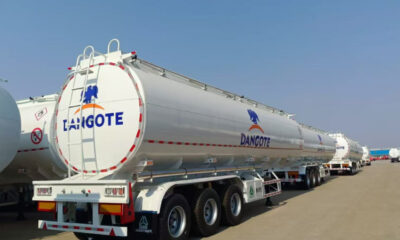
The $20 billion Dangote Refinery on the Lekki axis was sold to Nigerians not simply as a commercial venture, but as a national intervention, a private-sector response to decades of state failure in refining petroleum.
Nigeria, Africa’s largest crude producer, exporting raw crude only to import refined fuel at at unacceptable cost and consequence, had become a global paradox. Dangote stepped into that vacuum, and many applauded.
Fair enough.
No one is against Dangote getting return on his huge investments but it will amount to an incalculable harm to allow the protocols of industry regulation to be subverted.
And this is quite instructive
But patriotism, particularly in a constitutional democracy, is not self-certifying.
It is not enough to build big or invest big. It also matters how power is exercised, how disagreements with regulators are conducted, and how public narratives are shaped when interests collide.
The recent disputes involving the refinery, regulatory agencies, oil marketers and elements of the political class have exposed a deeper fault line.
On one side is the argument that Dangote is being deliberately frustrated by entrenched interests who profit from fuel importation and the structural opacity of the downstream sector.
This view is popular and not without merit. Nigeria’s oil economy has long functioned as a feeding bottle for cartels and middlemen who thrive on inefficiency. Any serious attempt to localise refining was bound to provoke resistance.
On the other side, however, is a growing concern that Dangote’s public posture increasingly frames legitimate regulatory oversight as sabotage and commercial competition as conspiracy.
And that is where the patriotism narrative begins to blur and the contradiction brightens.
In any functional economy, regulation is non-negotiable, no matter how strategic the investor.
The Nigerian state has a duty, no matter imperfectly discharged, to enforce standards, pricing frameworks and competition rules.
When a private actor, even one of national scale, begins to position himself as larger than the system, red flags appear. Not because success is suspect, but because unchecked dominance is equally dangerous.
The resignations of the two PIA-era regulators added a combustible layer to this already volatile mix. If, as alleged, there is deep-rooted corruption within the regulatory architecture, then the problem is larger than any single refinery or pricing dispute. Yet this is precisely where timing and motive become unavoidable questions.
If Dangote possessed evidence of corruption within the NMDPRA, for how long had it existed? Would it have surfaced had regulatory decisions consistently favoured his commercial interests?
These are not cynical questions.
They are necessary ones.
This is not an attempt to absolve Engineer Farouk Ahmed of any wrongdoing. Resignation does not amount to acquittal.
He must clear his name, and the state must investigate thoroughly. But Nigeria is governed by law, not outrage.
The legal maxim remains immutable: he who alleges must prove. Public accusation, no matter how emotionally satisfying, is not a substitute for due process. Dangote and his handlers are undoubtedly aware of this burden.
This is where Nigerians must draw a hard line between emotion and principle. The oil sector is deeply rotten. Many will argue that, vendetta or patriotism notwithstanding, it was better that Dangote spoke out than remained silent.
There is force in that argument. Whistleblowing, even when imperfect, can trigger long-delayed reckoning.
However, selective outrage is a fragile foundation for reform. Over the years, the Dangote Group allegedly benefited from concessions, waivers and regulatory accommodations, particularly under the immediate past administration of late President Muhammadu Buhari. Many of these advantages were lawful.
Some were strategic.
Others remain poorly explained.
This history complicates any claim to unblemished moral authority.
Equity is notorious and unforgiving. It does not negotiate sentiment. He who comes to equity must show a clean finger.
The question Nigerians are entitled to ask, and will continue to ask, is notorious but legitimate: how clean are Dangote’s fingers? One cannot credibly indict a system one has navigated, shaped and profited from without submitting oneself to the same level of scrutiny demanded of others.
What distinguishes the present moment, however, is the posture of the Tinubu administration. By moving swiftly to appoint replacements and stabilise regulatory leadership, the government signposted an impatience with drift and a refusal to personalise institutional crises.
In a sector notorious for paralysis and bureaucratic cowardice, this decisiveness matters.
It signals a government intent on pushing forward, not one content to be trapped in a billionaire-versus-bureaucrat confrontation.
Since assuming office, President Bola Tinubu has taken politically costly but structurally significant decisions in the oil sector.
The removal of fuel subsidy, long treated as untouchable, marked a decisive break with the past.
Exchange rate unification, equally painful, dismantled another pillar of arbitrage and opacity.
These reforms created shockwaves, but they also cleared the ground for a more rational energy economy with long term advantages if consistent.
That instinct is the right one. Nigeria does not need new gods in the oil sector. It needs rules that work, regulators who are accountable, and investors who understand that scale does not confer immunity.
Replacing broken public institutions with unrestrained private power is not reform. It is abdication, no matter how attractively it is packaged.
The dividing line, then, is neither abstract nor elusive. Patriotism is building within the system while pushing it to improve. Vendetta begins when regulation is delegitimised simply because it resists private or personal interest.
Dangote’s refinery can still be a national triumph as it was meant. But its legacy will not be measured only in refined-barrels-per-day or imports displaced, it will be measured in whether it strengthens Nigeria’s institutions or bends them.
As facts will unfold, Nigerians would do well to take a cue from the Tinubu administration’s urgency and insist on process over passion. The oil sector has consumed too many… good and bad.. already.
What it needs now is truth, restraint and momentum.
Nigeria, ultimately, is bigger than all of us.









News8 hours ago
Makinde holds PDP stakeholders meeting ahead of 2027 elections

World News8 hours ago
Iran says it received U.S. messages on ending war

News10 hours ago
DSS storms Malami’s Abuja residence after Atiku’s visit

News10 hours ago
One killed, others injured as IED explosion hits Kwara community

News10 hours ago
FG set to launch HIV prevention injection as 52,000 doses arrive

News11 hours ago
ICPC to arraign El-Rufai over alleged d fraud, money laundering charges

News16 hours ago
BREAKING: Former Acting Accountant-General sentenced to 72 Years for N868 Million fraud

News18 hours ago
Rising oil prices boost Nigeria’s fiscal space, says Gov. Otti

National News18 hours ago
NGF submits State Police framework to NSA, eyes National Assembly review

News18 hours ago
Nigerian Army neutralises dozens of bandits in Bello Turji’s camp

News18 hours ago
Police promise justice as 16 arrested over Ozoro festival violence

National News18 hours ago
Restructuring: Police clarify IGP directive, deny disbandment of tactical units
News18 hours ago
Nigerian Army neutralises dozens of bandits in Bello Turji’s camp

National News1 day ago
FG to scrap Common Entrance, introduce Learner ID for pupils

World News18 hours ago
Israel-Iran conflict deepens as global energy crisis worsens

National News1 day ago
Nigeria to get equipment, training support from France — Tinubu

News1 day ago
Panic in Kwara as gunmen invade Church, kidnap worshippers
National News18 hours ago
NGF submits State Police framework to NSA, eyes National Assembly review
News16 hours ago
BREAKING: Former Acting Accountant-General sentenced to 72 Years for N868 Million fraud

Sports1 day ago
Manchester City beat Arsenal 2-0 to win League Cup at Wembley
-
 News18 hours ago
Police promise justice as 16 arrested over Ozoro festival violence
-
 National News18 hours ago
Restructuring: Police clarify IGP directive, deny disbandment of tactical units
-
 National News1 day ago
FG to scrap Common Entrance, introduce Learner ID for pupils
-
 News18 hours ago
Nigerian Army neutralises dozens of bandits in Bello Turji’s camp
-
 National News1 day ago
Nigeria to get equipment, training support from France — Tinubu
-
 News1 day ago
Panic in Kwara as gunmen invade Church, kidnap worshippers
-
 World News18 hours ago
Israel-Iran conflict deepens as global energy crisis worsens
-
 News16 hours ago
BREAKING: Former Acting Accountant-General sentenced to 72 Years for N868 Million fraud