
Feature
Driven to end malaria: Nigeria intensifies fight as cases, deaths persist in Sub-Saharan Africa

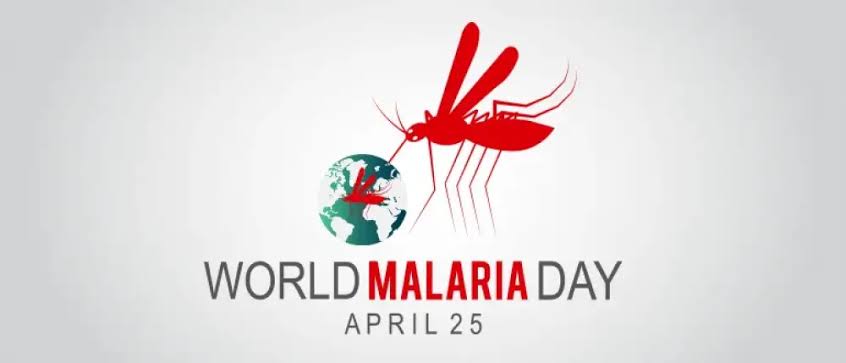
Malaria remains a quiet storm, ancient, persistent, and merciless, sweeping through vulnerable communities and tightening its grip across sub-Saharan Africa.
As the world pauses to mark World Malaria Day, Nigeria stands not in quiet observance, but in stark confrontation with a relentless, age-old scourge, one that creeps through the night with ruthless subtlety, preys on the most vulnerable, and leaves in its wake stories of pain too heavy for statistics to tell.
Across homes and hospital corridors, malaria unfolds not as a distant health concern, but as an intimate, lived ordeal, etched in the burning forehead of a child, the sleepless watch of a mother, and the fragile hope that treatment, when sought, will be timely and right.
Yet, too often, it is within the cracks of poor or improper treatment that this preventable disease finds its deadliest advantage.
At the very heart of this storm lies Nigeria, where the burden is not only overwhelming, but deeply, painfully human.
It often begins unnoticed, a fleeting mosquito bite.
Harmless, it seems.
Yet in that instant, Plasmodium parasites slip silently into the bloodstream, transforming the human body into a battleground.
Then, the assault.
A fever that burns.
A head that throbs. A body weakened by waves of vomiting, drenched in sweat, drained of life.
And when treatment is delayed, mismanaged, or inadequate, the descent is swift and devastating, seizures, organ failure, irreversible brain damage and even death.
This is the cruel contradiction of malaria: preventable, treatable, yet persistently deadly.
Beyond its human toll, malaria continues to exert a heavy economic burden, draining household incomes, reducing productivity, and placing immense pressure on already stretched health systems.
In Nigeria, it remains one of the leading causes of outpatient visits, hospital admissions, and absenteeism in schools and workplaces.
According to global health data, sub-Saharan Africa bears over ninety percent of the world’s malaria cases and deaths, with Nigeria consistently ranking among the highest-burden countries.
Despite the availability of effective prevention tools and treatment protocols, gaps in access, late presentation to health facilities, and inconsistent adherence to treatment guidelines continue to fuel transmission.
Year after year, it claims over half a million lives globally, most of them children under five and pregnant women, whose immunity is particularly vulnerable.
In high-burden settings like Nigeria, malaria is also a major contributor to maternal anaemia, low birth weight, and neonatal complications.
This year’s theme, “Driven to End Malaria: Now We Can, Now We Must”, is not just a statement of hope, but a call sharpened by urgency.
There are signs of progress.
Now, with a sense of urgency that brooks no delay, stakeholders in the health sector are sounding a resounding call, not for ritual commemoration, but for decisive, sustained, and accountable action.
A call to strengthen systems, deepen investment, and restore discipline to treatment and prevention efforts, before more lives are quietly, needlessly claimed.
Across the country, interventions are scaling up, life-saving intermittent preventive treatment in pregnancy, widespread distribution of insecticide-treated nets, and seasonal malaria chemo-prevention, targeting children in high-transmission areas during peak rainy seasons.
Here in the Federal Capital Territory, nearly one million children are being targeted for protection, a critical effort to outpace the seasonal surge that typically peaks with rainfall and stagnant water breeding sites.
However, experts caution that progress remains fragile.
Drug resistance concerns in some regions, low net usage despite distribution, environmental factors, and underfunded primary healthcare systems continue to undermine gains made over the years.
They warn that without sustained financing and stronger community-level compliance, elimination targets may remain out of reach.
A public health consultant and Acting Director, FCT, Public Health, Dr. Dan Gadzama, believed that time and genuine commitment were of essence.
“Government needs to prioritize and be practical and be intentional about malaria treatment as well as ensure the universal coverage is more robust to cover to have access to free malaria treatment.”
The call for action is growing louder, firmer, sharper, more insistent.
A call for sustained investment.
For stronger, more responsive healthcare systems.
For disciplined, accurate diagnosis and treatment at every level of care.
Health advocates are also pressing for greater behavioural change at community level, stressing that prevention remains the most cost-effective and powerful tool in the fight against malaria.
The head advocacy, communication and social mobilization, of the national malaria eradication programme, Mr. Raphael Oyinlo, called for better attitudinal approach.
“To ensure the prevention of the malaria biting the person, we are encouraging our populace to ensure cleaning of drainage, improving drainage, filling of potholes and cleaning the surroundings so that we will crush the population of the larva that hatched to pupa hatched to imago which is adult mosquito. By so doing, Nigeria will also eliminate malaria,” he said.
For frontline health professionals, one of whom is the National Chairperson, of the Professional Association of Public Health Nurses of Nigeria, Addakano Bello, the urgency takes on another dimension, the need for more trained personnel, better-equipped primary healthcare centres, and expanded access to free or subsidised malaria treatment, especially in hard-to-reach and rural communities.
Within communities, the reality remains uneven.
While awareness of malaria prevention is increasing, behavioural compliance and access to consistent care still vary widely.
Some residents in the FCT describe improvements in sensitisation campaigns, while others call for deeper, more sustained outreach, particularly at the grassroots level where vulnerability is highest.
Mary Istifanus says that “somewhere within the Nyanya axis, you will see dirts occupying the road, such a place would breed mosquitoes and those living there will always have malaria.”
For Ahmed Ibrahim, “there should be more there should be more awareness. Even distribution of insecticide treated mosquito nets especially for us living in the outskirts of Abuja.”
While Ada Eboh calls for more health workers and free or subsidized rate of malaria medicines in health centers.
Therefore, what emerges is a unified, unmistakable demand.
That ending malaria in Nigeria must move beyond intention to execution.
Beyond policy to impact.
Beyond promise to sustained, measurable action.
Because behind every statistic is a life interrupted.
A child.
A mother.
A future that should never have been at risk.




Ebola Patient in Nigeria Is Wife of Swiss Diplomat, Switzerland Says

Uba Sani Vows Massive Kaduna Support for Tinubu Ahead of 2027 Election

Atiku Asks Tinubu to Identify Those Behind Alleged Ministerial Appointment Bribes

One Dead, Three Rescued After Two-Storey Building Collapses in Lagos

CBN grants JPMorgan approval-in-principle to establish Merchant Bank in Nigeria

BREAKING: Veteran Nollywood Actor Francis Duru Dies at 57

Ebola: FG Orders Nationwide Awareness Campaign After Reported Case in Abuja

Sultan of Sokoto Meets Tinubu, Prays for Peaceful Elections

NEC Endorses 90-Day Plan to Ease Cost of Living, Targets Single-Digit Inflation

JUST-IN: Tinubu Appoints Ex-DSS DG Bichi to Lead NISS Governing Board

Gov Sule commends DSS over arrests, ammunition recoveries in Nasarawa

FCT Teachers Resume Classes After Suspending Two-Week Strike

NUJ demands justice, fair hearing and protection of press freedom in Farida Isiak’s case
JUST-IN: Tinubu Appoints Ex-DSS DG Bichi to Lead NISS Governing Board
NEC Endorses 90-Day Plan to Ease Cost of Living, Targets Single-Digit Inflation
Ebola: FG Orders Nationwide Awareness Campaign After Reported Case in Abuja
CBN grants JPMorgan approval-in-principle to establish Merchant Bank in Nigeria
Atiku Asks Tinubu to Identify Those Behind Alleged Ministerial Appointment Bribes
Sultan of Sokoto Meets Tinubu, Prays for Peaceful Elections
BREAKING: Veteran Nollywood Actor Francis Duru Dies at 57
-
 News2 days ago
Gov Sule commends DSS over arrests, ammunition recoveries in Nasarawa
-
 FCT News2 days ago
FCT Teachers Resume Classes After Suspending Two-Week Strike
-
 NUJ FCT1 day ago
NUJ demands justice, fair hearing and protection of press freedom in Farida Isiak’s case
-
 National News1 day ago
JUST-IN: Tinubu Appoints Ex-DSS DG Bichi to Lead NISS Governing Board
-
 National News1 day ago
NEC Endorses 90-Day Plan to Ease Cost of Living, Targets Single-Digit Inflation
-
 National News1 day ago
Ebola: FG Orders Nationwide Awareness Campaign After Reported Case in Abuja
-
 National News1 day ago
Sultan of Sokoto Meets Tinubu, Prays for Peaceful Elections
-
 Business2 hours ago
CBN grants JPMorgan approval-in-principle to establish Merchant Bank in Nigeria