
National News
FG rolls out direct funding model to curb leakages in Health Sector

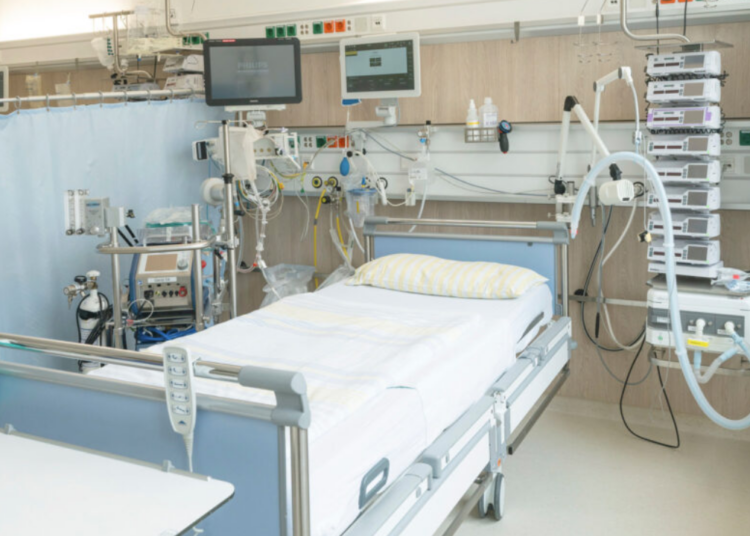
The federal government has disbursed over N192 billion to strengthen primary healthcare facilities across Nigeria since the launch of the Basic Health Care Provision Fund (BHCPF) in 2019.
This was disclosed by Dr. Muyi Aina, executive director and CEO of the National Primary Health Care Development Agency (NPHCDA), during an interview with the News Agency of Nigeria (NAN) following the National Health Financing Policy Dialogue in Abuja.
The dialogue, themed “Reimagining the Future of Health Financing in Nigeria,” was organised by the National Health Insurance Authority (NHIA) and partners to explore sustainable and equitable healthcare financing models.
Aina highlighted that rising service costs and currency fluctuations continue to strain the health sector, even as federal and state budgets grow.
He noted that out-of-pocket payments still dominate health spending, while government contributions remain low at just 14 percent.
According to him, N3.5 billion has been mobilised under initiatives such as the Sector-Wide Approach (SWAp) and the Health Sector Renewal Investment Initiative, with 60 percent sourced from funding partners like the Global Fund, Gavi, PEPFAR, and BHCPF.
Currently, 8,309 facilities receive quarterly BHCPF allocations, recently increased from N300,000 to between N600,000 and N800,000 per facility based on size and patient volume, under the new BHCPF 2.0 reform.
“This reform is aimed at addressing real operational costs, supporting staff, essential drugs, and infrastructure,” Aina said, adding that the government will roll out a direct funding mechanism nationwide to ensure transparency and reduce leakages.
The pilot, tested in several states, will enable direct payments for commodities and staff salaries into designated accounts.
Aina also revealed troubling vaccine accountability gaps, saying between 15 and 25 percent of non-campaign vaccines cannot be traced, citing possible wastage, poor forecasting, or mismanagement.
He disclosed that some states reported vaccine consumption up to four times higher than their recorded coverage, raising questions about accountability.
“We are now asking states to investigate these discrepancies at the local government level and fix them,” he said.
To address financial inefficiencies, Aina stated that Nigeria has reduced its projected vaccine procurement costs for the next five years from $1.5 billion to $1 billion through improved planning.
He reaffirmed the government’s commitment to stronger co-financing, performance-based accountability, and smarter spending to ensure quality healthcare delivery nationwide.














Ebola Patient in Nigeria Is Wife of Swiss Diplomat, Switzerland Says

Uba Sani Vows Massive Kaduna Support for Tinubu Ahead of 2027 Election

Atiku Asks Tinubu to Identify Those Behind Alleged Ministerial Appointment Bribes

One Dead, Three Rescued After Two-Storey Building Collapses in Lagos

CBN grants JPMorgan approval-in-principle to establish Merchant Bank in Nigeria

BREAKING: Veteran Nollywood Actor Francis Duru Dies at 57

Ebola: FG Orders Nationwide Awareness Campaign After Reported Case in Abuja

Sultan of Sokoto Meets Tinubu, Prays for Peaceful Elections

NEC Endorses 90-Day Plan to Ease Cost of Living, Targets Single-Digit Inflation

JUST-IN: Tinubu Appoints Ex-DSS DG Bichi to Lead NISS Governing Board
JUST-IN: Tinubu Appoints Ex-DSS DG Bichi to Lead NISS Governing Board
NEC Endorses 90-Day Plan to Ease Cost of Living, Targets Single-Digit Inflation
Ebola: FG Orders Nationwide Awareness Campaign After Reported Case in Abuja
Sultan of Sokoto Meets Tinubu, Prays for Peaceful Elections
Atiku Asks Tinubu to Identify Those Behind Alleged Ministerial Appointment Bribes
BREAKING: Veteran Nollywood Actor Francis Duru Dies at 57
CBN grants JPMorgan approval-in-principle to establish Merchant Bank in Nigeria
Uba Sani Vows Massive Kaduna Support for Tinubu Ahead of 2027 Election
One Dead, Three Rescued After Two-Storey Building Collapses in Lagos
Ebola Patient in Nigeria Is Wife of Swiss Diplomat, Switzerland Says
-
 National News2 days ago
JUST-IN: Tinubu Appoints Ex-DSS DG Bichi to Lead NISS Governing Board
-
 National News2 days ago
NEC Endorses 90-Day Plan to Ease Cost of Living, Targets Single-Digit Inflation
-
 National News2 days ago
Ebola: FG Orders Nationwide Awareness Campaign After Reported Case in Abuja
-
 National News2 days ago
Sultan of Sokoto Meets Tinubu, Prays for Peaceful Elections
-
 Entertainment2 days ago
BREAKING: Veteran Nollywood Actor Francis Duru Dies at 57
-
 Business23 hours ago
CBN grants JPMorgan approval-in-principle to establish Merchant Bank in Nigeria
-
 News23 hours ago
Atiku Asks Tinubu to Identify Those Behind Alleged Ministerial Appointment Bribes
-
 Metro23 hours ago
One Dead, Three Rescued After Two-Storey Building Collapses in Lagos