
News
FG targets 30% sodium reduction as experts link high salt intake to growing NCD crisis

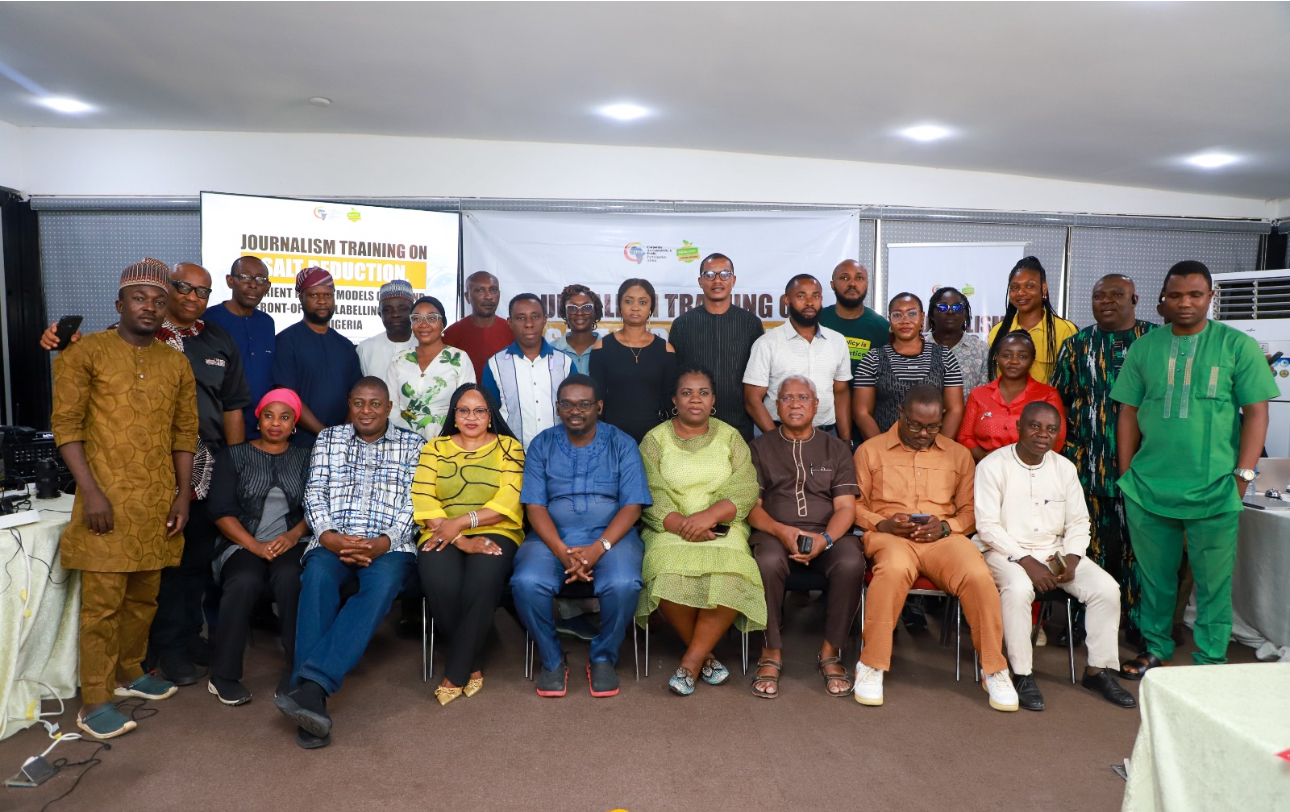
The Corporate Accountability and Public Participation Africa, CAPPA, has raised concern over the rising cases of non-communicable diseases in Nigeria, attributing the trend largely to excessive salt consumption driven by processed foods.
Speaking at a one-day journalism training on salt reduction and food labeling in Abuja, the Executive Director of CAPPA, Akinbode Oluwafemi, called on journalists to expose industry influence, increase public awareness, and promote accountability within the nation’s food system.
Oluwafemi noted that while the World Health Organisation recommends a daily salt intake of no more than five grams, many Nigerians consume nearly double that amount through common foods such as seasoning cubes, instant noodles, bread, and snacks.
“These unhealthy products are aggressively marketed, including to children, by powerful food corporations whose motive is profit, no matter the cost to our PPP health. These products are often marketed as convenient and modern, yet their nutritional realities are either unclear, hidden, or absent.“
“There is clearly a case for policy intervention to stem this tide and protect Nigerians.
Last year, the Nigerian government reflected on the problem and launched the National Sodium Reduction Guidelines as part of a comprehensive strategy to combat non-communicable diseases by setting salt targets for priority food categories,“ he said.
Meanwhile, the Food Safety Technical Lead at the Federal Ministry of Health, Femi Stephen, said the federal government has introduced the National Sodium Reduction Guidelines aimed at cutting sodium consumption by about 30 percent over the next five years.

“Those things if not checked will affect reduction in the health of Nigerian workers and their daily contribution to the economy, this is because a sick man or woman can not work in full capacity for the national economy. The Federal government is keen to gazette the sodium reduction policy in Nigeria through the enforcement of front-of-pack labelling, and this includes the 30 percent national reduction policy.”
Technical Adviser, Network for Health Equity and Development (NHED), Dr. Jerome Mafeni maintained that Nigeria is facing a triple burden of malnutrition including persistent undernutrition, micronutrient deficiency, and a growing prevalence of non-communicable diseases.
He said the menace can only be stopped through nutrition profiling by the federal government by adopting the WHO models and recommendations.
Also speaking, health consultant, Dr. Joseph Ekiyor emphasised the importance of strengthening primary healthcare, describing it as the first and most accessible point for managing both minor and chronic illnesses, including non-communicable diseases.








Tinubu mandates Shettima to lead high-level delegation to UNGA

NUJ demands independent probe into deaths of 37 miners in NSCDC custody

Tunji-Ojo leads FG delegation to Niger over deaths of miners in NSCDC custody

IGP Disu visits Niger, vows thorough probe into deaths of 37 miners in NSCDC custody

INEC opens recruitment portal for 1.4 Million Ad Hoc Staff for 2027 elections

Police rescue eight kidnap victims in Benue forest, one dies from injuries

Soludo grants pardon to native doctor Akwa Okuko, gives him new role in Anambra

Appeal Court upholds NDC registration, says Lokoja Court abused judicial power

APC Campaign Council accuses Atiku of compromising Nigeria’s interests over Mambilla dispute

Tinubu orders full investigation into deaths of 37 miners in NSCDC custody
IGP Disu visits Niger, vows thorough probe into deaths of 37 miners in NSCDC custody
NUJ demands independent probe into deaths of 37 miners in NSCDC custody
Tunji-Ojo leads FG delegation to Niger over deaths of miners in NSCDC custody
Tinubu mandates Shettima to lead high-level delegation to UNGA
-
 News2 days ago
IGP Disu visits Niger, vows thorough probe into deaths of 37 miners in NSCDC custody
-
NUJ FCT1 day ago
NUJ demands independent probe into deaths of 37 miners in NSCDC custody
-
 News2 days ago
Tunji-Ojo leads FG delegation to Niger over deaths of miners in NSCDC custody
-
 National News7 hours ago
Tinubu mandates Shettima to lead high-level delegation to UNGA