News
FG to embed Journalists in military operations — Defence Minister

The Federal Government has announced plans to embed journalists with military units during selected operations as part of efforts to enhance accurate security reporting and deepen public understanding of ongoing counterinsurgency and internal security operations.
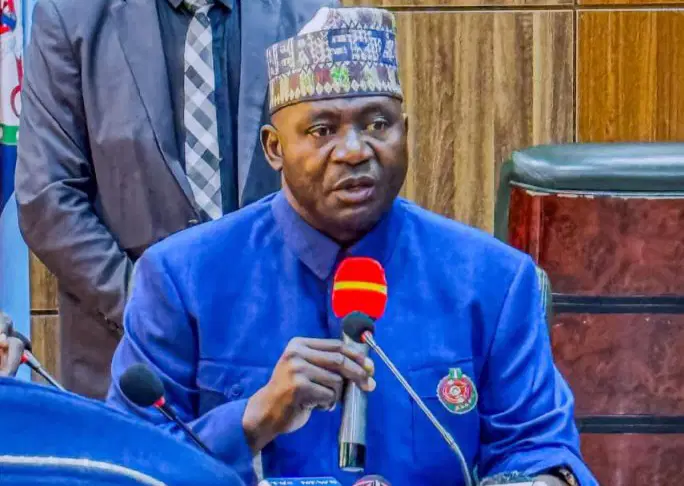
Minister of Defence, General Christopher Gwabin Musa (rtd.), disclosed this on Thursday at the National Security Summit organised by the Nigeria Union of Journalists (NUJ) in collaboration with the Department of State Services (DSS) in Abuja.
The Minister, represented by his Special Adviser, Rear Admiral Olusanya Bankole (rtd.), said the initiative is aimed at strengthening collaboration between the media and security agencies while improving transparency and public confidence in military operations.
The summit, themed “Media and Security Agencies as Partners in Nation Building,” brought together security chiefs, policymakers, media executives, academics and civil society representatives to deliberate on strategies for addressing Nigeria’s evolving security challenges.
Musa described the media as a critical partner in national security management, stressing that modern warfare now extends beyond land, air and maritime domains to include the information space.
According to him, effective security outcomes should not only be measured by battlefield success but also by public trust and confidence in security institutions.
“More than ever before, the media are not only enablers; they are stabilisers of government,” he said.
He added that journalists play a vital role in promoting unity, patriotism and national resilience.
The Defence Minister cautioned against the premature release of sensitive operational information, warning that such disclosures could compromise missions, endanger personnel and inadvertently aid criminal networks.
He explained that the Defence Ministry is exploring arrangements to embed journalists within military formations during operations to provide firsthand exposure to operational realities and improve the quality of security reporting.
“The Defence Ministry is exploring arrangements to embed journalists with military units during operations to enable more accurate reporting and deeper understanding of operational realities,” he said.
He added that the approach aligns with the evolving nature of modern warfare, which includes both kinetic and non-kinetic dimensions such as information management, strategic communication and community engagement.
Declaring the summit open, the Minister of Information and National Orientation, Mohammed Idris, said the gathering was timely given the increasing complexity of modern security threats across the world.
He noted that terrorism, violent extremism, cybercrime, organised crime, separatist agitations and disinformation campaigns have forced nations to rethink traditional approaches to security management.
“The relationship between the media and security agencies must therefore be founded on mutual respect, professionalism, trust and an appreciation of their complementary roles,” the minister said.
Idris said President Bola Ahmed Tinubu’s administration has continued to prioritise security as a central pillar of the Renewed Hope Agenda through military operations, intelligence gathering, technological innovation and community engagement.
He highlighted achievements recorded by security agencies, including the neutralisation of terrorists and bandits, rescue of kidnapped victims, dismantling of criminal camps and increased investments in military hardware, intelligence infrastructure and surveillance technology.
The minister urged journalists to uphold professionalism and ethical standards in reporting security matters, warning that misinformation and disinformation could undermine national security efforts.
NUJ National President, Comrade Alhassan Yahaya Abdullahi, said national security could no longer be left solely in the hands of security agencies, noting that journalists and other stakeholders have critical roles to play in safeguarding the country.
Abdullahi described the summit as the fulfilment of a commitment he made upon assuming office to create platforms that would foster collaboration between journalists and institutions responsible for governance and security.
“The vision behind that commitment was to build stronger bridges between journalists and stakeholders in governance and security. I firmly believed then, as I do now, that meaningful dialogue and cooperation are essential to strengthening our democracy and advancing the public interest,” he said.
According to him, the media and security institutions occupy strategic positions in every democratic society, with security agencies protecting lives and property while the media informs citizens, shapes public opinion and promotes accountability.
Also speaking, the National Security Adviser (ONSA) Nuhu Ribadu said security agencies and journalists must work together to strike a balance between the public’s right to know and the need to protect national security interests.
The NSA who was represented by his Special Adviser on strategic communication and civil society, Chido Onumah acknowledged that journalists often face challenges obtaining timely information and stressed that security institutions must improve communication and transparency.
“We are all in this together. We must have a secure nation before we can effectively practise our professions and pursue national development,” he said.
He disclosed that ONSA is developing a National Security Strategic Communication Framework aimed at creating a structured platform for information sharing, verification and collaboration between security agencies and media organisations.
According to him, the framework will help ensure that journalists have access to credible information while reducing the risk of reports that could inadvertently aid terrorists, criminals or other threats to national security.
In his paper presentation, Professor Okey Okechukwu of Nnamdi Azikiwe University said the media plays a crucial role in amplifying the impact of military operations, noting that without media visibility, even major security victories could go unnoticed.
He argued that journalism remains central to shaping public understanding of national security efforts and strengthening democratic governance in Nigeria.
He said Nigeria’s democratic structure places responsibility on individuals who, in many cases, lack sufficient capacity to fully grasp policy complexities, stressing the need for improved civic education and stronger institutional frameworks.
According to him, the poor state of education infrastructure, including dilapidated unity schools across the country, reflects deeper governance and developmental challenges that must be addressed to improve national outcomes.







Lagos-Ibadan Expressway Gridlock Lasts 14 Hours After Seven-Vehicle Crash at Kara

Presidency Dares Peter Obi to Quit 2027 Race Over Anambra Debt Claims

INEC Explains Amupitan’s Absence, Says Chairman Can Delegate Powers to National Commissioners

JAMB Begins Major UTME Review, Plans Life Skills, Critical Thinking Test

Supreme Court Reserves Judgment on Electoral Act 2026 Dispute

Court Orders Tinubu to Be Served With Atiku’s Suit Seeking His Disqualification

BREAKING: Nollywood Icon Olu Jacobs Dies at 84

I Don’t Need a Son to Inherit My Empire, My Daughters Can Lead — Dangote

Wike’s Rainbow Coalition Threat to APC Survival, Cohesion — Onoh

King’s College Concession: Education Workers Threaten Nationwide Shutdown of Unity Colleges

2027: INEC Promises Transparent, Credible and Peaceful General Election
King’s College Concession: Education Workers Threaten Nationwide Shutdown of Unity Colleges
BREAKING: Nollywood Icon Olu Jacobs Dies at 84
Wike’s Rainbow Coalition Threat to APC Survival, Cohesion — Onoh
Court Orders Tinubu to Be Served With Atiku’s Suit Seeking His Disqualification

BREAKING: Nigeria’s Inflation Rate Falls to 15.39% in August — NBS
Presidency Dares Peter Obi to Quit 2027 Race Over Anambra Debt Claims
Lagos-Ibadan Expressway Gridlock Lasts 14 Hours After Seven-Vehicle Crash at Kara
I Don’t Need a Son to Inherit My Empire, My Daughters Can Lead — Dangote
Supreme Court Reserves Judgment on Electoral Act 2026 Dispute
-
 News2 days ago
2027: INEC Promises Transparent, Credible and Peaceful General Election
-
 News2 days ago
King’s College Concession: Education Workers Threaten Nationwide Shutdown of Unity Colleges
-
 Entertainment23 hours ago
BREAKING: Nollywood Icon Olu Jacobs Dies at 84
-
 News2 days ago
Wike’s Rainbow Coalition Threat to APC Survival, Cohesion — Onoh
-
 News17 hours ago
Court Orders Tinubu to Be Served With Atiku’s Suit Seeking His Disqualification
-
 News2 days ago
BREAKING: Nigeria’s Inflation Rate Falls to 15.39% in August — NBS
-
 News16 hours ago
Presidency Dares Peter Obi to Quit 2027 Race Over Anambra Debt Claims
-
 Metro16 hours ago
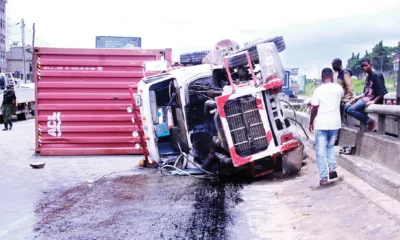
Lagos-Ibadan Expressway Gridlock Lasts 14 Hours After Seven-Vehicle Crash at Kara