
News
UBEC warns states as $552m Education programme targets 29 Million children

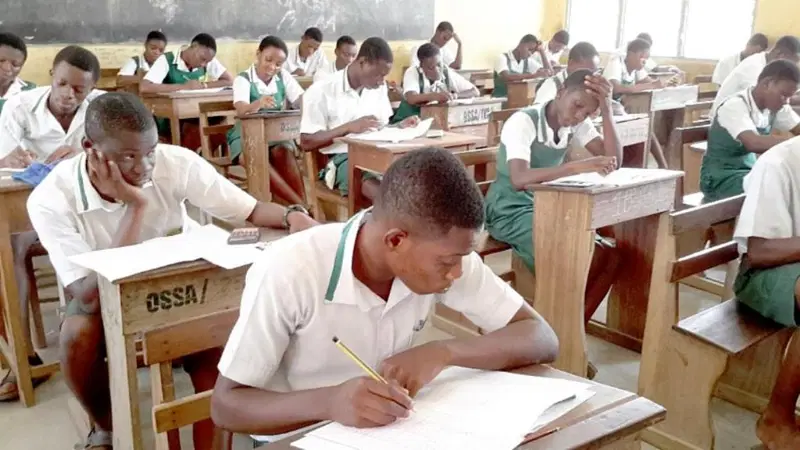
The Universal Basic Education Commission (UBEC) has warned state governments that failure to provide the required funding could undermine the implementation of a $552.18 million World Bank-supported education programme targeting 29 million Nigerian children.
The Human Capital Opportunities for Prosperity and Equity in Education (HOPE-EDU) programme also aims to reach 500,000 teachers, support 65,000 public schools and 10,000 non-formal learning centres, and facilitate the construction of 13,000 classrooms across the country.
However, the commission says the success of the initiative will depend largely on the willingness of state governments to make the necessary budgetary provisions and meet agreed implementation targets.
UBEC Executive Secretary, Dr Aisha Garba, raised the concern on Tuesday in Abuja during a two-day meeting with chairmen of State Universal Basic Education Boards (SUBEBs) on the programme’s implementation readiness.
Garba disclosed that HOPE-EDU became effective on February 27, 2026, and had entered its implementation phase. She urged states to incorporate relevant activities and funding requirements into their 2027 budgets.
According to her, several disbursement-linked indicators depend on states making adequate budgetary allocations, warning that failure to meet the conditions could prevent them from accessing the corresponding funds.
“A lot of the deliverables for Year 1 will require provisions in the states’ 2027 budget,” she said.
The UBEC boss directed SUBEB chairmen to present the programme’s implementation report to their respective state executives, secure their commitment and ensure that the necessary financial provisions were made on time.
The warning highlights the critical role of state governments in delivering the programme’s objectives, which include improving learning outcomes, reducing inequalities in access to education and strengthening accountability in the basic education sector.
How the $552.18m Programme Will Be Funded
Garba explained that HOPE-EDU operates a results-based financing model under which funds are released based on the achievement of agreed targets and performance indicators.
Under the programme’s funding structure, $262.239 million is earmarked for improving the quality of basic education, $123.9 million for expanding access, and $133.611 million for strengthening key systems.
The three components are designed to address persistent challenges in the sector, including poor learning outcomes, limited access to education and weaknesses in institutional capacity and accountability.
According to Garba, the quality improvement component will focus on raising teaching standards, providing essential learning resources and improving pupils’ academic performance.
A major intervention under this component is the Structured Pedagogy Programme (SPP), which is intended to strengthen the teaching of literacy and numeracy in primary schools.
She said HOPE-EDU would build on existing Universal Basic Education interventions while complementing other government initiatives in governance and primary healthcare.
Different Eligibility Requirements for States
The UBEC executive secretary said the programme’s three result areas have different participation requirements.
The first component, which focuses on improving education quality, is open to 33 states, with participation potentially extending to all 36 states and the Federal Capital Territory, subject to involvement in the HOPE-GOV operations.
The second component, aimed at expanding access to education, targets 15 states with the highest populations of out-of-school children that also meet other eligibility requirements.
The third component, which focuses on strengthening key systems, is open to all 36 states and the FCT.
Garba said the varying conditions meant that states must understand the requirements attached to each component and meet the relevant benchmarks to qualify for funding.
She stressed the need for effective coordination among state ministries of education, SUBEBs, Local Education Authorities, schools and School-Based Management Committees.
The SUBEB chairmen, whom she described as key drivers of basic education delivery at the state level, were urged to take ownership of the initiative and ensure that their states meet the agreed targets and verification requirements.
UBEC Seeks Equitable Access to Quality Education
Garba said the programme, introduced under President Bola Tinubu’s administration, was designed to give every Nigerian child access to quality education, particularly children in rural communities, marginalised populations and out-of-school groups.
She, however, stressed that achieving the objective would require more than policy commitments, noting that adequate funding and effective coordination at the state level would be essential.
“The success of HOPE-EDU rests on your shoulders. Let us work together to ensure that no state is left behind,” she told the SUBEB chairmen.
She encouraged participants to engage actively during the meeting, seek clarification on implementation requirements and return to their respective states as advocates for the programme.
The UBEC executive secretary also commended the National Programme Coordinator, the Programme Manager and the HOPE-EDU team for organising the meeting. She acknowledged the support of the Federal Ministry of Education, the World Bank and other technical partners.
Earlier, the programme’s manager, Mr Olumayowa Aleshin, presented an overview of HOPE-EDU, outlining its funding arrangements, implementation targets and key milestones.
Under the programme’s framework, participating states must meet specified performance targets and verification requirements before qualifying for the corresponding disbursements.
With targets covering 29 million children, 500,000 teachers, 65,000 public schools and 10,000 non-formal learning centres, HOPE-EDU represents a major intervention in Nigeria’s basic education sector.
Its impact will ultimately depend on the ability of federal and state authorities to translate funding commitments into additional classrooms, improved teaching standards, stronger learning outcomes and wider access to education for millions of children.


AFP to storm Made By Design Expo 2026 with new designs

Peller announces plans to host Wole Soyinka on livestream

Indonesia seeks Nigerian investment in renewable energy, manufacturing, agriculture

UBEC warns states as $552m Education programme targets 29 Million children

IMF urges Nigeria to reject broad petrol subsidy, recommends targeted relief

Atiku accuses Tinubu of making life expensive, promises affordable living

Zenith Bank Champions Girl-child Empowerment, Equips 300 Schoolgirls For The Future

N101m Judgment Debt: SERAP appeal returned for reassignment as Lawyers withdraw applications

Senate Orders Probe, Aircraft Safety Audit After Fatal NAF Crash in Ondo

Police Detain Rochas Okorocha Over Alleged Forgery, Impersonation

‘We Survived on Garri and Dirty Water’ — Rescued NYSC Member Recounts Kidnap Ordeal

Court strikes out FG’s eight-count charge against alleged fake agency DG, Adeyemi

Atiku Demands Full Disclosure of Coastal Highway Payments, Questions Alleged $20bn Loan

Livinus Victor condemns Abike Dabiri-Erewa’s remarks On journalism, demands public apology to Nigerian Journalists

2027: APC Names PDP’s Wike, Accord’s Adeleke, APGA’s Soludo Campaign Coordinators
IMF urges Nigeria to reject broad petrol subsidy, recommends targeted relief
Indonesia seeks Nigerian investment in renewable energy, manufacturing, agriculture

Shettima Meets Yahaya Bello, Badaru, Other Political Leaders at Presidential Villa
UBEC warns states as $552m Education programme targets 29 Million children

CDS Calls for Increased Investment in Indigenous Space Technology to Boost National Security
-
 News2 days ago
‘We Survived on Garri and Dirty Water’ — Rescued NYSC Member Recounts Kidnap Ordeal
-
 News2 days ago
Court strikes out FG’s eight-count charge against alleged fake agency DG, Adeyemi
-
 News2 days ago
Atiku Demands Full Disclosure of Coastal Highway Payments, Questions Alleged $20bn Loan
-
 News22 minutes ago
IMF urges Nigeria to reject broad petrol subsidy, recommends targeted relief
-
 National News16 minutes ago
Indonesia seeks Nigerian investment in renewable energy, manufacturing, agriculture
-
 News1 day ago
Livinus Victor condemns Abike Dabiri-Erewa’s remarks On journalism, demands public apology to Nigerian Journalists
-
 News22 hours ago
2027: APC Names PDP’s Wike, Accord’s Adeleke, APGA’s Soludo Campaign Coordinators
-
 News2 days ago
Shettima Meets Yahaya Bello, Badaru, Other Political Leaders at Presidential Villa