




News
FG approves ₦32.9bn to strengthen primary healthcare, insurance coverage

The Federal Government has approved the disbursement of ₦32.9 billion to the 36 states of the federation and the Federal Capital Territory (FCT) to strengthen primary healthcare delivery and expand health insurance coverage across the country.
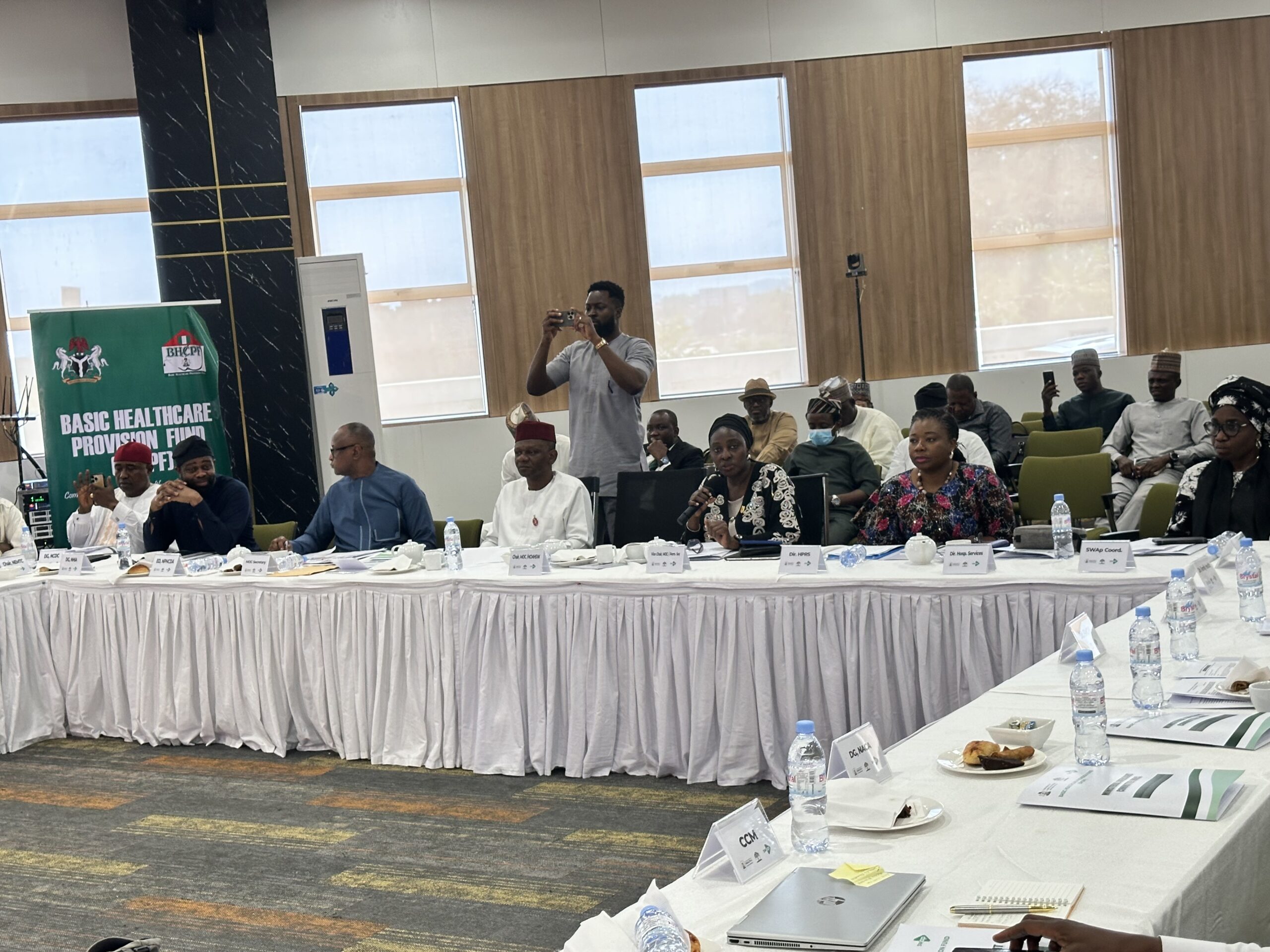
The approval was announced at the fourth quarterly meeting of the Ministerial Oversight Committee (MOC) for 2025, held in Abuja and convened by the Federal Ministry of Health and Social Welfare.
The Permanent Secretary of the Ministry, Ms Kachallom Daju, said the fourth release of funds under the Basic Health Care Provision Fund (BHCPF) was a reflection of the federal government’s commitment to financing, transparency, and accountability in the health sector.
Ms. Daju noted that the funds would also support improved service delivery at primary healthcare centres, increased health insurance enrolment, and stronger performance across key BHCPF gateways.
She also highlighted the inclusion of the Association of Local Government of Nigeria (ALGON) as a member of the MOC, to strengthen local government participation and the establishment of a Citizens’ Response Centre (CRC) to enhance transparency, citizen feedback, and accountability in the health sector, including BHCPF-supported interventions.
Ms. Daju explained that the disbursement is scheduled to commence in January 2026, adding that the administration of President Bola Tinubu has prioritised health, with accountability and transparency remaining central to ongoing reforms aimed at improving health outcomes and saving lives.
Also speaking, the Executive Director of the National Primary Health Care Development Agency (NPHCDA), Dr Muyi Aina, said regular BHCPF disbursements had contributed to measurable gains in primary healthcare services nationwide.
Dr. Aina noted rising utilisation of primary healthcare centres, improved immunisation coverage, and increased uptake of other essential health services.
Dr Aina further announced that, for the first time, BHCPF disbursements would be implemented under the BHCPF 2.0 Guidelines, introducing differentiated funding based on service volume.
“Beginning January 2026, low-volume facilities will receive ₦600,000 per quarter, while high-volume facilities will receive ₦800,000, replacing the previous flat-rate system.”
He said the approach was designed to better align resources with patient load, improve service readiness, and reduce out-of-pocket health spending.
“Looking ahead to 2026, the focus will be on accelerating impact across priority areas, including primary healthcare revitalisation, immunisation, maternal, newborn and child health, nutrition, and reproductive health services.”
In his remarks, the Director-General of the National Health Insurance Authority (NHIA), Dr Kelechi Ohiri, said health insurance coverage has continued to improve, driven by stronger coordination and accountability across the sector.
He explained that the MOC has enhanced transparency by publishing details of transfers from the one per cent Consolidated Revenue Fund to states and local governments, enabling citizens to track how health funds are allocated and utilised.
Dr Ohiri said the quarterly MOC meetings also serve as an accountability platform, that would require agencies to report on the deployment of resources under the BHCPF and other funding streams.
He added that while progress was recorded in 2025, the sector remained focused on accelerating results in 2026 to deliver better health outcomes for Nigerians.
The Basic Health Care Provision Fund, established under the National Health Act of 2014, is a flagship financing mechanism of the Federal Government aimed at ensuring sustainable funding for primary healthcare and expanding access to quality essential health services, particularly for the poor and vulnerable.






News12 hours ago
Makinde holds PDP stakeholders meeting ahead of 2027 elections

World News12 hours ago
Iran says it received U.S. messages on ending war

News13 hours ago
DSS storms Malami’s Abuja residence after Atiku’s visit

News14 hours ago
One killed, others injured as IED explosion hits Kwara community

News14 hours ago
FG set to launch HIV prevention injection as 52,000 doses arrive

News15 hours ago
ICPC to arraign El-Rufai over alleged d fraud, money laundering charges

News20 hours ago
BREAKING: Former Acting Accountant-General sentenced to 72 Years for N868 Million fraud

News22 hours ago
Rising oil prices boost Nigeria’s fiscal space, says Gov. Otti

National News22 hours ago
NGF submits State Police framework to NSA, eyes National Assembly review

News22 hours ago
Nigerian Army neutralises dozens of bandits in Bello Turji’s camp

News22 hours ago
Police promise justice as 16 arrested over Ozoro festival violence

National News22 hours ago
Restructuring: Police clarify IGP directive, deny disbandment of tactical units
News22 hours ago
Nigerian Army neutralises dozens of bandits in Bello Turji’s camp

National News1 day ago
FG to scrap Common Entrance, introduce Learner ID for pupils

National News1 day ago
Nigeria to get equipment, training support from France — Tinubu

News1 day ago
Panic in Kwara as gunmen invade Church, kidnap worshippers

World News22 hours ago
Israel-Iran conflict deepens as global energy crisis worsens
National News22 hours ago
NGF submits State Police framework to NSA, eyes National Assembly review
News20 hours ago
BREAKING: Former Acting Accountant-General sentenced to 72 Years for N868 Million fraud

Sports1 day ago
Manchester City beat Arsenal 2-0 to win League Cup at Wembley
-
 News22 hours ago
Police promise justice as 16 arrested over Ozoro festival violence
-
 National News22 hours ago
Restructuring: Police clarify IGP directive, deny disbandment of tactical units
-
 News22 hours ago
Nigerian Army neutralises dozens of bandits in Bello Turji’s camp
-
 National News1 day ago
FG to scrap Common Entrance, introduce Learner ID for pupils
-
 National News1 day ago
Nigeria to get equipment, training support from France — Tinubu
-
 News1 day ago
Panic in Kwara as gunmen invade Church, kidnap worshippers
-
 World News22 hours ago
Israel-Iran conflict deepens as global energy crisis worsens
-
 National News22 hours ago
NGF submits State Police framework to NSA, eyes National Assembly review