
News
Experts warn FG on unhealthy food fortification policy, citing links to NCD surge

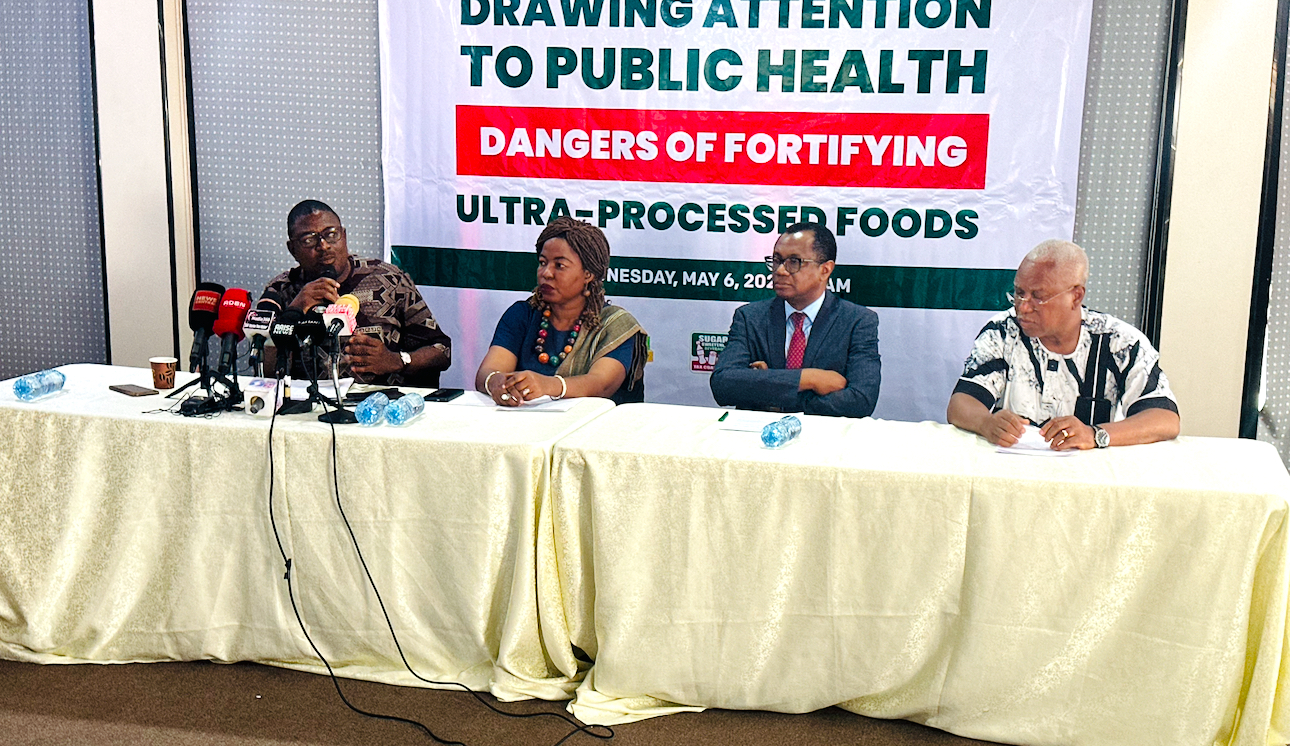
The Coalition for Healthy Food Advocacy and the National Sugar-Sweetened Beverages Tax Coalition (NSSBTC), have warned the Federal Government against fortifying ultra-processed foods, adding that the move could worsen the burden of diet-related diseases in Nigeria.
Speaking at a press conference in Abuja, Public Health Advocates under the Coalition, urged the federal government to review its fortification strategy and ensure that nutrition policies do not promote unhealthy consumption patterns.
A Technical Advisor at the Network for Health Equity and Development (NHED), Dr Jerome Mafeni, cautioned against fortifying high-sodium products such as bouillon cubes, noting that Nigeria already exceeds recommended salt intake levels.
“At this stage, Nigeria should not be advancing bouillon fortification. We must first reduce sodium exposure across the population, implement mandatory salt targets, establish clear and effective labelling, and strengthen regulatory enforcement,” he said.
Also speaking, the Executive Director of Corporate Accountability and Public Participation Africa (CAPPA), Akinbode Oluwafemi, stressed that while food fortification remains an important public health tool, it must be applied to genuinely healthy food options.
“The path to a healthier Nigeria lies in building a food system that values real food—diverse, locally sourced, and nutritionally sound. Fortifying poison does not make it medicine. We must ensure that Nigeria’s fortification drive truly delivers positive health outcomes, not unintended consequences,” he said.
He added that fortifying products such as seasoning cubes, instant noodles and sugary cereals could mislead consumers into believing they are healthy.
A lead researcher at the University of Abuja, Professor Dike Ojji, highlighted the rising burden of cardiovascular diseases in the country, noting that they account for about 10 per cent of deaths, while hypertension affects up to 30 per cent of Nigerians.
“The burden of cardiovascular disease is inextricably linked to poor diet and lifestyle choices, including sedentary habits and tobacco use. For Nigeria to make advancement in the primordial and primary prevention of CVD, structured policies are essential to protect the population from excessive salt, trans-fats, and ultra-processed foods,” he said.
Ojji further called for “robust health insurance to ensure the availability of affordable generic medications to manage hypertension, diabetes, and dyslipidaemia.”
The Executive Director of Keen and Care Initiative, Josephine Alabi, commended ongoing government efforts to tackle non-communicable diseases but warned against unintended consequences, particularly for vulnerable groups.
The coalition, in a unified call, urged the Federal Ministry of Health, the National Agency for Food and Drug Administration and Control (NAFDAC), and the Standards Organisation of Nigeria (SON), to reconsider the current policy direction.
It also advocated deliberate action to reduce sodium consumption by 30 per cent by 2030 as a critical step to safeguard public health.








NUJ demands independent probe into deaths of 37 miners in NSCDC custody

Tunji-Ojo leads FG delegation to Niger over deaths of miners in NSCDC custody

IGP Disu visits Niger, vows thorough probe into deaths of 37 miners in NSCDC custody

INEC opens recruitment portal for 1.4 Million Ad Hoc Staff for 2027 elections

Police rescue eight kidnap victims in Benue forest, one dies from injuries

Soludo grants pardon to native doctor Akwa Okuko, gives him new role in Anambra

Appeal Court upholds NDC registration, says Lokoja Court abused judicial power

APC Campaign Council accuses Atiku of compromising Nigeria’s interests over Mambilla dispute

Tinubu orders full investigation into deaths of 37 miners in NSCDC custody

Gov Bago orders immediate curfew in Minna as tension mounts over miners’ deaths
Tinubu orders full investigation into deaths of 37 miners in NSCDC custody
APC Campaign Council accuses Atiku of compromising Nigeria’s interests over Mambilla dispute
IGP Disu visits Niger, vows thorough probe into deaths of 37 miners in NSCDC custody
Appeal Court upholds NDC registration, says Lokoja Court abused judicial power
Gov Bago orders immediate curfew in Minna as tension mounts over miners’ deaths
Soludo grants pardon to native doctor Akwa Okuko, gives him new role in Anambra
Police rescue eight kidnap victims in Benue forest, one dies from injuries
INEC opens recruitment portal for 1.4 Million Ad Hoc Staff for 2027 elections
Tunji-Ojo leads FG delegation to Niger over deaths of miners in NSCDC custody
NUJ demands independent probe into deaths of 37 miners in NSCDC custody
-
 News1 day ago
IGP Disu visits Niger, vows thorough probe into deaths of 37 miners in NSCDC custody
-
 National News2 days ago
Tinubu orders full investigation into deaths of 37 miners in NSCDC custody
-
 News2 days ago
APC Campaign Council accuses Atiku of compromising Nigeria’s interests over Mambilla dispute
-
 News2 days ago
Appeal Court upholds NDC registration, says Lokoja Court abused judicial power
-
 News2 days ago
Gov Bago orders immediate curfew in Minna as tension mounts over miners’ deaths
-
 News2 days ago
Soludo grants pardon to native doctor Akwa Okuko, gives him new role in Anambra
-
 News2 days ago
Police rescue eight kidnap victims in Benue forest, one dies from injuries
-
 News2 days ago
INEC opens recruitment portal for 1.4 Million Ad Hoc Staff for 2027 elections