
News
ICPC warns LG Officials over corruption as Fiscal Autonomy takes effect

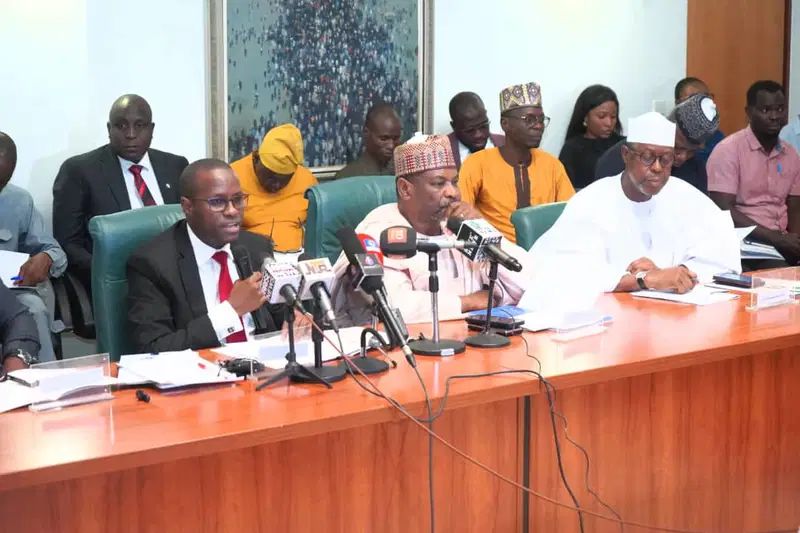
The Independent Corrupt Practices and Other Related Offences Commission (ICPC) has issued a stern warning to local government officials, promising to prosecute any found guilty of corruption as the new local government fiscal autonomy begins nationwide.
This warning was given by the ICPC Chairman, Dr. Musa Adamu, during the launch of the Accountability and Corruption Prevention Programme for Local Governments (ACPP-LG) in Abuja on Thursday. The program aims to tackle corruption across Nigeria’s 774 local government areas (LGAs).
Under the initiative, ICPC will closely monitor local government budgets and spending, focusing on five key areas to ensure transparency and accountability: Fiscal Transparency, Open Procurement, Human Resources Management, Corruption Control, and Citizen Engagement in Budget Implementation.
Dr. Adamu explained that the initiative aims to prevent the misuse of public funds and ensure that resources allocated for local development are used properly, in line with the recent Supreme Court ruling that restored financial autonomy to the LGAs.
The ICPC chairman further emphasized that the commission will work with critical government agencies, civil society organizations, and law enforcement bodies to enforce these measures. ICPC’s functions will include investigations, prosecutions, and regulatory actions to ensure compliance with anti-corruption laws.
“By focusing on these areas, we aim to strengthen governance structures, improve service delivery, and restore public trust in local governments,” Dr. Adamu said.
He also highlighted the significance of the Supreme Court’s ruling of July 11, 2024, which grants financial independence to local governments. This ruling ensures direct disbursement of funds to local councils, preventing undue interference by state governments and creating an opportunity for governance transformation.
Dr. Adamu warned that any local government official caught diverting public funds will face prosecution and the full consequences of the law.
The ICPC chairman stressed the need for collaboration with state governments, civil society groups, and media partners to ensure accountability. He also called on state governments to support local councils in implementing the reforms without administrative challenges.
“State governments must support local councils to ensure smooth implementation of this reform without administrative bottlenecks. Civil society organizations and the media also have a crucial role to play in raising awareness and holding local governments accountable,” Dr. Adamu said.
He added that technology and social media would be used to engage citizens in monitoring local government projects and reporting corruption through ICPC’s official platforms.
Senator Emmanuel Udende, Chairman of the Senate Committee on Anti-Corruption and Financial Crimes, assured the National Assembly’s support for ICPC’s efforts to promote transparency and good governance at the local level.
Similarly, Prince Kayode Moshood Akiolu, Chairman of the House of Representatives Committee on Anti-Corruption, condemned the long-standing practice of state governments hijacking LG funds, depriving local councils of the resources needed for effective service delivery.
Akiolu assured that measures were being put in place to correct this issue and restore financial independence to LGAs, ensuring they can serve their communities properly.









Adesina Meets Tinubu, Says He Is Ready to Contribute to Nigeria’s Development

Uzodimma Warns Imo APC Supporters Against Working With Rainbow Coalition

Man Allegedly Poses as Lawyer for 11 Years, Arrested in Ebonyi

Cameroon Suspends Opposition Party

Tinubu Submits $20.52bn, €1.045bn Borrowing Plan to National Assembly

FG, NLC Agree on N70,000 Monthly Transport Support, 19 Months’ Health Workers’ Arrears

Bago moves to restore neglected UBEC Smart School in Niger State

Alleged Cybercrime: Sowore’s Counsel admits ignorance of evidence act, Court to rule on DSS counsel’s subpoena

Burna Boy Presents Socrates Award to Arsenal Star Bukayo Saka at Ballon d’Or Ceremony

Man, Teenage Girl Swept Away While Attempting Rescue in Aba Flood
FG, NLC Agree on N70,000 Monthly Transport Support, 19 Months’ Health Workers’ Arrears

WHO Says Nigeria Has No Active Ebola Cases After Patient’s Evacuation to Switzerland

Uba Sani Says APC Will Consider 25% Opposition Vote in Kaduna a Failure

NDC Inaugurates New National Secretariat in Abuja Ahead of 2027 Elections

Shettima Says Obi Has Nothing to Offer Nigerians Beyond ‘Dubious Statistics’
Tinubu Submits $20.52bn, €1.045bn Borrowing Plan to National Assembly
Cameroon Suspends Opposition Party
Burna Boy Presents Socrates Award to Arsenal Star Bukayo Saka at Ballon d’Or Ceremony

Court Orders El-Rufai to Open Defence in Alleged NSA Phone Interception Case
Man Allegedly Poses as Lawyer for 11 Years, Arrested in Ebonyi
-
 National News25 minutes ago
FG, NLC Agree on N70,000 Monthly Transport Support, 19 Months’ Health Workers’ Arrears
-
 National News1 day ago
WHO Says Nigeria Has No Active Ebola Cases After Patient’s Evacuation to Switzerland
-
 News1 day ago
Uba Sani Says APC Will Consider 25% Opposition Vote in Kaduna a Failure
-
 News1 day ago
NDC Inaugurates New National Secretariat in Abuja Ahead of 2027 Elections
-
 National News24 minutes ago
Tinubu Submits $20.52bn, €1.045bn Borrowing Plan to National Assembly
-
 National News22 minutes ago
Cameroon Suspends Opposition Party
-
 News1 day ago
Shettima Says Obi Has Nothing to Offer Nigerians Beyond ‘Dubious Statistics’
-
 Sports1 day ago
Burna Boy Presents Socrates Award to Arsenal Star Bukayo Saka at Ballon d’Or Ceremony