
National News
No kobo was released to controversial investment Council, Budget Office DG Tells Reps

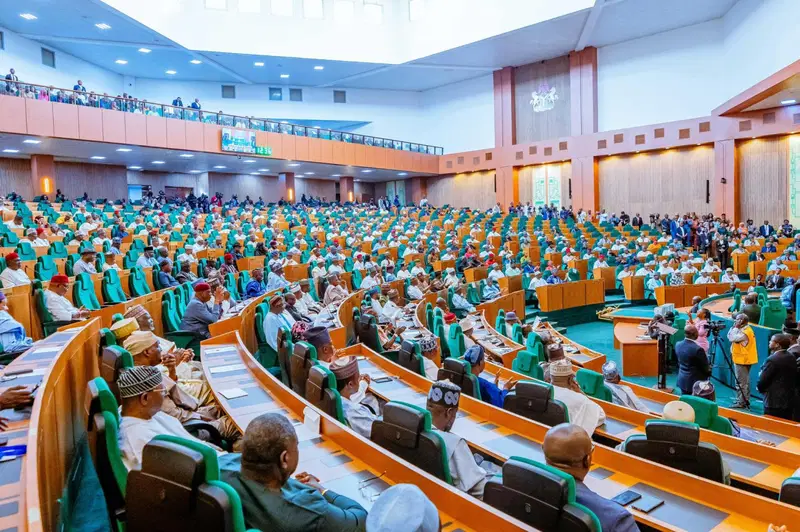
The Director-General of the Budget Office of the Federation, Tanimu Yakubu, has defended the agency’s role in the budgetary allocation made to the Presidential Foreign Investment Promotion Council (PFIPC), insisting that no public funds were released or spent despite provisions contained in the 2026 Appropriation Act.
Yakubu made the clarification on Friday while appearing before the House of Representatives Ad-Hoc Committee investigating the alleged unlawful establishment and funding of the council.
He told lawmakers that the Budget Office neither established the council nor approved its creation, recruitment of personnel or payment of salaries, stressing that its role was limited to assessing the financial implications of approvals issued by other government institutions.
“The Budget Office did not create the council. It did not assign its budget code. It did not approve its establishment. It did not grant its recruitment waiver. It received official instruments and did what the law required of it. It measured their fiscal effect,” he said.
The Budget Office boss disclosed that although the council requested ₦3.8 billion as personnel costs, the office rejected the proposal and independently calculated a lower estimate of ₦802.98 million based on the approved establishment and applicable public service salary structure.
According to him, the Budget Office’s computation was its independent fiscal recommendation and not an endorsement of the council’s request.
Yakubu, however, emphasised that the personnel allocation never translated into actual spending because the mandatory financial clearance required for recruitment and salary payments was never issued.
“There was therefore no financial clearance. There was no lawful recruitment. There was no payroll enrolment. There was no salary payment,” he stated.
He added that although personnel costs accounted for about 61.63 per cent of the council’s total appropriation, no funds were accessed.
“Not one naira of the personnel provision has been drawn. There is no personnel expenditure to recover because no expenditure ever occurred,” he said.
The DG further explained that the council’s ₦200 million overhead allocation also remained untouched because treasury warrants and cash backing were never approved.
Similarly, he said the ₦300 million capital allocation was never utilised because procurement processes required by law were not completed.
“No procurement reached the point at which expenditure would arise. No Ministerial Tenders Board approved a transaction. No Certificate of No Objection was issued. No treasury warrant followed. No treasury cash-backing followed,” Yakubu explained.
He maintained that Nigeria’s financial control mechanisms functioned effectively by preventing the release of funds before any expenditure could occur.
“The law did not recover money after it had gone. It prevented the expenditure before it began,” he added.
During the hearing, members of the committee questioned the legal basis for including the council in the national budget after examining what they described as a purported Act establishing the PFIPC.
A committee member, Abubakar Fulata, argued that the document lacked key features of a valid Act of Parliament, including a gazette number, the signature of the Clerk of the National Assembly and presidential assent.
“The purported Act is very clear. It is not genuine because it did not carry the gazette number, it did not have the signature of the Clerk of the National Assembly and it did not carry the signature of Mr. President,” Fulata said.
Responding, Yakubu maintained that the Budget Office relied strictly on official establishment approvals, recruitment waivers and salary directives issued by the relevant statutory authorities in carrying out its responsibilities.
He stressed that requests submitted by the council did not determine the Budget Office’s personnel calculations.
“We do not rely on any instrument to calculate personnel costs other than the establishment authorisation and the directives of the National Salaries, Incomes and Wages Commission,” he said.
Also speaking, Chairman of the Ad-Hoc Committee, Rep. Yusuf Gagdi, defended the Budget Office, stating that available evidence showed the agency acted based on approvals issued by the appropriate government institutions.
According to him, the committee’s investigation has established that the documents relied upon by those institutions were later discovered to be forged.
“The question is whether the Budget Office allocated budget to this agency without the agency satisfying the requirements. The answer, based on the documents before us, is no. I repeat, no,” Gagdi said.
He added that the focus of the investigation had shifted to determining how forged documents entered official government processes.
Gagdi announced that the Accountant-General of the Federation would appear before the committee on Monday to explain how the council obtained its budget code, adding that other agencies would also testify as the panel moves to conclude its investigation.
“By the special grace of God, we will conclude our findings and finish by next week,” he said.












Ebola: FG Orders Nationwide Awareness Campaign After Reported Case in Abuja

Sultan of Sokoto Meets Tinubu, Prays for Peaceful Elections

NEC Endorses 90-Day Plan to Ease Cost of Living, Targets Single-Digit Inflation

JUST-IN: Tinubu Appoints Ex-DSS DG Bichi to Lead NISS Governing Board

NUJ demands justice, fair hearing and protection of press freedom in Farida Isiak’s case

Gov Sule commends DSS over arrests, ammunition recoveries in Nasarawa

FCT Teachers Resume Classes After Suspending Two-Week Strike

Plateau Indigenous Youths Reject Petition Against DSS, Accuse Fulani Groups of Orchestrating ‘Calumny’ to Halt Security Operations

Seven-Year-Old Boy Found Dead After Kidnap, N2.5m Ransom Demand in Jos

Jonathan Urges Nigeria to Boost Local Manufacturing, Reduce Imports

Dele Giwa: Forty Years After The Parcel That Shook Nigeria – By Shu’aibu Usman Leman
Gov Sule commends DSS over arrests, ammunition recoveries in Nasarawa
FCT Teachers Resume Classes After Suspending Two-Week Strike
NUJ demands justice, fair hearing and protection of press freedom in Farida Isiak’s case
NEC Endorses 90-Day Plan to Ease Cost of Living, Targets Single-Digit Inflation
Jonathan Urges Nigeria to Boost Local Manufacturing, Reduce Imports
Seven-Year-Old Boy Found Dead After Kidnap, N2.5m Ransom Demand in Jos
JUST-IN: Tinubu Appoints Ex-DSS DG Bichi to Lead NISS Governing Board
Plateau Indigenous Youths Reject Petition Against DSS, Accuse Fulani Groups of Orchestrating ‘Calumny’ to Halt Security Operations
Ebola: FG Orders Nationwide Awareness Campaign After Reported Case in Abuja
-
 Journalism / Human Right2 days ago
Dele Giwa: Forty Years After The Parcel That Shook Nigeria – By Shu’aibu Usman Leman
-
 News20 hours ago
Gov Sule commends DSS over arrests, ammunition recoveries in Nasarawa
-
 News2 days ago
Jonathan Urges Nigeria to Boost Local Manufacturing, Reduce Imports
-
 FCT News21 hours ago
FCT Teachers Resume Classes After Suspending Two-Week Strike
-
 NUJ FCT17 hours ago
NUJ demands justice, fair hearing and protection of press freedom in Farida Isiak’s case
-
 National News8 hours ago
NEC Endorses 90-Day Plan to Ease Cost of Living, Targets Single-Digit Inflation
-
 News2 days ago
Seven-Year-Old Boy Found Dead After Kidnap, N2.5m Ransom Demand in Jos
-
 National News8 hours ago
JUST-IN: Tinubu Appoints Ex-DSS DG Bichi to Lead NISS Governing Board