
World News
US Supreme Court blocks Trump’s emergency tariffs, says President exceeded authority

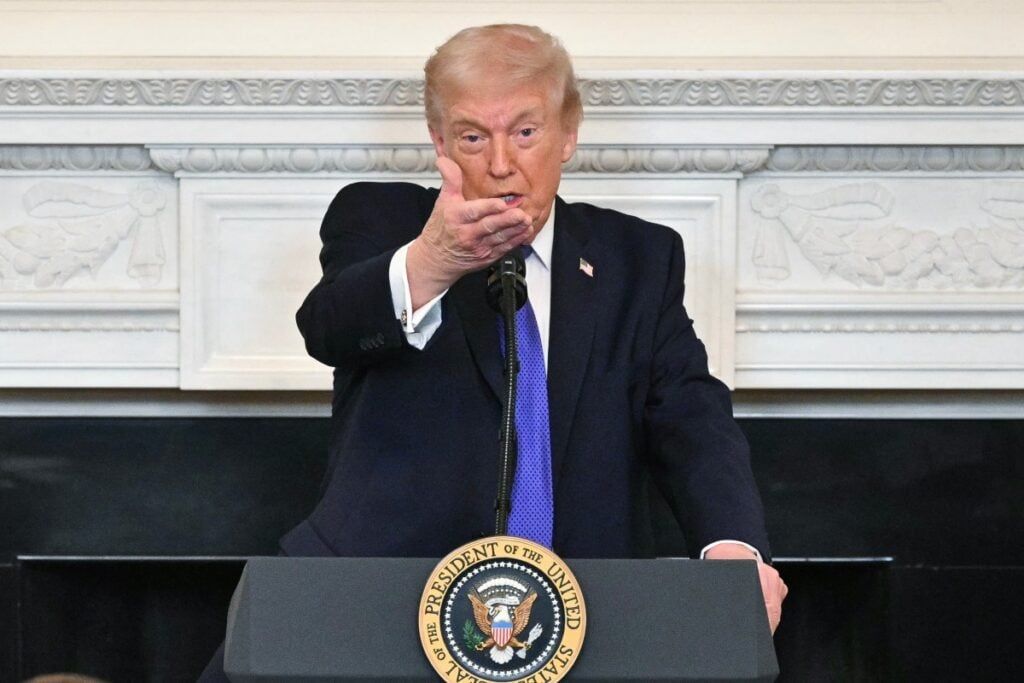
The US Supreme Court ruled on Friday that President Donald Trump exceeded his authority by imposing sweeping tariffs under emergency economic powers, dealing a major blow to a central pillar of his trade agenda.
In a 6–3 decision, the conservative-majority court held that the International Emergency Economic Powers Act (IEEPA) “does not authorise the President to impose tariffs.” The ruling effectively blocks Trump’s use of emergency powers to levy broad, across-the-board duties on US trading partners.
Trump had relied on IEEPA after returning to office last year to introduce wide-ranging “reciprocal” tariffs targeting countries whose trade practices Washington deemed unfair. Separate tariffs were also imposed on Mexico, Canada and China over issues related to illicit drug flows and immigration.
Delivering the opinion of the court, Chief Justice John Roberts stated that IEEPA contains no reference to tariffs or duties. The court noted that if Congress had intended to grant such extraordinary authority, it would have done so explicitly, as it has in other tariff statutes.
The ruling does not affect sector-specific tariffs Trump imposed separately on steel, aluminium and other goods. Several ongoing government investigations could still lead to additional, more targeted tariffs under other statutory authorities.
The court’s three liberal justices joined three conservatives in the majority. Conservative Justices Brett Kavanaugh, Clarence Thomas and Samuel Alito dissented.
The decision upholds earlier lower court rulings that found Trump overstepped his authority when imposing the tariffs. A trade court in May had blocked most of the measures, though that decision had been temporarily paused pending appeal.
Economists suggest the ruling could significantly reduce average US tariff rates. EY-Parthenon chief economist Gregory Daco previously estimated that striking down the emergency tariffs would lower the average rate from 16.8 percent to roughly 9.5 percent, while potentially costing the government between $100 billion and $120 billion in lost revenue.
However, analysts caution that the administration may seek alternative legal pathways to reintroduce broader trade measures. Erica York of the Tax Foundation noted that while the ruling constrains the president’s ability to impose sweeping tariffs unilaterally, other, more limited statutory options remain available.
The court did not clarify whether importers would be entitled to refunds for tariffs already collected, a process Justice Kavanaugh warned could become administratively complex.








Gombe Governor Swears in 19 Permanent Secretaries, Says Appointment Largest in State’s History

2027: ‘I’m NDC, Not Obidient or Kwankwasiyya’ — Dickson

2027: Obi Denies Rejecting Atiku’s Running Mate Offer

Sultan Directs Muslims to Search for Rabi’ al-Thani Crescent on September 11

Trump Promises $5,000 ‘Dividend’ to Americans if Republicans Win Congress

2027: Obi Vows to Accept Defeat if Election Is Free, Fair, Credible

2027: Remi Tinubu Appeals to South-East Voters to Re-elect Husband
Benue Police Arrest 46 Over Alleged Obstruction of Peter Obi’s Movement

Lagos-Ibadan Expressway: Kara Bridge Repairs Trigger Heavy Gridlock

Charismatic Bishops Conference Backs Tinubu for Second Term in 2027
Lagos-Ibadan Expressway: Kara Bridge Repairs Trigger Heavy Gridlock
Charismatic Bishops Conference Backs Tinubu for Second Term in 2027
2027: ‘I’m NDC, Not Obidient or Kwankwasiyya’ — Dickson

NDC Legislators Demand Probe of Reported Blockade of Peter Obi in Benue

TCN Announces Fresh Power Outage in Parts of Abuja After Transformer Trips
Trump Promises $5,000 ‘Dividend’ to Americans if Republicans Win Congress
2027: Remi Tinubu Appeals to South-East Voters to Re-elect Husband
2027: Obi Vows to Accept Defeat if Election Is Free, Fair, Credible
Sultan Directs Muslims to Search for Rabi’ al-Thani Crescent on September 11
2027: Obi Denies Rejecting Atiku’s Running Mate Offer
-
 News19 hours ago
Lagos-Ibadan Expressway: Kara Bridge Repairs Trigger Heavy Gridlock
-
 News4 hours ago
2027: ‘I’m NDC, Not Obidient or Kwankwasiyya’ — Dickson
-
 News1 day ago
NDC Legislators Demand Probe of Reported Blockade of Peter Obi in Benue
-
 News19 hours ago
Charismatic Bishops Conference Backs Tinubu for Second Term in 2027
-
 FCT News1 day ago
TCN Announces Fresh Power Outage in Parts of Abuja After Transformer Trips
-
 World News4 hours ago
Trump Promises $5,000 ‘Dividend’ to Americans if Republicans Win Congress
-
 News19 hours ago
2027: Remi Tinubu Appeals to South-East Voters to Re-elect Husband
-
 News5 hours ago
2027: Obi Vows to Accept Defeat if Election Is Free, Fair, Credible