
Journalism / Human Right
Sterling Group,CAMIC train Journalists on AI-driven sustainability reporting

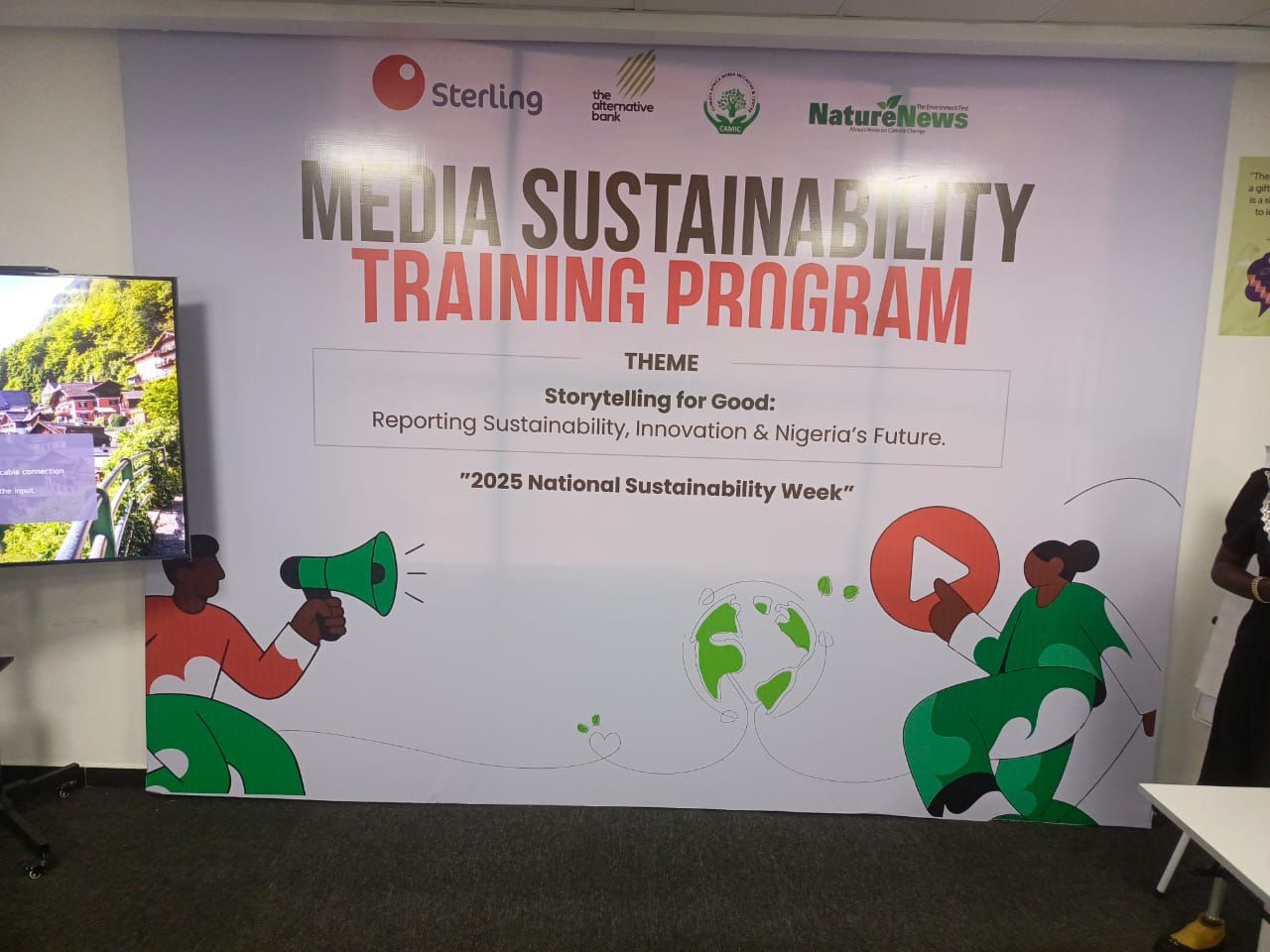
The Sterling Sustainability Working Group, in partnership with the Climate Africa Media Initiative and Centre (CAMIC), has called on journalists to leverage Artificial Intelligence (AI) to strengthen public education and awareness on environmental protection, climate action and sustainable development.
The call was made in Abuja during a two-day capacity-building workshop aimed at equipping media practitioners with practical tools and skills for effective sustainability, health and environmental reporting.
Speakers at the training included the Chairperson of Sterling Bank’s Sustainability Working Group, Mrs. Bunmi Ajiboye; Publisher of NatureNews Media, Aliu Akoshile; former Managing Director of Daily Trust, Akogun Ishiak Ajibola; and Editor at the International Centre for Investigative Reporting (ICIR), Victoria Bamas.
In her welcome address, Mrs. Ajiboye emphasised the pivotal role of the media in shaping public understanding and driving sustainable change, describing the workshop as more than a routine training exercise.
“This is a cornerstone of how Nigeria tells her story of progress, resilience and innovation,” she said, noting that storytelling determines how issues are understood, believed and acted upon.
According to her, while sustainability initiatives are important, the way they are communicated ultimately influences national culture, behaviour and public perception.
“At Sterling, our journey in sustainability has been bold and intentional—from financing renewable energy to supporting circular-economy startups, climate-smart agriculture and youth empowerment. But beyond the work itself, the story is what shapes the nation,” Ajiboye added.
Speaking on investigative journalism, ICIR Editor Victoria Bamas highlighted the responsibility of reporters in uncovering hidden environmental and social challenges, while underscoring the growing relevance of AI in modern newsrooms.
She explained that AI tools can support content creation across text, audio and visuals, automate routine reporting tasks, aid transcription and translation, and assist with data analysis, trend identification and story mapping.
“AI has become an indispensable tool in journalism, but it must be adopted responsibly for journalists to remain competitive and credible,” Bamas said.
On ethical considerations, Aliu Akoshile led a session on media ethics and the risks associated with AI usage, stressing that technology cannot replace human judgment, accountability and professional values.
“AI may drive efficiency, but critical thinking remains the journalist’s most important asset,” he said, urging media professionals to uphold ethics, credibility and public trust in the age of AI-driven content.
Also speaking, Akogun Ishiak Ajibola encouraged media organisations to embrace digital tools and innovative storytelling formats to reach younger and wider audiences, while prioritising both financial and editorial sustainability.
The interactive workshop featured question-and-answer sessions, experience sharing and networking among participants.
As sustainability continues to dominate national and global discourse, the Sterling Bank-led initiative reaffirmed the media’s role not only as reporters of events, but as strategic partners in shaping Nigeria’s sustainable future.






2027: New strategy in place to checkmate Atiku, Obi – Wike

INEC, Police Move to Identify, Arrest Perpetrators of Pre-Election Violence Ahead of 2027

NCDC Places Nigeria on High Alert Over Ebola Outbreak in DR Congo

‘Every Nigerian Should Undergo Military Training’ — Defence Minister Musa

‘Trump Has No Right to Govern Other Countries’ — Brazil’s Lula

You Won’t Return to Senate in 2027, Defends FCT Loans – Wike Tells Kingibe

Trump Rejects Global Supervision of AI, Calls It ‘Globalist Scheme’

UK Bars Nigerian, Ghanaian Teachers From QTS Application Route in England

CBN Resets Monetary Policy Rate to 23%

FG Inaugurates 10-Member Panel to Probe Deaths of 37 Suspected Illegal Miners in NSCDC Custody
UK Bars Nigerian, Ghanaian Teachers From QTS Application Route in England
‘Trump Has No Right to Govern Other Countries’ — Brazil’s Lula
‘Every Nigerian Should Undergo Military Training’ — Defence Minister Musa
CBN Resets Monetary Policy Rate to 23%

NSITF now a digital, efficient, accountable institution – Faleye
Trump Rejects Global Supervision of AI, Calls It ‘Globalist Scheme’
FG Inaugurates 10-Member Panel to Probe Deaths of 37 Suspected Illegal Miners in NSCDC Custody
NCDC Places Nigeria on High Alert Over Ebola Outbreak in DR Congo
You Won’t Return to Senate in 2027, Defends FCT Loans – Wike Tells Kingibe
INEC, Police Move to Identify, Arrest Perpetrators of Pre-Election Violence Ahead of 2027
-
 News1 day ago
UK Bars Nigerian, Ghanaian Teachers From QTS Application Route in England
-
 News5 hours ago
‘Trump Has No Right to Govern Other Countries’ — Brazil’s Lula
-
 News5 hours ago
‘Every Nigerian Should Undergo Military Training’ — Defence Minister Musa
-
 National News1 day ago
CBN Resets Monetary Policy Rate to 23%
-
 News2 days ago
NSITF now a digital, efficient, accountable institution – Faleye
-
 World News1 day ago
Trump Rejects Global Supervision of AI, Calls It ‘Globalist Scheme’
-
 National News1 day ago
FG Inaugurates 10-Member Panel to Probe Deaths of 37 Suspected Illegal Miners in NSCDC Custody
-
 National News5 hours ago
NCDC Places Nigeria on High Alert Over Ebola Outbreak in DR Congo