
World News
Israel strikes Iran, Lebanon as Hormuz tensions rattle global markets

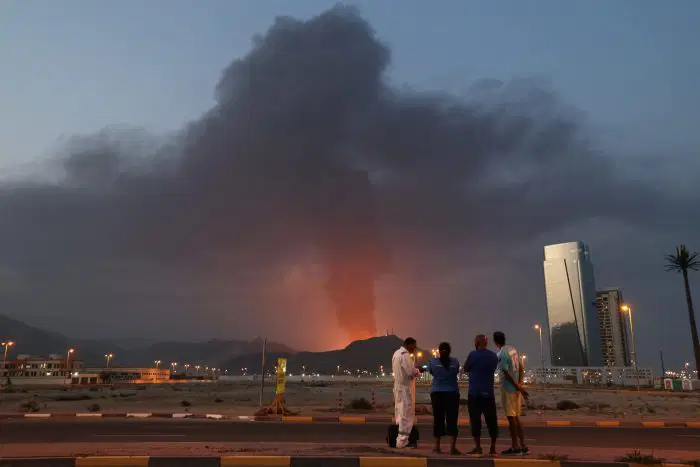
Fresh Israeli airstrikes pounded Iran and Lebanon on Wednesday, as Iran’s Revolutionary Guards claimed control of the strategic Strait of Hormuz, one of the world’s most critical energy corridors.
The escalating conflict, now in its fifth day, has shaken global markets and sent oil prices climbing amid fears of prolonged instability across the Middle East. Governments raced to evacuate stranded citizens as missile and drone exchanges intensified.
Energy Chokepoint Under Threat
Iran’s Revolutionary Guards declared they had “complete control” over the Strait of Hormuz — the narrow passage through which roughly one-fifth of the world’s seaborne oil flows.
However, US President Donald Trump countered that American forces had “knocked out” Iran’s navy, air force and radar systems, insisting the US Navy stood ready to escort tankers safely through the waterway.
The US military disclosed it had struck nearly 2,000 targets in Iran since launching joint operations with Israel last Saturday — attacks that reportedly killed Iran’s supreme leader, Ayatollah Ali Khamenei.
Lebanon Drawn Deeper
The conflict widened further as Israeli forces carried out what they described as a “broad wave of strikes” across Iran, while also targeting positions in Lebanon linked to the Iran-backed militant group Hezbollah.
Lebanese state media reported that Israeli strikes hit a residential building in Baalbek, killing four people, and also targeted a hotel in Beirut. In the towns of Aramoun and Saadiyat, south of Beirut, at least six people were killed and eight wounded, according to the health ministry, which described the toll as preliminary.
The Israeli military issued urgent evacuation warnings to residents of 16 towns and villages in southern Lebanon ahead of operations against Hezbollah.
Regional Fallout
Saudi Arabia said it intercepted two cruise missiles, while drones reportedly struck near the US consulate in Dubai and targeted the American military base at Al-Udeid in Qatar.
The United States urged its citizens to leave the region where commercial flights remain available, even as airspace disruptions complicated evacuations. Britain and France deployed chartered flights to extract their nationals.
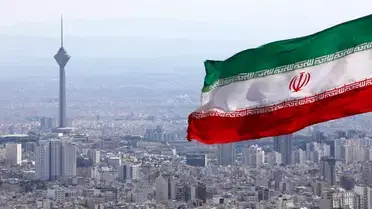
In Tehran, once bustling streets turned eerily quiet as residents sheltered indoors. Security forces increased checkpoints, and armoured vehicles were stationed at major junctions.
The Iranian Red Crescent reported that 787 people had been killed in Iran since the hostilities began, a figure that could not be independently verified. In Lebanon, at least 52 people have reportedly died, with over 30,000 displaced, according to the United Nations.
War Rhetoric Intensifies
US Central Command chief Admiral Brad Cooper described the American buildup as the largest in the Middle East in a generation. President Trump suggested further Iranian leadership figures may have been killed in subsequent strikes, though he stopped short of declaring regime change as the objective.
Iran, for its part, vowed severe retaliation. Revolutionary Guard General Ebrahim Jabbari warned that if Iran’s key centres were targeted, it would strike economic hubs across the region.
As the confrontation widens, concerns mount over the stability of global energy supplies, civilian safety, and the risk of a broader regional war.












Man United Consider Howe, Nagelsmann, Conte as Carrick Faces Uncertain Future

Shettima Says Obi Has Nothing to Offer Nigerians Beyond ‘Dubious Statistics’

Uba Sani Says APC Will Consider 25% Opposition Vote in Kaduna a Failure

Court Orders El-Rufai to Open Defence in Alleged NSA Phone Interception Case

WHO Says Nigeria Has No Active Ebola Cases After Patient’s Evacuation to Switzerland

BYM condemns killing Of 60-year-old woman, after attack at Gwom-Ajang

Ebola Patient in Nigeria Is Wife of Swiss Diplomat, Switzerland Says

Uba Sani Vows Massive Kaduna Support for Tinubu Ahead of 2027 Election

Atiku Asks Tinubu to Identify Those Behind Alleged Ministerial Appointment Bribes

One Dead, Three Rescued After Two-Storey Building Collapses in Lagos
WHO Says Nigeria Has No Active Ebola Cases After Patient’s Evacuation to Switzerland
Uba Sani Says APC Will Consider 25% Opposition Vote in Kaduna a Failure
Shettima Says Obi Has Nothing to Offer Nigerians Beyond ‘Dubious Statistics’
Court Orders El-Rufai to Open Defence in Alleged NSA Phone Interception Case
BYM condemns killing Of 60-year-old woman, after attack at Gwom-Ajang
Man United Consider Howe, Nagelsmann, Conte as Carrick Faces Uncertain Future
-
 National News56 minutes ago
WHO Says Nigeria Has No Active Ebola Cases After Patient’s Evacuation to Switzerland
-
 News49 minutes ago
Uba Sani Says APC Will Consider 25% Opposition Vote in Kaduna a Failure
-
 News47 minutes ago
Shettima Says Obi Has Nothing to Offer Nigerians Beyond ‘Dubious Statistics’
-
 News1 day ago
BYM condemns killing Of 60-year-old woman, after attack at Gwom-Ajang
-
 News51 minutes ago
Court Orders El-Rufai to Open Defence in Alleged NSA Phone Interception Case
-
 Sports41 minutes ago
Man United Consider Howe, Nagelsmann, Conte as Carrick Faces Uncertain Future