
News
INEC conducts mock accreditation across FCT ahead of February 21 polls – by Oladosu Adebola Oluwaseun

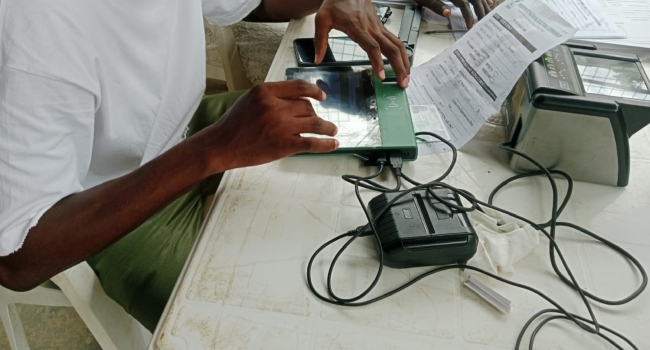
On Saturday, February 7, 2026, the Independent National Electoral Commission (INEC) conducted a pivotal mock accreditation exercise across the six Area Councils of the Federal Capital Territory.
This strategic exercise served as a final technical rehearsal designed to fortify the integrity of the electoral process ahead of the main elections scheduled for February 21, 2026. By deploying the Bimodal Voter Accreditation System (BVAS) in selected polling units within Abaji, Bwari, Gwagwalada, Kuje, Kwali, and the Abuja Municipal Area Council, the Commission aimed to verify the hardware’s readiness and the software’s efficiency in a live environment.
Throughout the day, INEC officials and technical teams monitored the performance of the BVAS devices, focusing specifically on the speed and accuracy of facial and fingerprint recognition. This simulation allowed the Commission to identify potential “blind spots” in network connectivity and resolve any user-interface challenges faced by ad-hoc staff before thousands of voters descend upon the polls. The exercise also acted as a public demonstration of transparency, allowing citizens and observers to witness firsthand how the technology prevents multiple voting and ensures that only validly registered voters are cleared to cast their ballots.
The Chairman of INEC, Prof. Joash Amupitan (SAN), emphasized that the mock election was not merely a formality but a critical diagnostic tool. He noted that while the overall performance of the accreditation technology was impressive, the real-world feedback gained from the exercise would be used to fine-tune logistics and deployment strategies for the 68 constituencies involved.
Residents who participated in the exercise expressed a mixture of curiosity and cautious optimism, viewing the digital safeguards as a necessary evolution in Nigeria’s democratic journey.
As the clock ticks toward the February 21st polls, the successful conclusion of this mock exercise has provided a much-needed boost to public confidence. With the political atmosphere in Abuja heightening and campaigns reaching their peak, the Commission has reiterated its commitment to a “No PVC, No Voting” policy.
The mock election serves as a reminder that the backbone of a credible election lies in the seamless marriage of robust technology and disciplined human administration.
By testing these systems under pressure, INEC aims to ensure that when the actual Election Day arrives, the focus remains entirely on the will of the people, expressed through a process that is both technologically sound and transparently managed.















2027: Remi Tinubu Appeals to South-East Voters to Re-elect Husband

Benue Police Arrest 46 Over Alleged Obstruction of Peter Obi’s Movement

Lagos-Ibadan Expressway: Kara Bridge Repairs Trigger Heavy Gridlock

Charismatic Bishops Conference Backs Tinubu for Second Term in 2027

TCN Announces Fresh Power Outage in Parts of Abuja After Transformer Trips

NDC Legislators Demand Probe of Reported Blockade of Peter Obi in Benue

Peter Obi Arrives Jos for Solidarity Visit to Mangu Attack Victims

Bandits Kill Two, Abduct 26 in Kaduna Communities

NUJ FCT Raises N5.01m Trust Fund for Late Chairman’s Children

FG Automates Academic Certificate Evaluation, Authentication, Ends Physical Visits

Tension in The Gambia as Thousands Protest Power Blackouts, Chant ‘Barrow Must Go’

Kenya Gives Foreign Workers 90 Days to Regularise Status After Ruto’s Small Business Order
Peter Obi’s Convoy Allegedly Attacked by Thugs in Benue

Alia Govt: We Didn’t Know Peter Obi Was Coming to Benue

2026 Ballon d’Or: Messi, Dembélé, Mbappé, Yamal, Haaland Make 30-Man Shortlist
FG Automates Academic Certificate Evaluation, Authentication, Ends Physical Visits
NUJ FCT Raises N5.01m Trust Fund for Late Chairman’s Children
Peter Obi Arrives Jos for Solidarity Visit to Mangu Attack Victims
NDC Legislators Demand Probe of Reported Blockade of Peter Obi in Benue
Lagos-Ibadan Expressway: Kara Bridge Repairs Trigger Heavy Gridlock
-
 News2 days ago
Tension in The Gambia as Thousands Protest Power Blackouts, Chant ‘Barrow Must Go’
-
 News2 days ago
Peter Obi’s Convoy Allegedly Attacked by Thugs in Benue
-
 News2 days ago
Alia Govt: We Didn’t Know Peter Obi Was Coming to Benue
-
 World News2 days ago
Kenya Gives Foreign Workers 90 Days to Regularise Status After Ruto’s Small Business Order
-
 National News2 days ago
FG Automates Academic Certificate Evaluation, Authentication, Ends Physical Visits
-
 Sports2 days ago
2026 Ballon d’Or: Messi, Dembélé, Mbappé, Yamal, Haaland Make 30-Man Shortlist
-
 NUJ FCT2 days ago
NUJ FCT Raises N5.01m Trust Fund for Late Chairman’s Children
-
 News2 days ago
Peter Obi Arrives Jos for Solidarity Visit to Mangu Attack Victims