







National News
Senate slashes election notice period from 360 to 300 Days

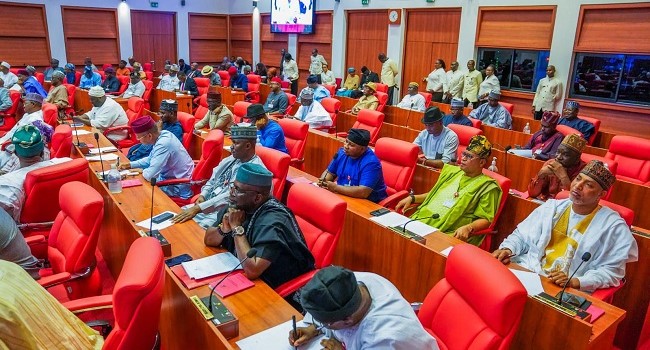
The Nigerian Senate has amended Clause 28 of the Electoral Act Amendment Bill, reducing the notice period for elections from 360 days to 300 days, a move designed to give the Independent National Electoral Commission (INEC) greater flexibility in fixing dates for the 2027 general elections.
The amended Clause 28 now provides that the Commission shall, not later than 300 days before the date appointed for an election, publish a notice in each state of the federation and the Federal Capital Territory stating the election date and the locations for submission of nomination papers.
The amendment was effected during clause-by-clause consideration of the reworked Electoral Act, 2022 (Repeal and Re-Enactment) Bill 2026, after Senate Leader Opeyemi Bamidele moved a motion for rescission and recommittal of the earlier passed version.
Bamidele explained that retaining the 360-day notice requirement could have resulted in the 2027 Presidential and National Assembly elections falling within the Ramadan period. He warned that conducting elections during Ramadan might negatively affect voter turnout, logistics, stakeholder participation and overall inclusiveness.
The motion also cited discrepancies in the Long Title and several clauses of the bill, including Clauses 6, 9, 10, 22, 23, 28, 29, 32, 42, 47, 51, 60, 62, 64, 65, 73, 77, 86, 87, 89, 93 and 143, noting issues with cross-referencing, numbering and internal consistency.
Earlier, proceedings turned rowdy when Senator Enyinnaya Abaribe (ADC/Abia South) demanded a division on Clause 60(3), which allows manual transmission of results in the event electronic transmission fails. Senate President Godswill Akpabio initially indicated that the demand had been withdrawn, but opposition lawmakers objected.
Deputy Senate President Barau Jibrin cited Order 52(6) to argue against revisiting a ruled matter, sparking further uproar and consultations on the floor. The chamber briefly moved into a closed-door session before resuming.
Abaribe formally invoked Order 72(1) and called for a division on the proviso permitting manual transmission. During voting, 15 opposition senators stood against retaining the caveat, while 55 senators voted in support of it, according to the Senate President’s count.
The Senate subsequently passed the Electoral Act, 2022 (Repeal and Re-Enactment) Bill 2026.
INEC had earlier fixed February 20, 2027, for the Presidential and National Assembly elections, with governorship and State Assembly polls slated for March 6, 2027. The timetable drew concerns from some stakeholders, including former Vice President Atiku Abubakar, who urged a reconsideration of the dates due to their overlap with Ramadan.
In response, INEC, through its National Commissioner and Chairman of the Information and Voter Education Committee, Mohammed Haruna, said the Commission had taken note of the concerns and was consulting stakeholders.
It indicated that it may seek legislative intervention if adjustments are necessary, while ensuring compliance with constitutional and statutory requirements.
















News5 hours ago
NUJ demands apology from Wike over comment on Journalist Seun Okinbaloye

News6 hours ago
Stray bullet from soldiers’ celebration kills teenager in Maiduguri

News8 hours ago
Arteta rallies Arsenal after shock defeats ahead of Champions League clash

News8 hours ago
ADC coalition ‘no threat’ to APC — Felix Morka

National News22 hours ago
Tinubu approves ₦3.3trn power debt settlement to tackle outages, boost economy

News22 hours ago
Easter Tragedy: 17 feared dead as Herdsmen attack Benue community

News22 hours ago
Easter Celebration: NUJ FCT Chairman Grace Ike urges hope, unity, national renewal

News1 day ago
Otu charges Elders: Stand with me to reclaim Cross River’s oil status

News2 days ago
Easter: Gov Otu urges hope, unity

National News2 days ago
Tinubu commissions Ogun Airport, reaffirms Nigeria’s path to greatness
News22 hours ago
Easter Celebration: NUJ FCT Chairman Grace Ike urges hope, unity, national renewal
National News22 hours ago
Tinubu approves ₦3.3trn power debt settlement to tackle outages, boost economy
News22 hours ago
Easter Tragedy: 17 feared dead as Herdsmen attack Benue community
News8 hours ago
ADC coalition ‘no threat’ to APC — Felix Morka
National News2 days ago
Tinubu commissions Ogun Airport, reaffirms Nigeria’s path to greatness
News2 days ago
Easter: Gov Otu urges hope, unity
News5 hours ago
NUJ demands apology from Wike over comment on Journalist Seun Okinbaloye
News1 day ago
Otu charges Elders: Stand with me to reclaim Cross River’s oil status
News8 hours ago
Arteta rallies Arsenal after shock defeats ahead of Champions League clash
News6 hours ago
Stray bullet from soldiers’ celebration kills teenager in Maiduguri
-
 News22 hours ago
Easter Celebration: NUJ FCT Chairman Grace Ike urges hope, unity, national renewal
-
 News22 hours ago
Easter Tragedy: 17 feared dead as Herdsmen attack Benue community
-
 National News22 hours ago
Tinubu approves ₦3.3trn power debt settlement to tackle outages, boost economy
-
 News8 hours ago
ADC coalition ‘no threat’ to APC — Felix Morka
-
 National News2 days ago
Tinubu commissions Ogun Airport, reaffirms Nigeria’s path to greatness
-
 News2 days ago
Easter: Gov Otu urges hope, unity
-
 News1 day ago
Otu charges Elders: Stand with me to reclaim Cross River’s oil status
-
 News5 hours ago
NUJ demands apology from Wike over comment on Journalist Seun Okinbaloye