
National News
FG begins strategic review of tariff policies to boost local production, cut business costs

The Federal Government has commenced a strategic review of Nigeria’s tariff policies as part of efforts to encourage local production, protect domestic industries and ease the cost of doing business.
The move followed a high-level meeting involving the Tariffs Review Board and the Minister of State for Finance, Dr Doris Uzoka-Anite, where existing tariff regimes were examined against the backdrop of rising production costs, foreign exchange pressures and global trade volatility.
Discussions at the meeting centred on supporting the Federal Government’s industrialisation agenda, addressing the challenges faced by local manufacturers, and ensuring a balanced tariff framework that allows access to essential imports while strengthening Nigeria’s local value chains.
Uzoka-Anite said the review forms part of the government’s broader strategy to stimulate industrial growth and enhance economic competitiveness, stressing the administration’s commitment to data-driven policymaking and reforms aimed at building a resilient, inclusive and competitive economy.
She explained that the goal is to reposition tariffs as tools for economic development rather than barriers to productivity, with emphasis on encouraging domestic manufacturing, protecting home-grown industries and reducing operational costs across key sectors.
“Our objective is to create a tariff regime that supports local manufacturers, strengthens value chains and promotes sustainable industrial expansion,” Uzoka-Anite said.
“This means striking a careful balance between meeting essential import needs and protecting domestic industries from unfair competition.”
According to a statement issued after the meeting, the government is seeking a more responsive tariff structure aligned with its industrialisation drive, while maintaining market stability amid an increasingly uncertain global trade environment.
Key issues deliberated included tariff-related bottlenecks affecting manufacturers, especially sectors dependent on imported raw materials and intermediate goods. Participants also explored options for fiscal relief to cushion domestic producers grappling with high input costs, with the aim of boosting output, preserving jobs and improving competitiveness.
The meeting underscored the importance of empirical evidence in shaping tariff adjustments, with consensus that decisions must be guided by data on their impact on production costs, consumer prices and employment.
By fine-tuning these fiscal levers, the Federal Government hopes to unlock industrial capacity, attract investment and deepen local value addition across the economy.













Gombe Governor Swears in 19 Permanent Secretaries, Says Appointment Largest in State’s History

2027: ‘I’m NDC, Not Obidient or Kwankwasiyya’ — Dickson

2027: Obi Denies Rejecting Atiku’s Running Mate Offer

Sultan Directs Muslims to Search for Rabi’ al-Thani Crescent on September 11

Trump Promises $5,000 ‘Dividend’ to Americans if Republicans Win Congress

2027: Obi Vows to Accept Defeat if Election Is Free, Fair, Credible

2027: Remi Tinubu Appeals to South-East Voters to Re-elect Husband
Benue Police Arrest 46 Over Alleged Obstruction of Peter Obi’s Movement

Lagos-Ibadan Expressway: Kara Bridge Repairs Trigger Heavy Gridlock

Charismatic Bishops Conference Backs Tinubu for Second Term in 2027
Lagos-Ibadan Expressway: Kara Bridge Repairs Trigger Heavy Gridlock
2027: ‘I’m NDC, Not Obidient or Kwankwasiyya’ — Dickson

NDC Legislators Demand Probe of Reported Blockade of Peter Obi in Benue
Charismatic Bishops Conference Backs Tinubu for Second Term in 2027

TCN Announces Fresh Power Outage in Parts of Abuja After Transformer Trips
Trump Promises $5,000 ‘Dividend’ to Americans if Republicans Win Congress
2027: Remi Tinubu Appeals to South-East Voters to Re-elect Husband
2027: Obi Vows to Accept Defeat if Election Is Free, Fair, Credible
Sultan Directs Muslims to Search for Rabi’ al-Thani Crescent on September 11
2027: Obi Denies Rejecting Atiku’s Running Mate Offer
-
 News21 hours ago
Lagos-Ibadan Expressway: Kara Bridge Repairs Trigger Heavy Gridlock
-
 News6 hours ago
2027: ‘I’m NDC, Not Obidient or Kwankwasiyya’ — Dickson
-
 News2 days ago
NDC Legislators Demand Probe of Reported Blockade of Peter Obi in Benue
-
 News21 hours ago
Charismatic Bishops Conference Backs Tinubu for Second Term in 2027
-
 FCT News1 day ago
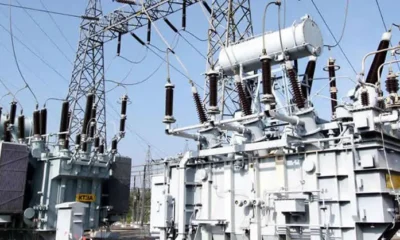
TCN Announces Fresh Power Outage in Parts of Abuja After Transformer Trips
-
 World News7 hours ago
Trump Promises $5,000 ‘Dividend’ to Americans if Republicans Win Congress
-
 News21 hours ago
2027: Remi Tinubu Appeals to South-East Voters to Re-elect Husband
-
 News7 hours ago
2027: Obi Vows to Accept Defeat if Election Is Free, Fair, Credible